Get your free personalized podcast brief
We scan new podcasts and send you the top 5 insights daily.
When domestic regulations make a business model illegal, founders can launch in a more favorable foreign country. By partnering with governments there and gathering extensive operational data (e.g., 100M miles with no incidents), they can return to their home market with the credibility needed to gain regulatory approval.
Related Insights
By launching in Rwanda, Zipline was forced to engineer its drones for some of the world's most volatile weather. This real-world hardening created a more robust system and provided invaluable safety data that proved critical for gaining regulatory trust and expanding into the U.S. market.

Zipline, much like early Tesla or SpaceX, was never part of a broader investment "hype cycle." They spent a decade working on a contrarian idea that most investors thought was stupid. This obscurity allowed them to build with deep conviction, attracting only highly contrarian investors who believed in the long-term, inevitable vision.
After a failed European expansion, Bolt rejected conventional VC advice to target the US or Western Europe. Instead, they built a data model in Excel, ranking global cities by metrics like unemployment and car ownership. This led them to Africa, a non-obvious but highly successful market that became over 50% of their business in six months.

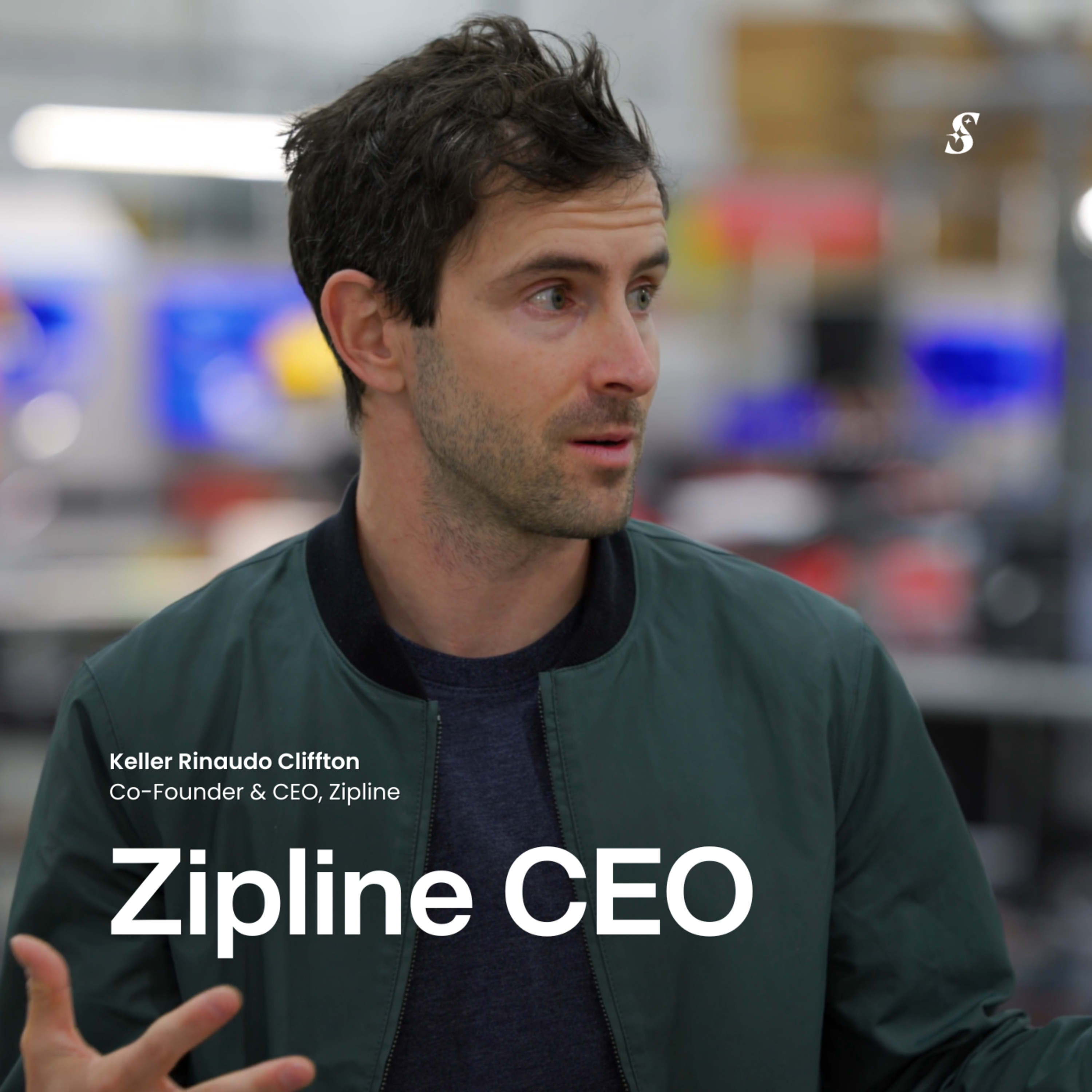
CEO Keller Rinaudo Cliffton explains that developing nations can be superior markets for launching disruptive tech. Rwanda's regulatory agility and hunger to adopt new paradigms allowed Zipline to deploy and prove its technology faster than would have been possible in the U.S.

Against investor advice and industry trends favoring VTOL (vertical takeoff and landing) drones, Zipline opted for a fixed-wing airplane design. They realized their customers valued range above all else, and a simple airplane could fly 10-30x farther, solving the core problem more effectively.
Zipline's original product was a robotics platform that failed to gain traction. Their 'Capital P Pivot' was to medical drone delivery, starting in Rwanda due to US regulations. The strategy was to build a strong safety record abroad to eventually earn the right to operate in the US.

Faced with complex U.S. regulations, Sure's founder went to South Africa. He leveraged its single-regulator system and his personal roots to land his first insurance partner. This validation then served as crucial social proof to sign the same company's U.S. division, de-risking a much larger market entry.

After a disastrous London launch was shut down in 72 hours for bypassing regulators, Bolt learned a critical lesson. Their 'move fast' approach from low-regulation markets didn't work everywhere. This failure forced them to create a dual strategy: optimizing for speed in some countries and for risk mitigation and compliance in others.
Amidst growing uncertainty at the US FDA, biotech companies are using a specific de-risking strategy: conducting early-stage clinical trials in countries like South Korea and Australia. This global approach is not just about cost but a deliberate move to get fast, reliable early clinical data to offset domestic regulatory instability and gain a strategic advantage.

While competitors publicly blamed the FAA for delays, Zipline engaged the agency as a partner. They co-developed regulatory frameworks and flew officials to their Rwanda operation to demonstrate high safety standards. This partnership approach was key to securing critical flight approvals in the U.S.