Get your free personalized podcast brief
We scan new podcasts and send you the top 5 insights daily.
Stripe’s Kai uses "Projects" as a powerful governance layer. Instead of just organizing chats, Projects define context, set spending limits by restricting model choice, and enforce tool usage policies. This allows teams to create safe, pre-configured environments for specific workflows.

Related Insights
The optimal strategy for managing AI costs is neither total restriction nor a free-for-all. It's providing engineers with dedicated "learning budgets" and experimentation pools, coupled with clear visibility into costs. This fosters innovation responsibly without incurring surprise invoices and turns cost into a first-class constraint.
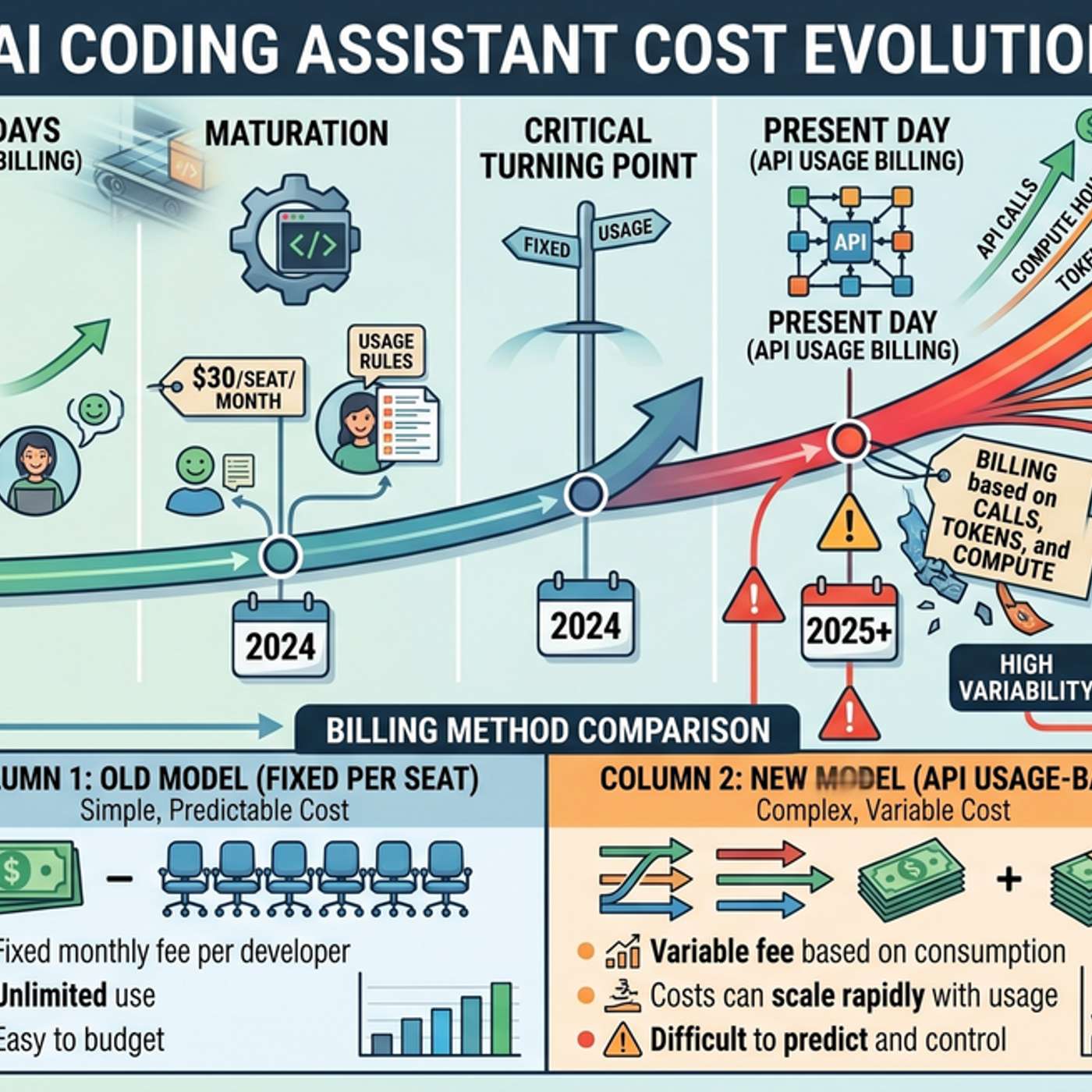
CFOs and GTM leaders may prefer tools that abstract AI costs into a simplified, capped credit model. This provides a fixed, predictable cost, mitigating the risk of runaway expenses from direct, usage-based API access to LLMs, which can be difficult to control and forecast.

Stripe's Kai enables context-specific safety by applying tool policies at the "Project" level. For an HR project with sensitive data, creating a public document can trigger human approval, while other, less sensitive projects run without this friction.
Go beyond single-chat prompting by using features like Claude's "Projects." This bakes in context like brand guidelines and SOPs, creating an AI "second brain" that acts as a strategic partner, eliminating the need to start from scratch with each new task.

To keep your AI agent efficient, differentiate between global and project-level skills and context files. General-purpose tools, like a text truncation skill, should be global. Specific processes, like a referral template, should be kept at the project level to avoid cluttering every interaction.

While seemingly logical, hard budget caps on AI usage are ineffective because they can shut down an agent mid-task, breaking workflows and corrupting data. The superior approach is "governed consumption" through infrastructure, which allows for rate limits and monitoring without compromising the agent's core function.

Thinking about token budgets per person is a flawed, input-focused metric. The correct model is to allocate a budget (potentially seven figures) to a project or desired outcome, like beating a benchmark. This reframes AI spend as a capital allocation towards business goals, not an employee perk.

Chamath's "Software Factory" is a control plane for the entire SDLC, not just a coding tool. It provides governance, auditability, and synchronization from intent to production. This is the level of rigor large, regulated enterprises need, contrasting sharply with simple "vibe coding" assistants.

The primary challenge in building Stripe's internal AI, Kai, wasn't the technology, but creating governance structures. This ensures employees across a complex, global business can use AI safely and know it will "do the right thing," making governance the true product.
To avoid chaotic spending, enterprises must replicate their "Cloud 2.0" governance models for AI. This means establishing a central platform engineering team to broker access to models, set budgets, and control the tools agents can use. This prevents runaway costs and security risks from decentralized AI development.
