Get your free personalized podcast brief
We scan new podcasts and send you the top 5 insights daily.
Thinking about token budgets per person is a flawed, input-focused metric. The correct model is to allocate a budget (potentially seven figures) to a project or desired outcome, like beating a benchmark. This reframes AI spend as a capital allocation towards business goals, not an employee perk.

Related Insights
The optimal strategy for managing AI costs is neither total restriction nor a free-for-all. It's providing engineers with dedicated "learning budgets" and experimentation pools, coupled with clear visibility into costs. This fosters innovation responsibly without incurring surprise invoices and turns cost into a first-class constraint.
If your team cannot articulate the specific business outcome of their AI usage in a single sentence, you don't have an AI strategy. You simply have 'token maxing'—usage for the sake of usage. This framework forces a direct link between AI spend and business results.

After initial unrestricted spending led to budget overruns at companies like Uber, major enterprises are shifting focus. They are moving away from measuring raw AI usage (tokens) and toward implementing AI only for proven use cases with clear ROI, which may benefit cheaper, open-source models over expensive frontier ones.

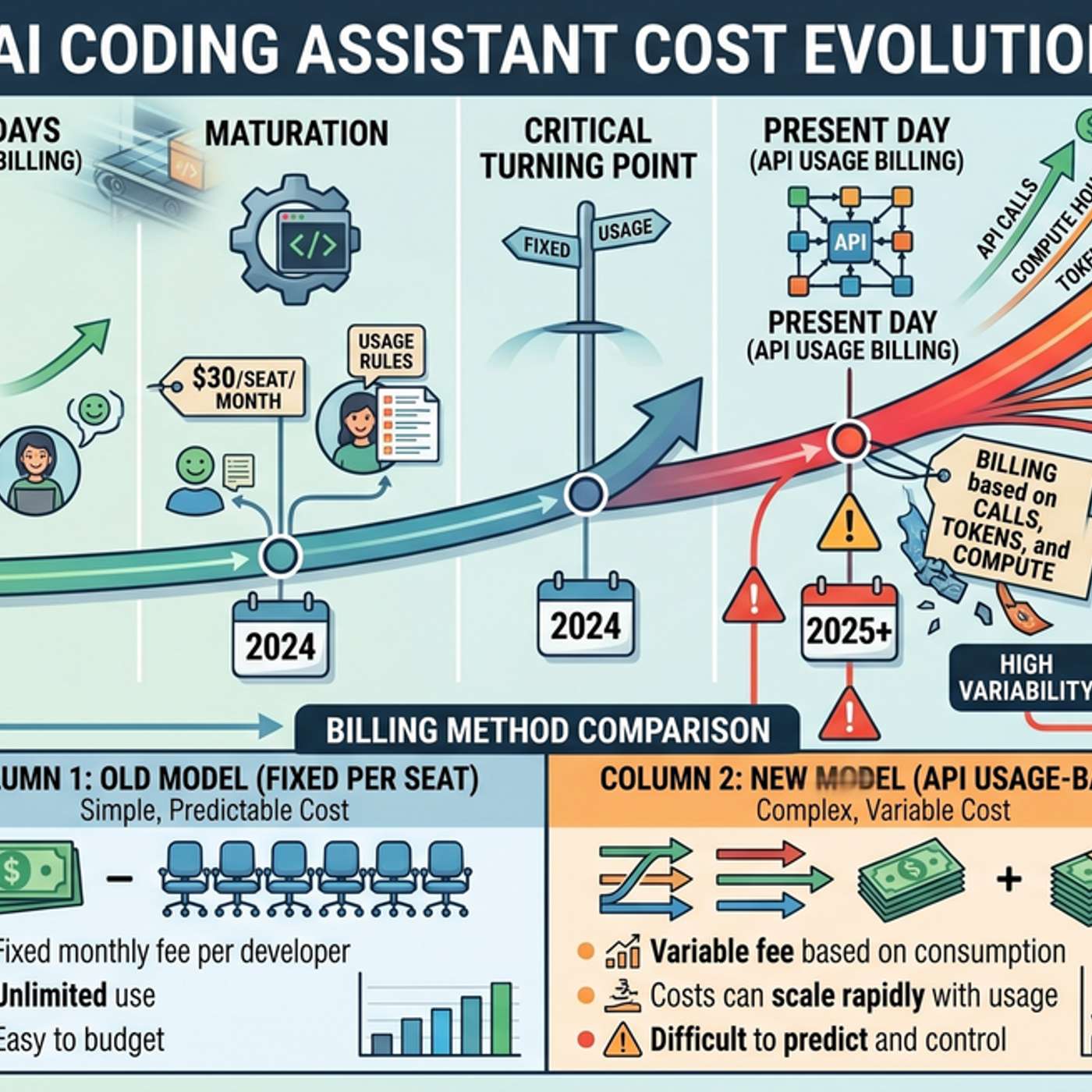
Traditional software budgeting fails for generative AI, where costs are variable and tied to tokens and usage. A CFO noted a team's daily per-person cost jumped 50% in one week. Companies must accept this volatility, run pilots to establish baseline costs, and then determine ROI, rather than trying to set a fixed budget upfront.

Superhuman's CEO advises against simply tracking AI costs, a practice he calls 'token maxing'. Instead, they evaluate the ROI of internal AI tools by measuring developer productivity metrics like feature delivery pace. This output-focused approach has doubled engineering velocity, justifying the AI spend.

An anecdote about an engineer spending $100M in a month on AI tokens reveals a core enterprise issue. For Lenovo's CFO, the problem isn't the amount but its lack of planning and clear ROI. This signals a shift from predictable software subscriptions to volatile, usage-based AI compute costs.

Unlike predictable seat-based SaaS, consumption-based AI is a fungible resource. Companies must treat 'intelligence' like capital, creating budgets and allocating it to the most productive people and projects. This requires a new financial discipline beyond simple software procurement.
To solve the challenge of budgeting for AI, Andrew MacDonald proposes a novel approach: merge the headcount and compute budgets into a single pool. This forces leaders to make direct trade-offs between hiring more engineers and spending on AI models, ensuring they allocate capital to the highest ROI activities.

AI's usage-based pricing doesn't fit traditional seat-based software budgets. Frame it like a marketing program (e.g., paid ads). If increased spending on AI tools generates high ROI, it justifies a larger, flexible budget, shifting the conversation with finance from fixed cost to performance investment.

Giving teams a 'token budget' is flawed because it incentivizes generating low-value output to hit a quota, similar to bad hiring quotas. Instead, companies must tie token consumption directly to business KPIs. This reframes AI spend as a value-creating investment, not a cost to be managed.
