Get your free personalized podcast brief
We scan new podcasts and send you the top 5 insights daily.
Even when scaling an agency, leaders must remain hands-on with the core craft (e.g., live streaming). Getting too far from the day-to-day work makes you vulnerable as the landscape rapidly changes and your advice becomes outdated.

Related Insights
As companies grow, communication becomes fragmented across more people, increasing the risk of "translation errors." Regular, firsthand customer experience for all roles—not just founders—is essential to prevent internal models from diverging from customer reality.

Contrary to conventional wisdom about delegation, the best management style for a small business founder is to be "all over fucking everything all the time." This means maintaining granular involvement in every aspect of the company—from client happiness to legal spending—to relentlessly drive daily improvements and maintain operational control.
Tariq Farid shares his grandfather's wisdom: "brawn to brain." In a company's early days, a founder's physical work ("brawn") is crucial. As it matures, their value shifts to wisdom, strategy, and system-building ("brain") to enable scale and prevent burnout.

What's often negatively labeled as micromanagement is a crucial skill for early founders. When there is no team to delegate to, you must do everything and be obsessed with the details. This isn't a scaling strategy, but a necessary mode of operation for starting from nothing.
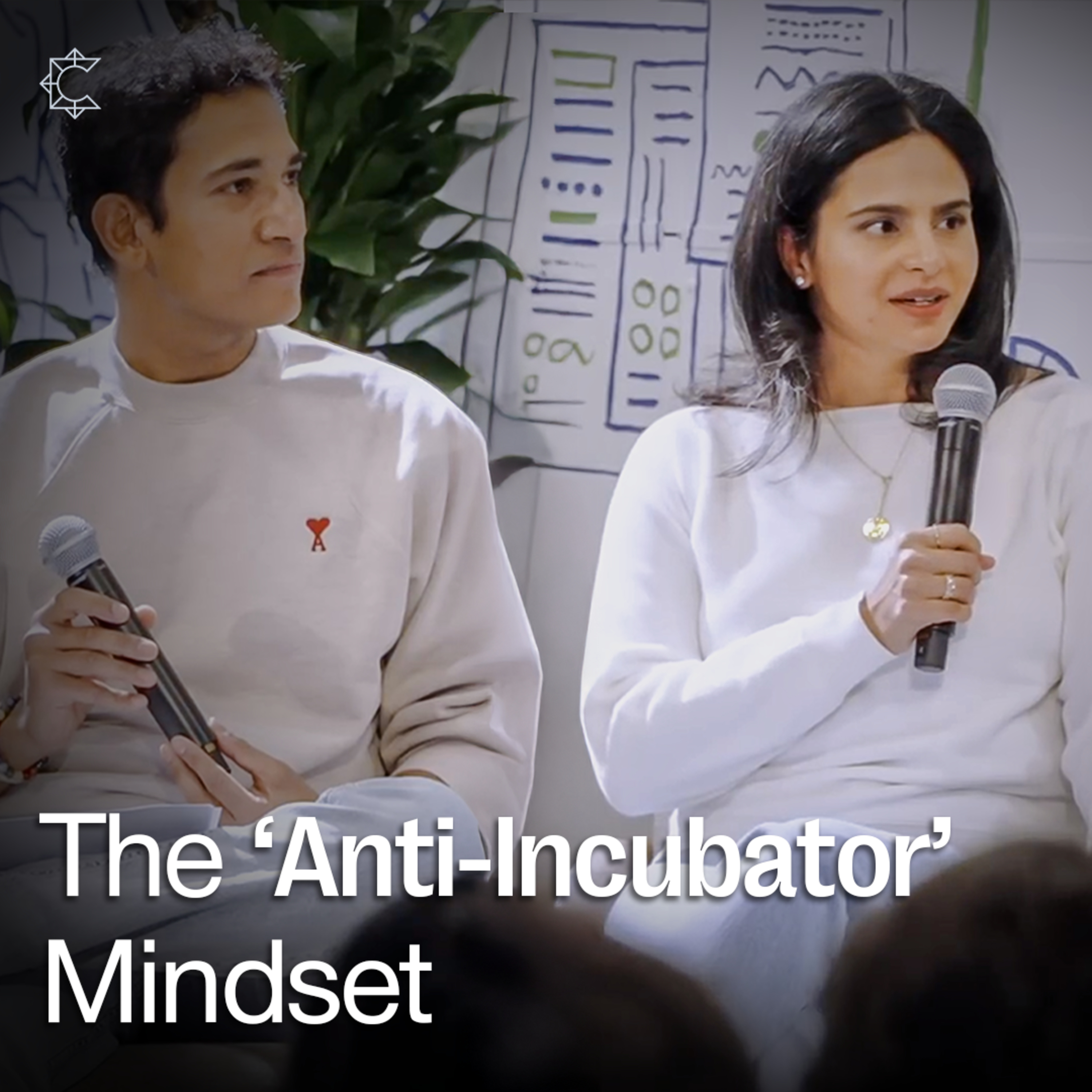
To truly scale, a founder must transition from doing client work to building the systems that deliver it. The host, a long-time agency owner, states his most valuable contribution is innovating the agency's processes. This shift is essential to move beyond being a founder-dependent business.

A founder's role is constantly changing—from individual contributor to manager to culture builder. Success requires being self-aware enough to recognize you're always in a new, unfamiliar role you're not yet good at. Sticking to the old job you mastered is a primary cause of failure to scale.

Simple Mills founder Caitlin Smith's key advice is that entrepreneurship requires constant self-reinvention. She notes that if you succeed, your job will eventually outgrow you unless you are constantly learning and adapting. This makes continuous personal scaling the most critical leadership skill.

StubHub's social lead left a director role because it moved her away from content creation. She argues that leaders in creative fields must stay "in the weeds"—creating alongside their team—to maintain trust, lead by example, and sharpen their gut instinct for what is culturally relevant.

Despite her strengths lying in marketing and brand, Heaven Mayhem's founder deliberately sits with the operations team. This ensures she remains connected to the part of the business with the highest potential for critical errors, preventing her from becoming isolated in a creative silo and neglecting foundational issues.

As a creative business scales, its operational needs and existing structure can start dictating strategy, stifling the original vision. Founders must actively resist this inertia to avoid simply servicing the machine they've built.
