Get your free personalized podcast brief
We scan new podcasts and send you the top 5 insights daily.
Despite her strengths lying in marketing and brand, Heaven Mayhem's founder deliberately sits with the operations team. This ensures she remains connected to the part of the business with the highest potential for critical errors, preventing her from becoming isolated in a creative silo and neglecting foundational issues.

Related Insights
Contrary to conventional wisdom about delegation, the best management style for a small business founder is to be "all over fucking everything all the time." This means maintaining granular involvement in every aspect of the company—from client happiness to legal spending—to relentlessly drive daily improvements and maintain operational control.
Guy Kawasaki identifies successful founders like Steve Jobs and David Chang as being both "plumbers" (handling the messy, operational details like cleaning up literal shit) and "poets" (driving the grand, artistic vision). Excelling at only one without the other is insufficient for building a remarkable company.

Contrary to stereotypes, the best creative leaders possess a strong understanding of business mechanics. They use this knowledge not just for operational success, but as a crucial tool to protect their creative vision and build a robust, defensible enterprise.

One founder (the Visionary) drives creative vision and product DNA, while the other (the Integrator) translates it into scalable systems and operations. This separation of duties, inspired by the book 'Traction', prevents conflict and enables focused execution, especially in family-run businesses.
Consistently great creative is underpinned by excellent operations. To achieve this, operational roles like program managers shouldn't be in a centralized PMO. They must be part of the creative organization to understand how their work directly enables high-quality output.

What's often negatively labeled as micromanagement is a crucial skill for early founders. When there is no team to delegate to, you must do everything and be obsessed with the details. This isn't a scaling strategy, but a necessary mode of operation for starting from nothing.
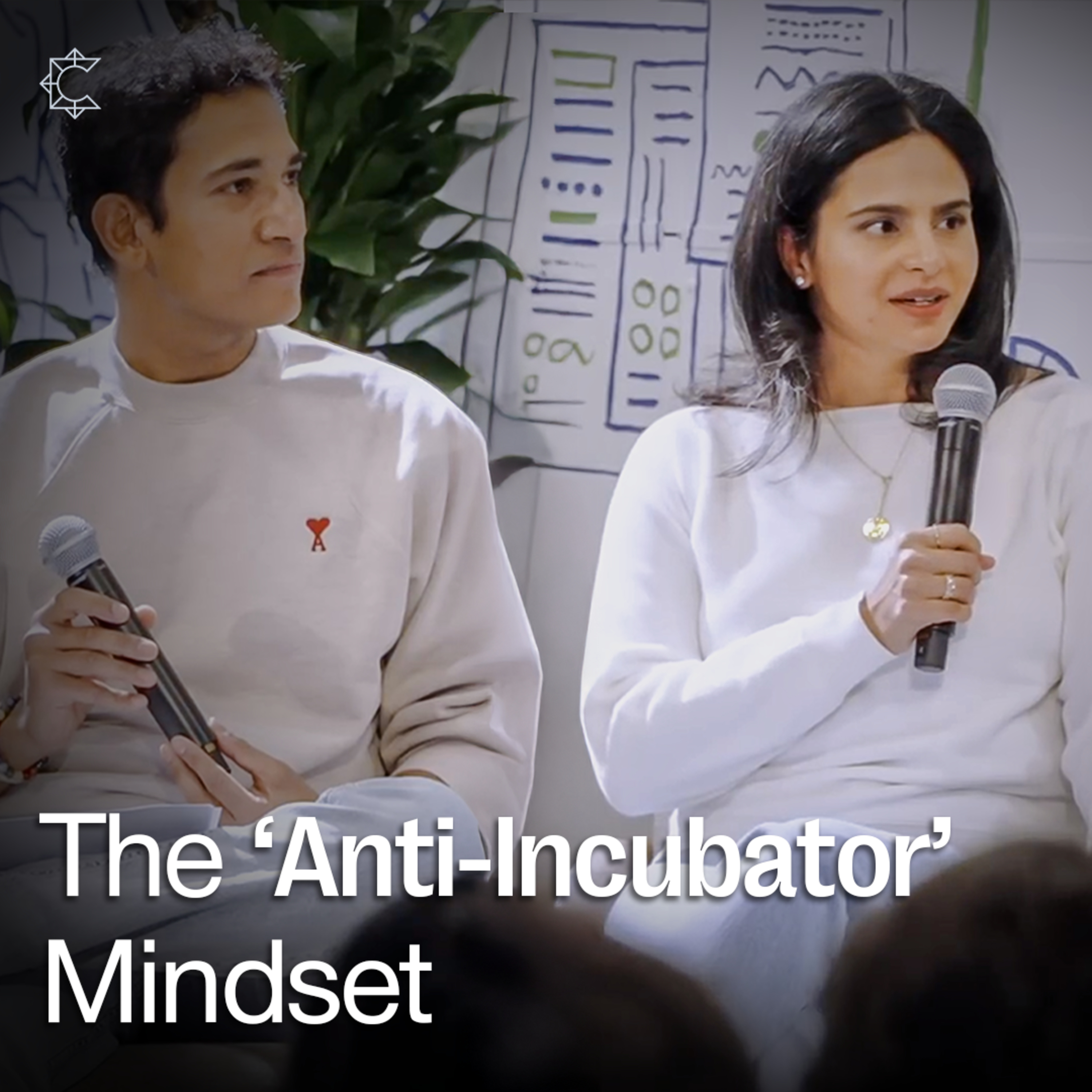
A weekly call with a design partner is a sign of failure. True product iteration speed comes from being deeply embedded. Founders should aim to work from their design partner's office, sitting next to the users. This proximity provides a constant, high-fidelity feedback loop.

The ideal company culture balances two opposing forces: the 'artisan' (creativity, innovation, imagination) and the 'operator' (predictability, efficiency, financial controls). Founder Eric Ryan strives to build teams that excel at both, creating a durable business that can innovate at scale, citing Apple and Nike as examples.

Hamdi Ulukaya attributes Chobani's success in scaling without sacrificing product quality to his extreme operational commitment. For years, he rarely left the factory floor, ensuring standards were met firsthand. This underscores the value of deep, physical immersion for leaders in manufacturing and operations.

Creator-founder Alison Roman admits her strength is in product development, which she calls 'the easy part.' She now needs to hire a 'boss' for the venture to handle business strategy and scaling, a common pain point for founders transitioning from creator to CEO.
