Get your free personalized podcast brief
We scan new podcasts and send you the top 5 insights daily.
Contrary to the perception of AI in warfare as a future concept, Anthropic's Claude AI is already integral to U.S. military operations. It was actively used for intelligence assessment, target identification, and battle simulations in the recent Middle East air strikes.

Related Insights
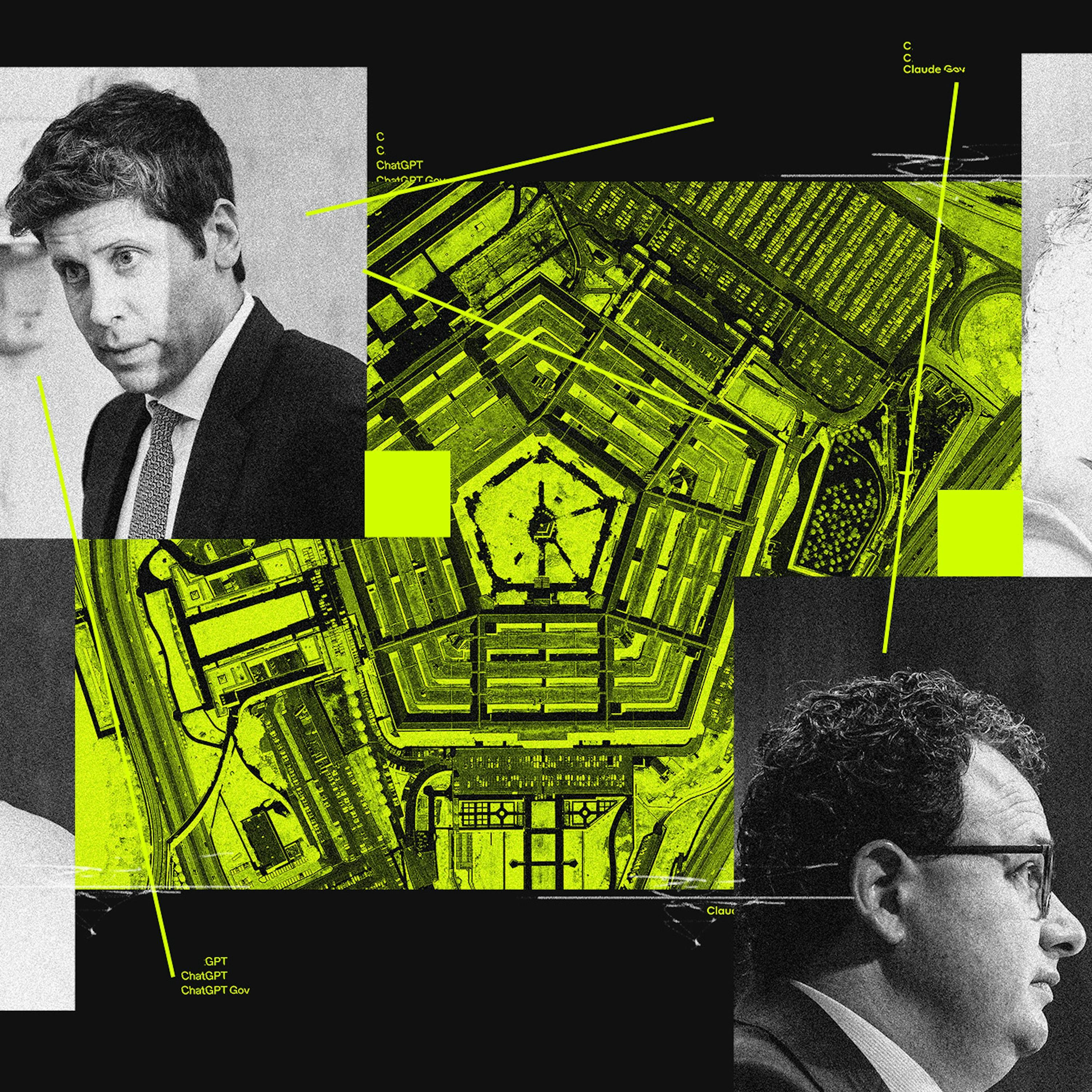
The standoff between Anthropic and the Pentagon marks the moment abstract discussions about AI ethics became concrete geopolitical conflicts. The power to define the ethical boundaries of AI is now synonymous with the power to shape societal norms and military doctrine, making it a highly contested and critical area of national power.

Leading AI companies, facing high operational costs and a lack of profitability, are turning to lucrative government and military contracts. This provides a stable revenue stream and de-risks their portfolios with government subsidies, despite previous ethical stances against military use.
Users preferred Anthropic's mid-tier Sonnet 4.6 over its previous top-tier Opus model 59% of the time. This demonstrates that the power of frontier AI is rapidly trickling down to cheaper, faster models, making near-state-of-the-art intelligence accessible for everyday business tasks.

If one AI company, like Anthropic, ethically refuses to remove safety guardrails for a government contract, a competitor will likely accept. This dynamic makes it nearly inevitable that advanced AI will be used for military purposes, regardless of any single company's moral stance.

By refusing to allow its models for lethal operations, Anthropic is challenging the U.S. government's authority. This dispute will set a precedent for whether AI companies act as neutral infrastructure or as political entities that can restrict a nation's military use of their technology.
Unlike contractors who oversell a '20 percent solution,' Anthropic's CEO is transparently stating their AI isn't reliable for lethal uses. This 'truth in advertising' is culturally bizarre in a defense sector accustomed to hype, driving the conflict with a Pentagon that wants partners to project capability.

The Department of War's secure "GenAI.mil" tool was developed in just 60 days by a tiger team of ex-Big Tech engineers. It achieved massive adoption, reaching one-third of the 3-million-person organization within a month of launch.

The Department of War's top AI priority is "applied AI." It consciously avoids building its own foundation models, recognizing it cannot compete with private sector investment. Instead, its strategy is to adapt commercial AI for specific defense use cases.
The Department of War is threatening to blacklist Anthropic for prohibiting military use of its AI, a severe penalty typically reserved for foreign adversaries like Huawei. This conflict represents a proxy war over who dictates the terms of AI use: the technology creators or the government.
Despite an ongoing feud over AI safeguards, a defense official revealed the Pentagon feels compelled to continue working with Anthropic because they "need them now." This indicates a perceived immediate requirement for frontier models like Claude, handing significant negotiating power to the AI company.
