Get your free personalized podcast brief
We scan new podcasts and send you the top 5 insights daily.
AI tools reduce the communication overhead and lengthy handoffs that traditionally separated product and engineering. By streamlining the path from idea to code, AI makes the combined Chief Product and Technology Officer (CPTO) role more viable, enabling a single leader to manage both functions effectively.

Related Insights
AI agents will automate PM tasks like competitive analysis, user feedback synthesis, and PRD writing. This efficiency gain could shift the standard PM-to-developer ratio from 1:6-10 to 1:20-30, allowing PMs to cover a much broader product surface area and focus on higher-level strategy.
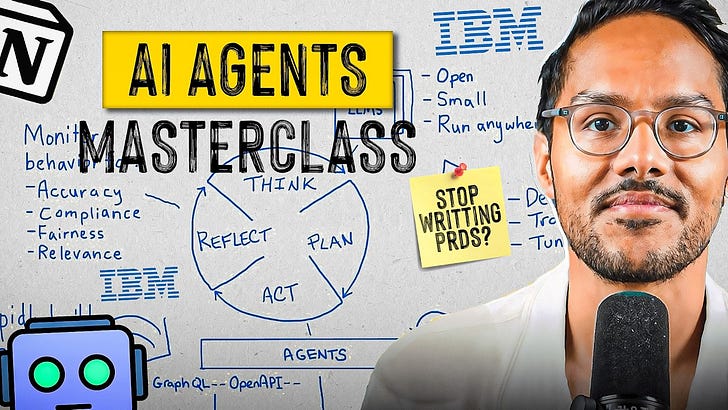
The most significant productivity gains come from applying AI to every stage of development, including research, planning, product marketing, and status updates. Limiting AI to just code generation misses the larger opportunity to automate the entire engineering process.

AI automates tactical tasks, shifting the PM's role from process management to de-risking delivery by developing deep customer insights. This allows PMs to spend more time confirming their instincts about customer needs, which engineering teams now demand.

As AI becomes foundational, the PM role will specialize. A new "AI Platform PM" will emerge to own core infrastructure like embeddings and RAG. They will expose these as services to domain-expert PMs who focus on user-facing features, allowing for deeper expertise in both areas.

The "ICCPO" (Individual Contributor Chief Product Officer) model requires leaders to use AI tools to self-serve answers directly from company data. This shifts the executive role from pure delegation to hands-on experimentation, modeling a culture of self-sufficiency and inspiring the team to adopt new tools.
Dylan Field predicts that AI tools will blur the lines between design, engineering, and product management. Instead of siloed functions, teams will consist of 'product builders' who can contribute across domains but maintain a deep craft in one area. Design becomes even more critical in this new world.

When an engineering team is hesitant about a new feature due to unfamiliarity (e.g., mobile development), a product leader can use AI tools to build a functional prototype. This proves feasibility and shifts the conversation from a deadlock to a collaborative discussion about productionizing the code.
AI tools are collapsing the traditional moats around design, engineering, and product. As PMs and engineers gain design capabilities, designers must reciprocate by learning to code and, more importantly, taking on strategic business responsibilities to maintain their value and influence.

As AI tools empower individuals to handle tasks across the entire product development lifecycle, traditional, siloed roles are merging. This fundamental shift challenges how tech professionals define their value and contribution, causing significant professional anxiety.
The traditional tasks of a product manager—writing specs, building plans, prototyping—are being automated by AI. The role will likely evolve into a hybrid "Experience Engineer" who combines product, design, and engineering skills to build experiences, or a highly commercial "GM" role with direct P&L responsibility.
