Get your free personalized podcast brief
We scan new podcasts and send you the top 5 insights daily.
A founder asking an investor about their biggest blind spot during evaluation is a disarming and intelligent question. As shared by Maytha Agarwal of Defy, it forces the VC to self-audit their decision-making process in real-time, revealing their introspection and leading to a more honest, transparent conversation.

Related Insights
During due diligence, the most revealing portfolio company reference checks involve asking CEOs leading questions. Frame inquiries to suggest the private equity sponsor is taking undue credit for successes. This tactic encourages frankness and uncovers the true dynamics of value creation and deal sourcing.

Direct questions in sales or leadership can feel confrontational. Prefacing them with 'I'm curious...' completely changes the dynamic from an interrogation to a collaborative effort to understand. This simple linguistic shift builds trust, encourages openness, and turns transactions into lasting relationships.

To vet potential investors or acquirers, founders should ask them to articulate their vision for the startup's next five years. Hearing their story told through the buyer's eyes reveals the depth of their strategic thinking and helps assess whether their vision aligns with the founder's, ensuring a better post-transaction fit.

To truly understand a prospect's decision-making process, ask for more than you expect to get, such as requesting to be part of their internal evaluation meeting. Even a "no" often prompts them to reveal more about their process, criteria, and stakeholders than a standard discovery question would.
To predict the future health of a partnership, intentionally have difficult conversations before any investment is made. If you can't productively disagree or discuss serious problems before you're formally linked, it's highly unlikely you'll be able to do so when the stakes are higher post-investment.

Rather than imposing processes after investing, VCs can use frameworks like the "sales sprint" as a pre-investment litmus test. Sharing the approach and observing the founder's reaction reveals their mindset. A founder who is eager to adopt a disciplined, customer-centric process is a stronger bet than one who must be forced into it.

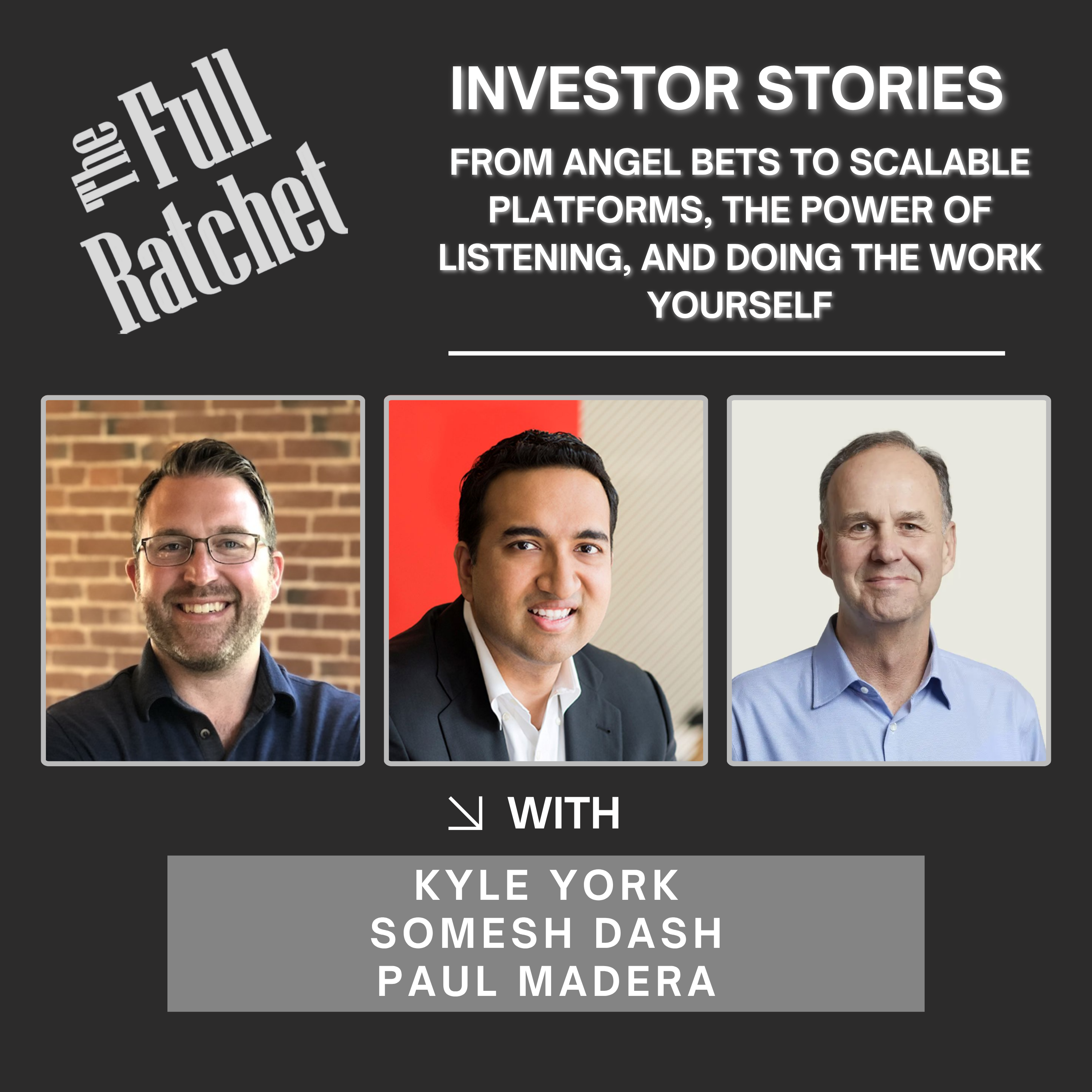
IVP's Samesh Dash observes that young VCs, driven by insecurity, often overcompensate by talking too much and offering premature advice. Maturing as an investor means shifting from talking to active listening, asking fewer but more pointed questions, and understanding a founder's immediate context before offering input.
To elicit candid answers from fund managers, the most effective technique is not the question itself but the silence that follows. Resisting the psychological urge to fill the space forces the manager to sit with the question, often leading to less rehearsed and more truthful responses.
![[REPLAY] Matt Bank - "GEMs" of Risk, Asset Allocation, and Manager Selection (EP.419) thumbnail](https://static.libsyn.com/p/assets/f/b/7/6/fb76e1c8bfb69e8dd959afa2a1bf1c87/CA_Square_logo_light_background_6.26.24.jpg)
Proactively asking a potential investor how they navigate disagreements reveals their philosophy on board governance and CEO autonomy. Investor Alex Nihanky of Scale notes the CEO is the "runner" and the tie should go to them, but not all investors share this view. This question helps founders vet investor fit before a conflict arises.
To get candid early-stage feedback, founder Janice Omadeke disarmed potential advisors by explicitly asking them to tell her if her "baby is ugly" and why. This framing signaled a thick skin and a genuine desire for constructive criticism, leading to more valuable insights instead of polite encouragement.
