Get your free personalized podcast brief
We scan new podcasts and send you the top 5 insights daily.
The same historical facts, like America's history with slavery, can be interpreted as a story of shame or a story of heroic struggle to live up to founding ideals. The narrative a society chooses dictates its collective psyche and future trajectory.

Related Insights
A country's identity is built on a "founding myth" that provides social cohesion, like the idealized story of Thanksgiving. This narrative is often a deliberate simplification to mask a brutal reality. The conflict between the useful myth and historical truth is where a nation's soul is contested.

Trauma is not an objective property of an event but a subjective experience created by the relationship between a present situation and past memories. Because experience is a combination of sensory input and remembered past, changing the meaning or narrative of past events can change the experience of trauma itself.

The lack of a unified national narrative creates profound societal division. America is fractured by two irreconcilable stories: one of colonialist oppression and another of unprecedented prosperity, making a shared identity and collective action impossible.

The flow of capital and the trajectory of history follow powerful stories, not just logic. Leaders, like JFK with the Apollo program, use narrative to frame ambitious goals, capturing public imagination and securing massive investment to pull the future forward.

Despite objective improvements in equity, life expectancy, and economic growth, a majority of Americans feel their country is failing and prefer to live in the past. This suggests the current crisis is rooted in a loss of shared national narrative and faith, rather than a decline in material conditions.
The strong cultural expectation in America to find a positive outcome from adversity (a "redemption story") can be harmful. This "master narrative" can pressure those experiencing trauma, like a severe illness, to invent a positive spin, leading to feelings of failure and isolation if they cannot.

Ed Luttwak's parents viewed the Holocaust as a colossal failure of Jewish leadership, not a personal tragedy to dwell on. This forward-looking mindset—refusing to discuss past losses or victimhood—was a powerful psychological tool that enabled them to rebuild their lives and achieve immense post-war success.

Bryan Stevenson argues that beyond the physical brutality, slavery's most damaging legacy is the narrative of racial difference created to allow enslavers to see themselves as moral. This ideology of racial hierarchy persists today, enabling moral disengagement and perpetuating injustice.

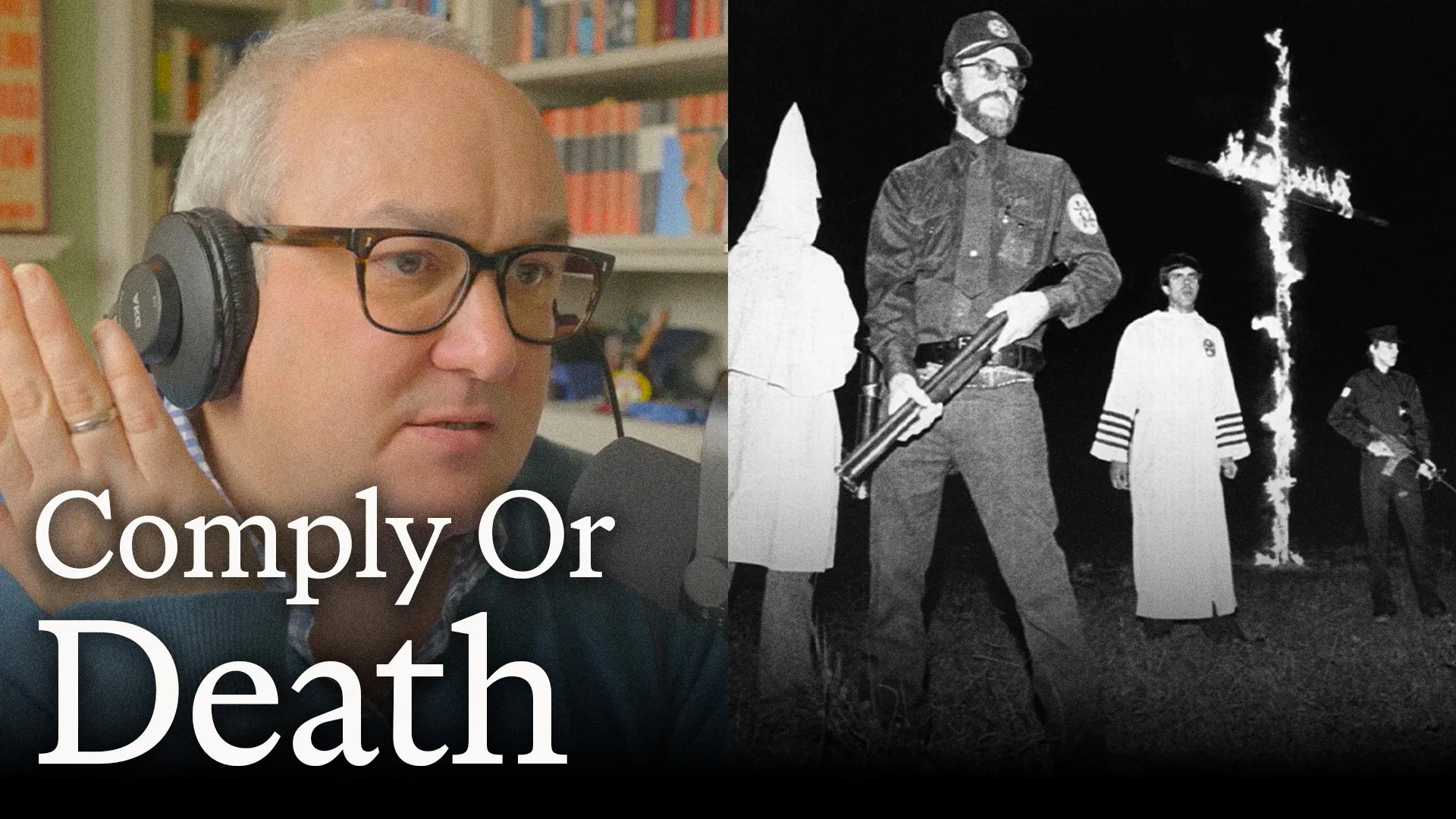
Following its demise, the KKK's violent legacy was completely sanitized by the 'Lost Cause' mythology. Academic historians and popular culture, most notably D.W. Griffith's 1915 film 'The Birth of a Nation', recast the Klan not as racist terrorists but as swashbuckling defenders of civilization, a narrative that enabled its eventual rebirth.
The meaning of an event is not fixed but is shaped by its narrative framing. As both the author and protagonist of our life stories, we can change an experience's impact by altering its "chapter breaks." Ending a story at a low point creates a negative narrative, while extending it to include later growth creates a redemptive one.