Get your free personalized podcast brief
We scan new podcasts and send you the top 5 insights daily.
Following its demise, the KKK's violent legacy was completely sanitized by the 'Lost Cause' mythology. Academic historians and popular culture, most notably D.W. Griffith's 1915 film 'The Birth of a Nation', recast the Klan not as racist terrorists but as swashbuckling defenders of civilization, a narrative that enabled its eventual rebirth.
Related Insights
A country's identity is built on a "founding myth" that provides social cohesion, like the idealized story of Thanksgiving. This narrative is often a deliberate simplification to mask a brutal reality. The conflict between the useful myth and historical truth is where a nation's soul is contested.

Klan terrorism was a calculated political strategy. By creating persistent violence and chaos, white Southern Democrats aimed to exhaust the North's will to enforce Reconstruction. They correctly gambled that Northerners would eventually tire of the costly project and withdraw federal power.

Although the first iteration of the Ku Klux Klan was ultimately suppressed by 1872, it had already achieved its primary long-term goals. It successfully destroyed the Republican Party's infrastructure in the South and, crucially, exhausted the North's political will to continue Reconstruction, paving the way for generations of white supremacist rule.
The KKK's campaign of terror had a quantifiable and devastating impact on elections. In some Georgia counties with Black majorities, the Republican vote for Ulysses S. Grant was reduced from over a thousand to single digits, or even zero. This demonstrates that paramilitary violence was a brutally effective tool for achieving political outcomes.
The Klan adopted a bizarre, elaborate hierarchy with fantastical titles. This included a "Grand Wizard" of the Empire, "Grand Dragons" for each state, and ordinary members called "Ghouls." This structure reflected a blend of fraternal ritual, theatricality, and pseudo-chivalric nonsense.
Counterintuitively, the first KKK chapter in Tennessee was ordered to disband by its leader not because it was defeated, but because it had become unnecessary. A new, more moderate state government began implementing their goals, such as restoring Confederate voting rights and introducing poll taxes, making the Klan's violent tactics redundant.
The Klan's terror campaign was a holistic effort to restore pre-war racial hierarchy. Beyond suppressing votes, they targeted Black churches, schools, landowners, and even women who displayed self-respect. This reveals a broader goal: to crush any sign of Black autonomy and re-establish total white supremacy in every aspect of Southern life.
Contrary to the image of a fringe movement, the Klan was composed of and led by the Southern elite. Eyewitness accounts consistently identified lawyers, doctors, planters, and sheriffs as perpetrators of the violence. This highlights how extremist movements can be driven by the most powerful and 'respectable' members of a society.
The KKK had three separate incarnations: a post-Civil War paramilitary group (1866), a massive anti-Catholic and nativist movement popular in the North (1915), and a smaller far-right group fighting the Civil Rights movement (1940s). Each had different characteristics and goals.
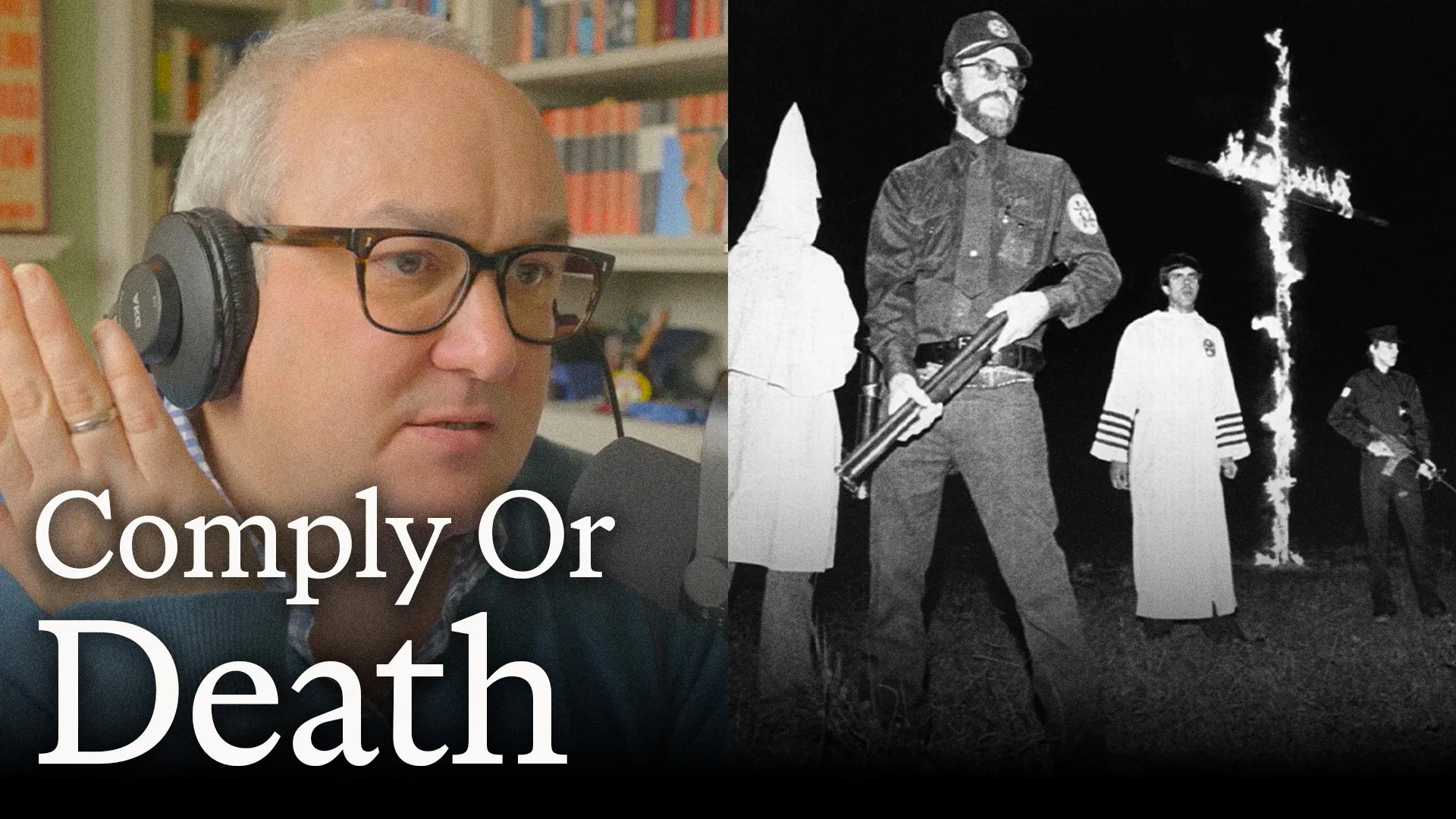
Contrary to popular imagery, the original post-Civil War Ku Klux Klan never burned crosses. This iconic act of terror was introduced by the second Klan, founded in 1915, which was inspired by its depiction in the film "The Birth of a Nation."