Get your free personalized podcast brief
We scan new podcasts and send you the top 5 insights daily.
While competitors focus on specific industrial tasks, XPeng believes the key to success in robotics is data scaling. By deploying a versatile, human-like robot widely, they aim to collect superior training data from diverse real-world environments, accelerating the robot's general capabilities faster than rivals.

Related Insights
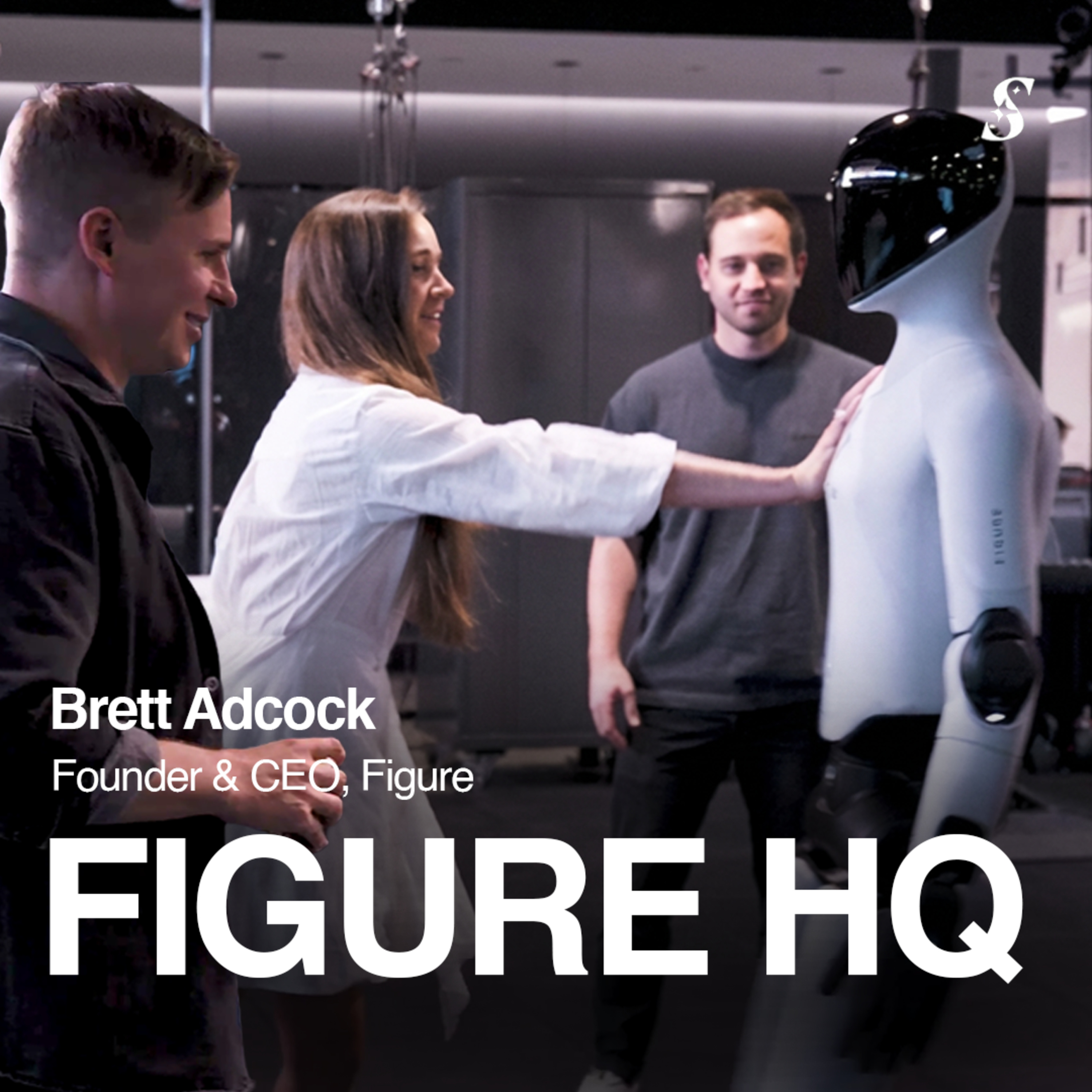
According to Figure's CEO, the company's biggest challenge is no longer hardware reliability but acquiring enormous amounts of diverse, high-quality data. This data is essential for pre-training their Helix AI model to generalize and handle countless real-world scenarios in homes and commercial settings.
Unlike cars, which gather data passively, humanoid robots need active training. To solve this, Musk's strategy is to build a physical 'academy' of 10,000-30,000 Optimus robots performing self-play on various tasks, using this real-world data to close the 'sim-to-real' gap from millions of simulated robots.

Progress in robotics for household tasks is limited by a scarcity of real-world training data, not mechanical engineering. Companies are now deploying capital-intensive "in-field" teams to collect multi-modal data from inside homes, capturing the complexity of mundane human activities to train more capable robots.

One X's core bet is that by making its humanoid robot physically similar to a human, it can train its models on the immense, pre-existing dataset of general human video (e.g., YouTube). This solves the Catch-22 of needing massive robotics data, positioning the human as the 'cross-embodiment' platform.

The true economic advantage of a humanoid robot is not outperforming specialized automation at a single, repetitive task. Instead, its value lies in its versatility—the ability to perform a wide range of tasks in environments designed for humans, justifying its form factor for multi-purpose workflows rather than hyper-optimized ones.
Contrary to starting in controlled industrial settings, ONE X believes the complex, diverse, and social nature of the home is the best environment to develop true general intelligence. The robot must learn to navigate social context, like holding a door for someone, which is data unavailable in a factory.
To create a powerful data flywheel for AI training, ONE X estimates that deploying 10,000 robots into the world would generate a data influx comparable to the daily upload rate of YouTube. This provides a concrete benchmark for the scale required to achieve self-improving general intelligence in robotics.
The company sees its move into robotics as a natural extension of its EV business. It argues that modern EVs are increasingly like robots on wheels. The 'physical AI' capabilities developed for autonomous driving—including custom chips, AI models, and data pipelines—are directly transferable to robotics, creating significant R&D synergies.
Firms are deploying consumer robots not for immediate profit but as a data acquisition strategy. By selling hardware below cost, they collect vast amounts of real-world video and interaction data, which is the true asset used to train more advanced and capable AI models for future applications.

For robotics companies, market dominance hinges on a data flywheel effect. This requires rapidly deploying robots into real-world environments, even at a financial loss, because each unit acts as a data source. A small lead in data collection today translates into a massive competitive advantage tomorrow.
