Get your free personalized podcast brief
We scan new podcasts and send you the top 5 insights daily.
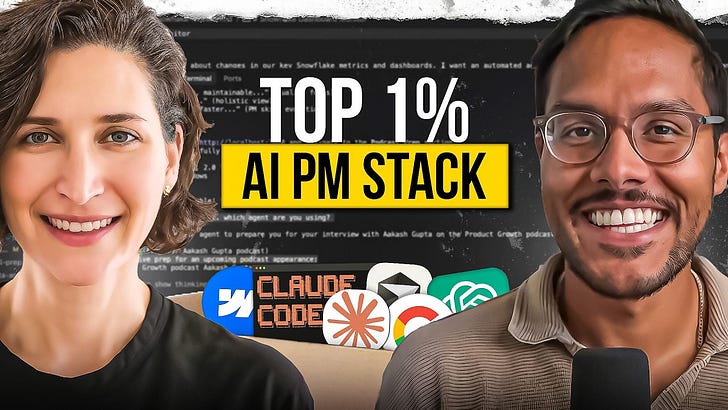
To avoid chaos in AI exploration, assign roles. Designate one person as the "pilot" to actively drive new tools for a set period. Others act as "passengers"—they are engaged and informed but follow the pilot's lead. This focuses team energy and prevents conflicting efforts.

Related Insights
To prevent single points of failure, implement a "pilot/co-pilot" system. Regularly rotate employees, promoting the co-pilot to pilot and bringing in a new co-pilot. This develops well-rounded talent, breaks down knowledge silos, and makes the company anti-fragile, despite initial employee resistance to change.

To prepare for a future of human-AI collaboration, technology adoption is not enough. Leaders must actively build AI fluency within their teams by personally engaging with the tools. This hands-on approach models curiosity and confidence, creating a culture where it's safe to experiment, learn, and even fail with new technology.
An effective AI strategy pairs a central task force for enablement—handling approvals, compliance, and awareness—with empowerment of frontline staff. The best, most elegant applications of AI will be identified by those doing the day-to-day work.

AI is a 'hands-on revolution,' not a technological shift like the cloud that can be delegated to an IT department. To lead effectively, executives (including non-technical ones) must personally use AI tools. This direct experience is essential for understanding AI's potential and guiding teams through transformation.

Early AI adoption by PMs is often a 'single-player' activity. The next step is a 'multiplayer' experience where the entire team operates from a shared AI knowledge base, which breaks down silos by automatically signaling dependencies and overlapping work.

When employees are 'too busy' to learn AI, don't just schedule more training. Instead, identify their most time-consuming task and build a specific AI tool (like a custom GPT) to solve it. This proves AI's value by giving them back time, creating the bandwidth and motivation needed for deeper learning.
Instead of viewing AI collaboration as a manager delegating tasks, adopt the "surgeon" model. The human expert performs the critical, hands-on work while AI assistants handle prep (briefings, drafts) and auxiliary tasks. This keeps the expert in a state of flow and focused on their unique skills.

Don't view AI tools as just software; treat them like junior team members. Apply management principles: 'hire' the right model for the job (People), define how it should work through structured prompts (Process), and give it a clear, narrow goal (Purpose). This mental model maximizes their effectiveness.

Instead of static org charts, AI can monitor team performance and sentiment to propose small, ongoing adjustments—like rotating a member for fresh eyes or changing meeting formats. This turns organizational design into a dynamic, data-driven process of continuous improvement, overcoming human inertia.

To transform a product organization, first provide universal access to AI tools. Second, support teams with training and 'builder days' led by internal champions. Finally, embed AI proficiency into career ladders to create lasting incentives and institutionalize the change.