Get your free personalized podcast brief
We scan new podcasts and send you the top 5 insights daily.
Early AI adoption by PMs is often a 'single-player' activity. The next step is a 'multiplayer' experience where the entire team operates from a shared AI knowledge base, which breaks down silos by automatically signaling dependencies and overlapping work.
Related Insights
The ultimate vision for AI in product isn't just generating specs. It's creating a dynamic knowledge base where shipping a product feeds new data back into the system, continuously updating the company's strategic context and improving all future decisions.
In a remote environment, immediate access to colleagues isn't always possible. A GPT loaded with context about your company and cofounders' thinking can act as a thought partner, helping you overcome the "blank slate" problem without scheduling a meeting.
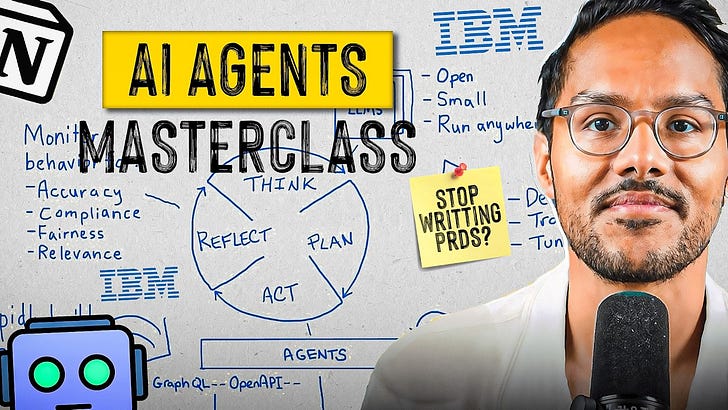
AI agents will automate PM tasks like competitive analysis, user feedback synthesis, and PRD writing. This efficiency gain could shift the standard PM-to-developer ratio from 1:6-10 to 1:20-30, allowing PMs to cover a much broader product surface area and focus on higher-level strategy.
Generative AI's most immediate impact for product managers isn't just writing user stories. It's consolidating disparate information sources into a single interface, freeing up the cognitive load wasted on context switching and allowing for deeper strategic thinking.
By creating a central repository infused with company strategy and market data, AI tools can help junior PMs produce assets with the same contextual depth as a 20-year veteran, democratizing product intuition and standardizing quality across the team.
As AI becomes foundational, the PM role will specialize. A new "AI Platform PM" will emerge to own core infrastructure like embeddings and RAG. They will expose these as services to domain-expert PMs who focus on user-facing features, allowing for deeper expertise in both areas.

To avoid chaos in AI exploration, assign roles. Designate one person as the "pilot" to actively drive new tools for a set period. Others act as "passengers"—they are engaged and informed but follow the pilot's lead. This focuses team energy and prevents conflicting efforts.

Instead of holding context for multiple projects in their heads, PMs create separate, fully-loaded AI agents (in Claude or ChatGPT) for each initiative. These "brains" are fed with all relevant files and instructions, allowing the PM to instantly get up to speed and work more efficiently.
To maximize AI's impact, don't just find isolated use cases for content or demand gen teams. Instead, map a core process like a campaign workflow and apply AI to augment each stage, from strategy and creation to localization and measurement. AI is workflow-native, not function-native.
As AI automates synthesis and creation, the product manager's core value shifts from managing the development process to deeply contextualizing all available information (market, customer, strategy) to define the *right* product direction.