Get your free personalized podcast brief
We scan new podcasts and send you the top 5 insights daily.
After the Cold War, the US de-emphasized manufacturing, creating a massive skills gap. Today, the money exists to build more submarines, but the trained welders, machinists, and engineers do not. This human capital deficit, not budget, is the primary obstacle to scaling production.

Related Insights
The nearly trillion-dollar US defense budget is misleading. The vast majority is locked into fixed costs like salaries, facilities, and sustaining legacy systems. The actual procurement budget for new technology is at a historic low as a percentage of GDP, constraining modernization.

Despite tariffs making imports more expensive, moving furniture production back to the US is seen as unrealistic. The primary obstacle is not financial, but a critical shortage of trained workers who can and want to do the work, a deficit that tariffs cannot fix.

The submarine production crisis is not just a headcount problem; it is a deep operational inefficiency problem. A Navy Admiral reveals that in some areas, worker productivity is less than 50%, meaning simply hiring more people is insufficient without fundamentally new technology and processes.
The push to build defense systems in America reveals that critical sub-components, like rocket motors or high-powered amplifiers, are no longer manufactured domestically at scale. This forces new defense companies to vertically integrate and build their own factories, essentially rebuilding parts of the industrial base themselves.

The US defense industry's error was creating a separate, "exquisite" industrial base. The solution is designing weapons that can be built using existing, scalable commercial manufacturing techniques, mirroring the successful approach used during World War II.
The national initiative to reshore manufacturing faces a critical human capital problem: a shortage of skilled tradespeople like electricians and plumbers. The decline of vocational training in high schools (e.g., "shop class") has created a talent gap that must be addressed to build and run new factories.

While startups excel at invention, Undersecretary Michael points out their primary disadvantage against established primes is the ability to manufacture and scale production reliably. He urges new entrants to build this 'muscle' early, borrowing from the 'old world' to cross the chasm from concept to deployed product.
The decisive advantage in future conflicts will not be just technological superiority, but the ability to mass-produce weapons efficiently. After decades of offshoring manufacturing, re-industrializing the US to produce hardware at scale is Anduril's core strategic focus, viewing the factory itself as the ultimate weapon.
The U.S. military's power is no longer backed by a robust domestic industrial base. Decades of offshoring have made it dependent on rivals like China for critical minerals and manufacturing. This means the country can no longer sustain a prolonged conflict, a reality its defense planners ignore.

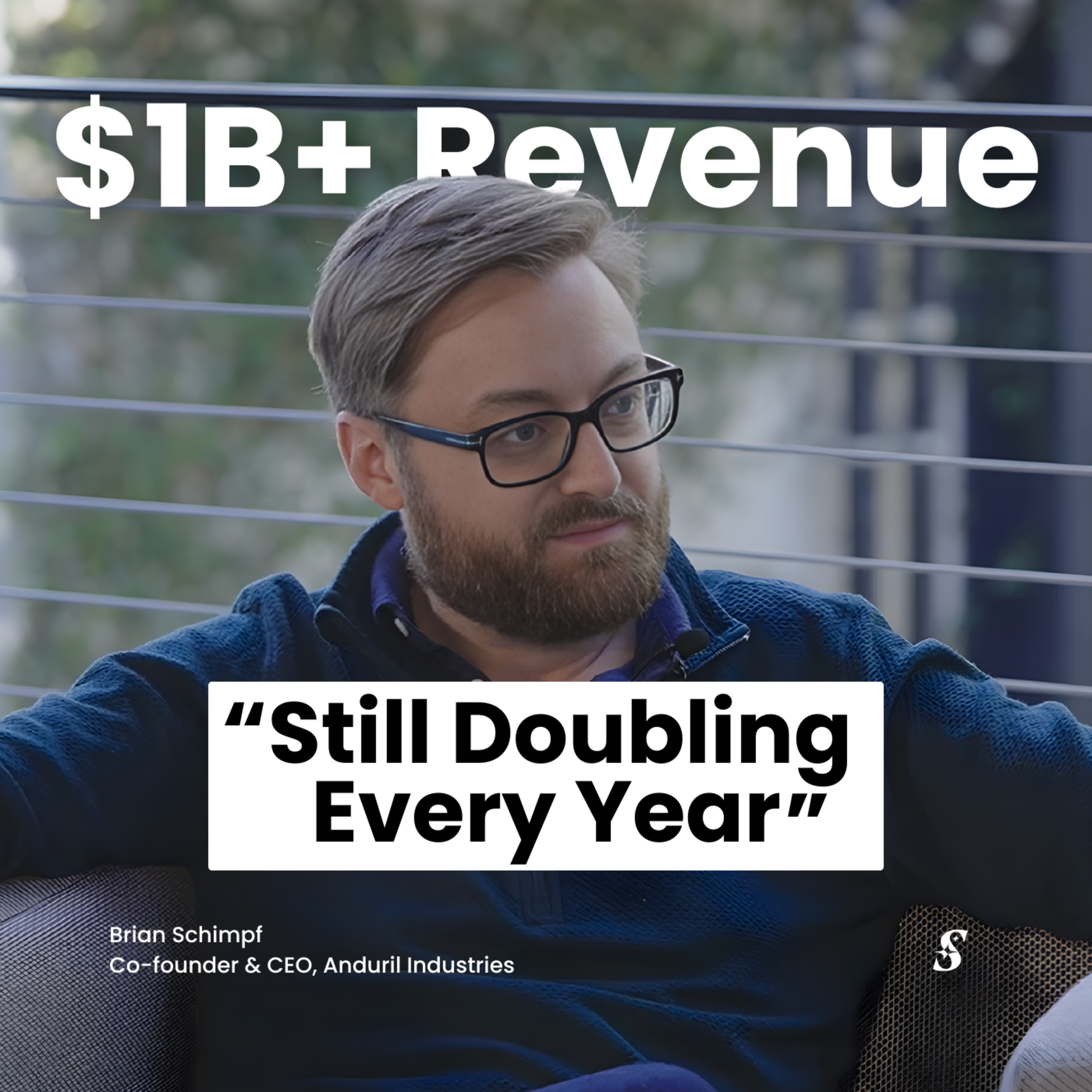
Anduril's co-founder argues America's atrophied manufacturing base is a critical national security vulnerability. The ultimate strategic advantage isn't a single advanced weapon, but the ability to mass-produce "tens of thousands of things" efficiently. Re-industrializing is therefore a core pillar of modern defense strategy.