Get your free personalized podcast brief
We scan new podcasts and send you the top 5 insights daily.
Despite overtaking Tesla, BYD's growth faces significant threats. Domestically, China is reducing EV purchase tax exemptions, potentially dampening demand. Globally, the influx of cheap Chinese EVs is likely to trigger protectionist trade barriers in key markets like the EU, limiting export growth.

Related Insights
Ford's massive write-down and scrapping of the F-150 Lightning signals a critical vulnerability in the EV market. The business case for many EVs has relied heavily on government subsidies and mandates, not standalone profitability. As these supports disappear, the weak underlying economics are forcing automakers into dramatic pivots.

While the loss of the tax credit will hurt sales short-term, it also removes the "government mandate" attack line used by politicians. This forces EVs to be judged as just another car, allowing them to compete on their own merits like lower operating costs and better performance.

Intended to help struggling European automakers, the EU's decision to relax its ban on petrol cars creates a vulnerability. This policy shift may inadvertently benefit Chinese manufacturers, whose popular hybrid vehicles are gaining significant market share in Europe and are not subject to the same hefty tariffs as pure EVs.
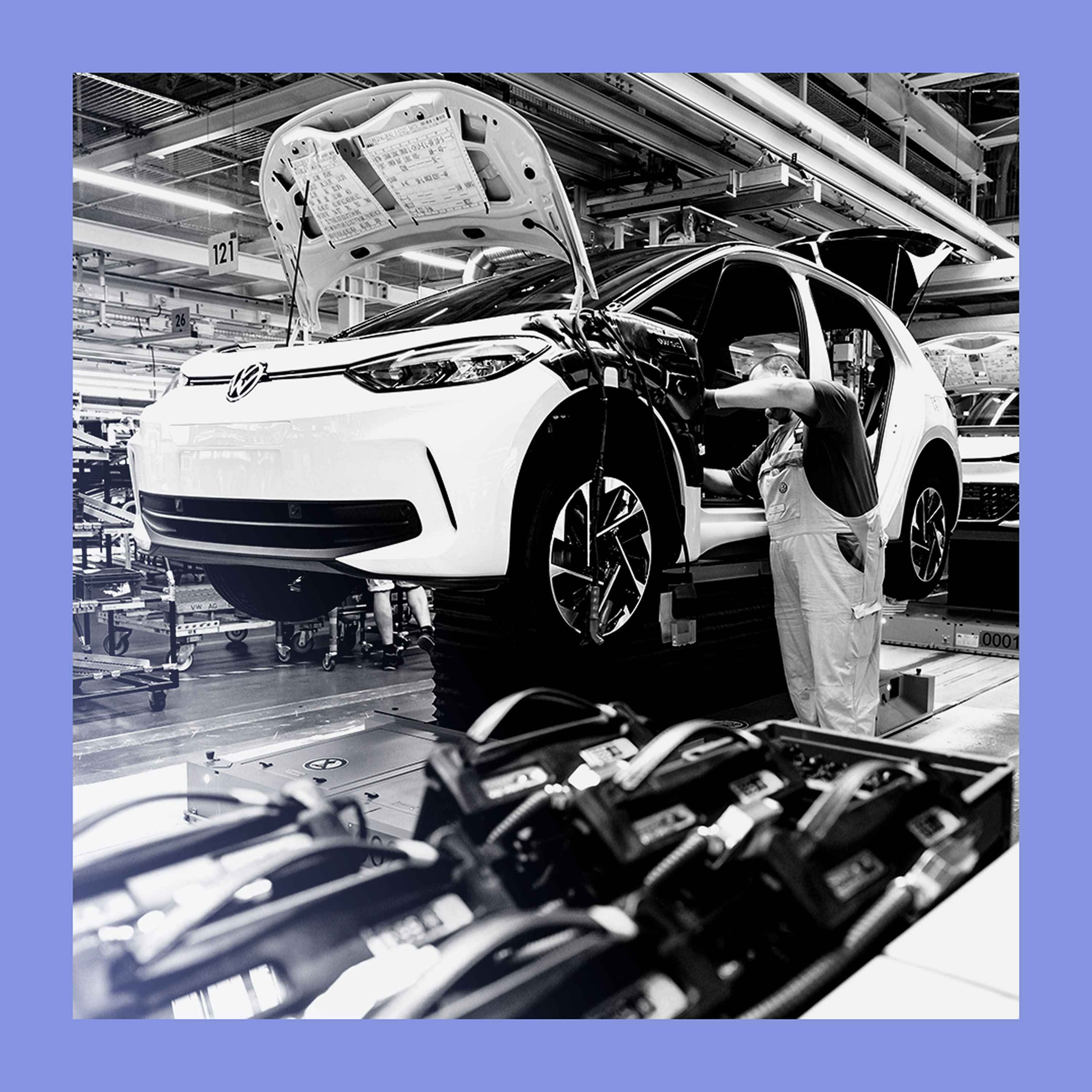
Tesla's cheaper Model 3 and Y are a downgrade and cost more than previous premium versions after tax credits expired. This signals weakening value as Chinese competitors like BYD offer comparable EVs for a fraction of the price, intensifying market pressure.

Uber's CEO argues China's EV dominance is a product of a unique hybrid model. The government sets a top-down strategic goal, but then over 100 domestic companies engage in "brutal," bottoms-up competition. The winners, like BYD, emerge battle-tested and highly innovative.

China is restricting exports of essential rare earth minerals and EV battery manufacturing equipment. This is a strategic move to protect its global dominance in these critical industries, leveraging the fact that other countries have outsourced environmentally harmful mining to them for decades.

China's economic structure, which funnels state-backed capital into sectors like EVs, inherently creates overinvestment and excess capacity. This distorted cost of capital leads to hyper-competitive industries, making it difficult for even successful companies to generate predictable, growing returns for shareholders.

European automakers, heavily invested in combustion engines and hampered by regulations that stifle new entrants, are ill-equipped to compete with China's cheaper, superior electric vehicles. This creates an existential threat to a cornerstone of Europe's industrial economy.
The credit's requirements for North American manufacturing and sourcing from trade partners were designed to counter China's dominance in the EV supply chain. Its elimination undermines this strategic goal, leaving tariffs as the primary, less effective tool.
Without government incentives to offset high costs, American carmakers like Ford are now forced to pursue radical manufacturing innovations and smaller vehicle platforms, directly citing Chinese competitors like BYD as the model for profitable, affordable EVs.