Get your free personalized podcast brief
We scan new podcasts and send you the top 5 insights daily.
European automakers, heavily invested in combustion engines and hampered by regulations that stifle new entrants, are ill-equipped to compete with China's cheaper, superior electric vehicles. This creates an existential threat to a cornerstone of Europe's industrial economy.
Related Insights
Intended to help struggling European automakers, the EU's decision to relax its ban on petrol cars creates a vulnerability. This policy shift may inadvertently benefit Chinese manufacturers, whose popular hybrid vehicles are gaining significant market share in Europe and are not subject to the same hefty tariffs as pure EVs.
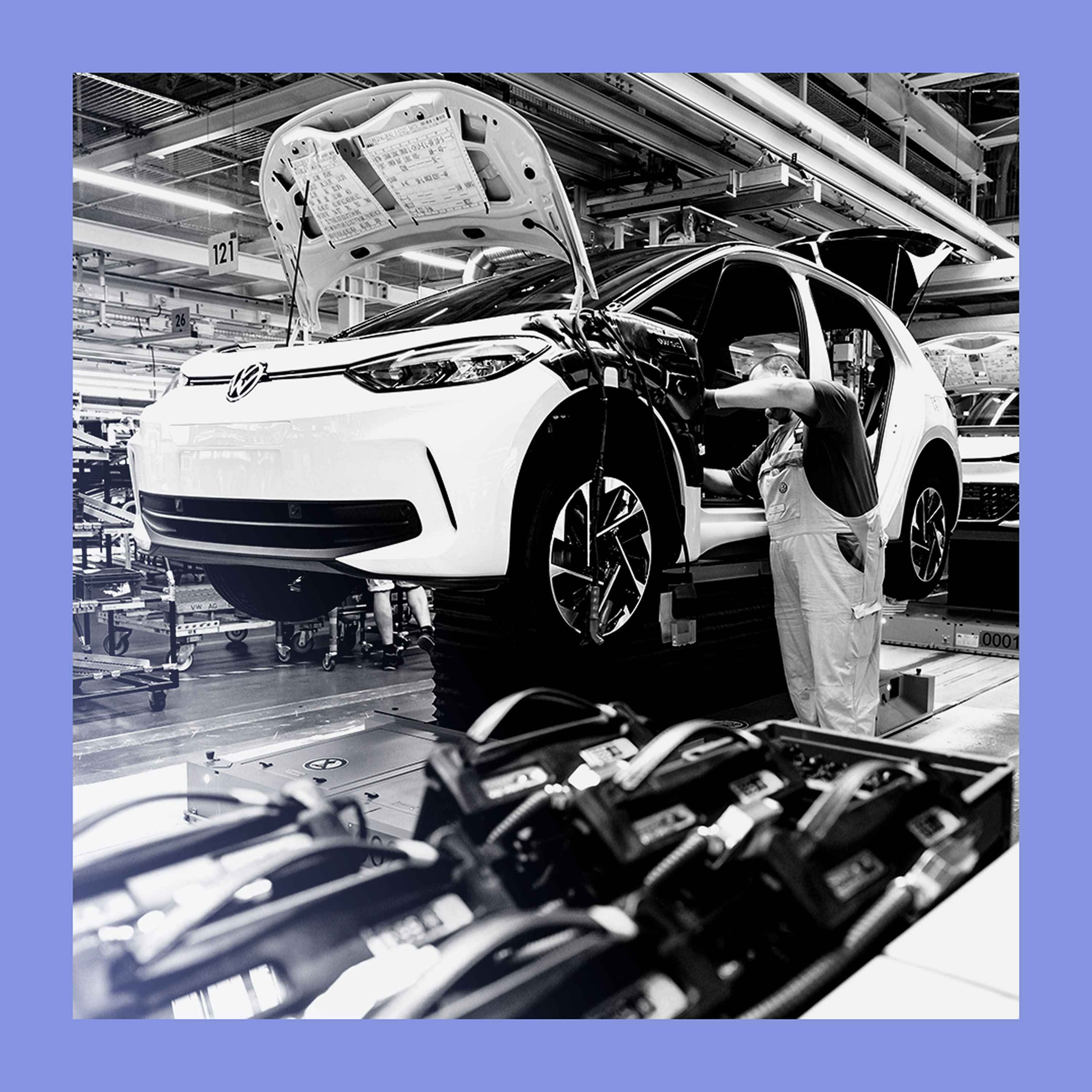
German automaker Volkswagen can now develop and build an electric vehicle in China for half the cost of doing so elsewhere. This shift from simple manufacturing to localized R&D—the "innovate in China for the world" model—signifies a dangerous hollowing out of core industrial capabilities and high-value jobs in Western economies.

Unlike the U.S. government's recent strategy of backing single "champions" like Intel, China's successful industrial policy in sectors like EVs involves funding numerous competing companies. This state-fostered domestic competition is a key driver of their rapid innovation and market dominance.

Uber's CEO argues China's EV dominance is a product of a unique hybrid model. The government sets a top-down strategic goal, but then over 100 domestic companies engage in "brutal," bottoms-up competition. The winners, like BYD, emerge battle-tested and highly innovative.

The Nexperia dispute reveals China's strategic leverage. By controlling the supply of mid-tech chips for basic car functions like airbags and windows, Beijing can cripple major European automakers, demonstrating its influence over global supply chains beyond just high-end tech.
A persistent headwind for European markets is the dual impact of rising Chinese competition and weak demand from China. For the past several years, this single factor has been responsible for a staggering 60% to 90% of all earnings downgrades across the European index, particularly hitting sectors like chemicals and autos.

RJ Scaringe argues that while Chinese EV costs are low due to economic factors like cheap capital and labor, their more significant advantage is their advanced, clean-sheet software and electronics platforms—an area where legacy automakers are far behind and which tariffs cannot easily address.

Europe faces a critical conflict between its ambitious net-zero targets and its economic health. High energy costs and a heavy regulatory burden, designed without market realities in mind, are causing companies to close facilities or move investment to the U.S., forcing a difficult reassessment.
The global energy transition is also a geopolitical race. China is strategically positioning itself to dominate 21st-century technologies like solar and EVs. In contrast, the U.S. is hampered by a legacy mindset that equates economic growth with fossil fuels, risking its future competitiveness.

Without government incentives to offset high costs, American carmakers like Ford are now forced to pursue radical manufacturing innovations and smaller vehicle platforms, directly citing Chinese competitors like BYD as the model for profitable, affordable EVs.
