Get your free personalized podcast brief
We scan new podcasts and send you the top 5 insights daily.
Traditional product metrics like DAU are meaningless for autonomous AI agents that operate without user interaction. Product teams must redefine success by focusing on tangible business outcomes. Instead of tracking agent usage, measure "support tickets automatically closed" or "workflows completed."

Related Insights
To discover high-value AI use cases, reframe the problem. Instead of thinking about features, ask, "If my user had a human assistant for this workflow, what tasks would they delegate?" This simple question uncovers powerful opportunities where agents can perform valuable jobs, shifting focus from technology to user value.
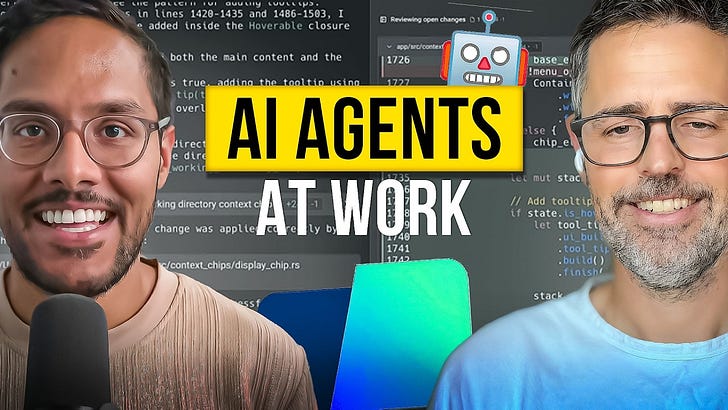
A key metric for AI coding agent performance is real-time sentiment analysis of user prompts. By measuring whether users say 'fantastic job' or 'this is not what I wanted,' teams get an immediate signal of the agent's comprehension and effectiveness, which is more telling than lagging indicators like bug counts.

The current AI hype cycle can create misleading top-of-funnel metrics. The only companies that will survive are those demonstrating strong, above-benchmark user and revenue retention. It has become the ultimate litmus test for whether a product provides real, lasting value beyond the initial curiosity.

To evaluate AI's role in building relationships, marketers must look beyond transactional KPIs. Leading indicators of success include sustained engagement, customers volunteering more information, and recommending the experience to others. These metrics quantify brand trust and empathy—proving the brand is earning belief, not just attention.

Effective AI moves beyond a simple monitoring dashboard by translating intelligence directly into action. It should accelerate work tasks, suggest marketing content, identify product issues, and triage service tickets, embedding it as a strategic driver rather than a passive analytics tool.

The evolution of Tesla's Full Self-Driving offers a clear parallel for enterprise AI adoption. Initially, human oversight and frequent "disengagements" (interventions) will be necessary. As AI agents learn, the rate of disengagement will drop, signaling a shift from a co-pilot tool to a fully autonomous worker in specific professional domains.
Open and click rates are ineffective for measuring AI-driven, two-way conversations. Instead, leaders should adopt new KPIs: outcome metrics (e.g., meetings booked), conversational quality (tracking an agent's 'I don't know' rate to measure trust), and, ultimately, customer lifetime value.

The transition from AI as a productivity tool (co-pilot) to an autonomous agent integrated into team workflows represents a quantum leap in value creation. This shift from efficiency enhancement to completing material tasks independently is where massive revenue opportunities lie.

The paradigm shift with AI agents is from "tools to click buttons in" (like CRMs) to autonomous systems that work for you in the background. This is a new form of productivity, akin to delegating tasks to a team member rather than just using a better tool yourself.

Anthropic's data reveals users are moving beyond AI as a creative partner and are now delegating entire tasks. This "directive automation" behavior jumped from 27% to 39% of conversations in just nine months, signaling rapidly growing trust in AI for autonomous work completion.