Get your free personalized podcast brief
We scan new podcasts and send you the top 5 insights daily.
Anthropic's data reveals users are moving beyond AI as a creative partner and are now delegating entire tasks. This "directive automation" behavior jumped from 27% to 39% of conversations in just nine months, signaling rapidly growing trust in AI for autonomous work completion.
Related Insights
The evolution of 'agentic AI' extends beyond content generation to automating the connective tissue of business operations. Its future value is in initiating workflows that span departments, such as kickstarting creative briefs for marketing, creating product backlogs from feedback, and generating service tickets, streamlining operational handoffs.

AI's impact on coding is unfolding in stages. Phase 1 was autocomplete (Copilot). We're now in Phase 2, defined by interactive agents where developers orchestrate tasks with prompts. Phase 3 will be true automation, where agents independently handle complete, albeit simpler, development workflows without direct human guidance.
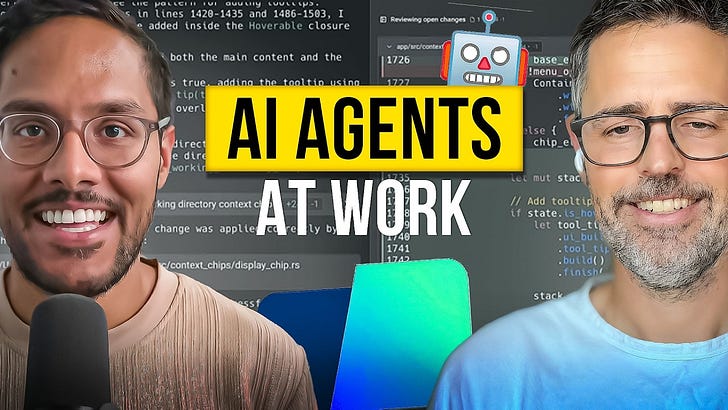
The most significant productivity gains come from applying AI to every stage of development, including research, planning, product marketing, and status updates. Limiting AI to just code generation misses the larger opportunity to automate the entire engineering process.

Julian Schrittwieser, a key researcher from Anthropic and formerly Google DeepMind, forecasts that extrapolating current AI progress suggests models will achieve full-day autonomy and match human experts across many industries by mid-2026. This timeline is much shorter than many anticipate.
Traditional product metrics like DAU are meaningless for autonomous AI agents that operate without user interaction. Product teams must redefine success by focusing on tangible business outcomes. Instead of tracking agent usage, measure "support tickets automatically closed" or "workflows completed."

The evolution of Tesla's Full Self-Driving offers a clear parallel for enterprise AI adoption. Initially, human oversight and frequent "disengagements" (interventions) will be necessary. As AI agents learn, the rate of disengagement will drop, signaling a shift from a co-pilot tool to a fully autonomous worker in specific professional domains.
A key strategy for labs like Anthropic is automating AI research itself. By building models that can perform the tasks of AI researchers, they aim to create a feedback loop that dramatically accelerates the pace of innovation.
By handling repetitive production work, AI gives designers bandwidth to focus on high-impact, creative problems. This includes innovating on previously overlooked details like loading states, which have new importance in AI-driven products for building user trust.

The transition from AI as a productivity tool (co-pilot) to an autonomous agent integrated into team workflows represents a quantum leap in value creation. This shift from efficiency enhancement to completing material tasks independently is where massive revenue opportunities lie.

The paradigm shift with AI agents is from "tools to click buttons in" (like CRMs) to autonomous systems that work for you in the background. This is a new form of productivity, akin to delegating tasks to a team member rather than just using a better tool yourself.