Get your free personalized podcast brief
We scan new podcasts and send you the top 5 insights daily.
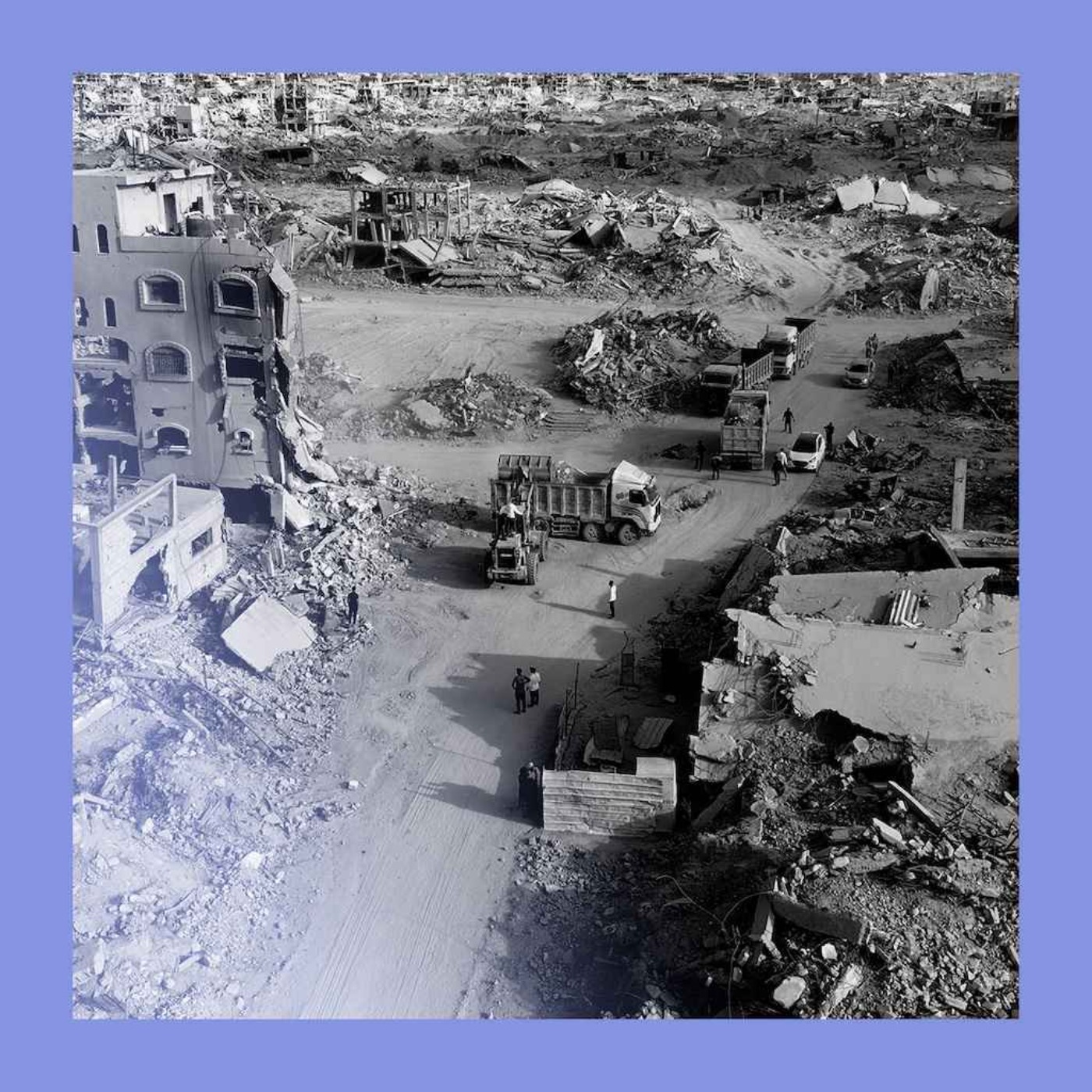
Despite a comprehensive Egyptian-led rebuilding plan, wealthy Gulf monarchies refuse to provide the necessary $55 billion. They will not invest funds that could be destroyed in a future conflict, making Hamas's disarmament a non-negotiable prerequisite for any major rebuilding effort to begin.
Related Insights
Nations increasingly use sanctions and tariffs as weapons, risking a destructive race to the bottom. A new international doctrine is needed to establish rules of engagement for economic statecraft, much like the Geneva Conventions govern military conflict, to preserve the global economy.

Unlike predecessors who acted as "Israel's lawyer," Trump's administration applied coercive pressure to both Israeli and Hamas leadership. According to diplomats, this impartial approach was the key to brokering a peace deal where past efforts failed.

The only historically effective method to resolve deep-rooted religious and ideological conflicts is to shift focus toward shared economic prosperity. Alliances like the Abraham Accords create tangible incentives for peace that ideology alone cannot, by making life demonstrably better for citizens.

For nations facing acute liquidity stress, such as Maldives with its large 2026 bond maturity, traditional economic analysis is insufficient. The key mitigating factor is the expectation of "extraordinary bilateral support" from allied nations. This geopolitical safety net is crucial for bridging financing gaps where reserves alone would fail.

The primary obstacle to rebuilding Gaza isn't just funding but the logistics of clearing 55-60 million tons of debris. Engineers estimate this initial step alone could take over six years, far longer than the six months proposed in reconstruction plans, making immediate rebuilding impossible.
Viewing the conflict as two rational sides in a misunderstanding is flawed. Both sides see the other as an existential threat and are willing to use extreme violence to achieve their goals. This reframes the narrative from a political dispute to a primal, violent tribal conflict where both sides see themselves as righteous.

The viability of a two-state solution depends entirely on the nature of the new Palestinian government. A state cannot achieve stability if it is run by a terrorist organization like Hamas. The international community's push for statehood is meaningless without addressing the internal governance that perpetuates violence.

The loss of US aid didn't just defund specific projects; it dismantled an entire operational 'architecture.' The collapse of shared resources, like UN-funded logistics and transportation, created cascading failures across the sector, showing how the entire humanitarian value chain can depend on a single keystone funder.

Geopolitical solutions based on earthly incentives like economic development are bound to fail when dealing with an ideology focused on martyrdom. If people believe the ultimate goal is paradise after death, they won't compromise for a better life for their children now.

Regional stability is an economic necessity for oil-rich nations. Peace allows them to accelerate monetization of their finite oil reserves and reinvest the capital into diversified, future-proof economies like AI and tourism before alternative energy devalues their primary asset.