Get your free personalized podcast brief
We scan new podcasts and send you the top 5 insights daily.
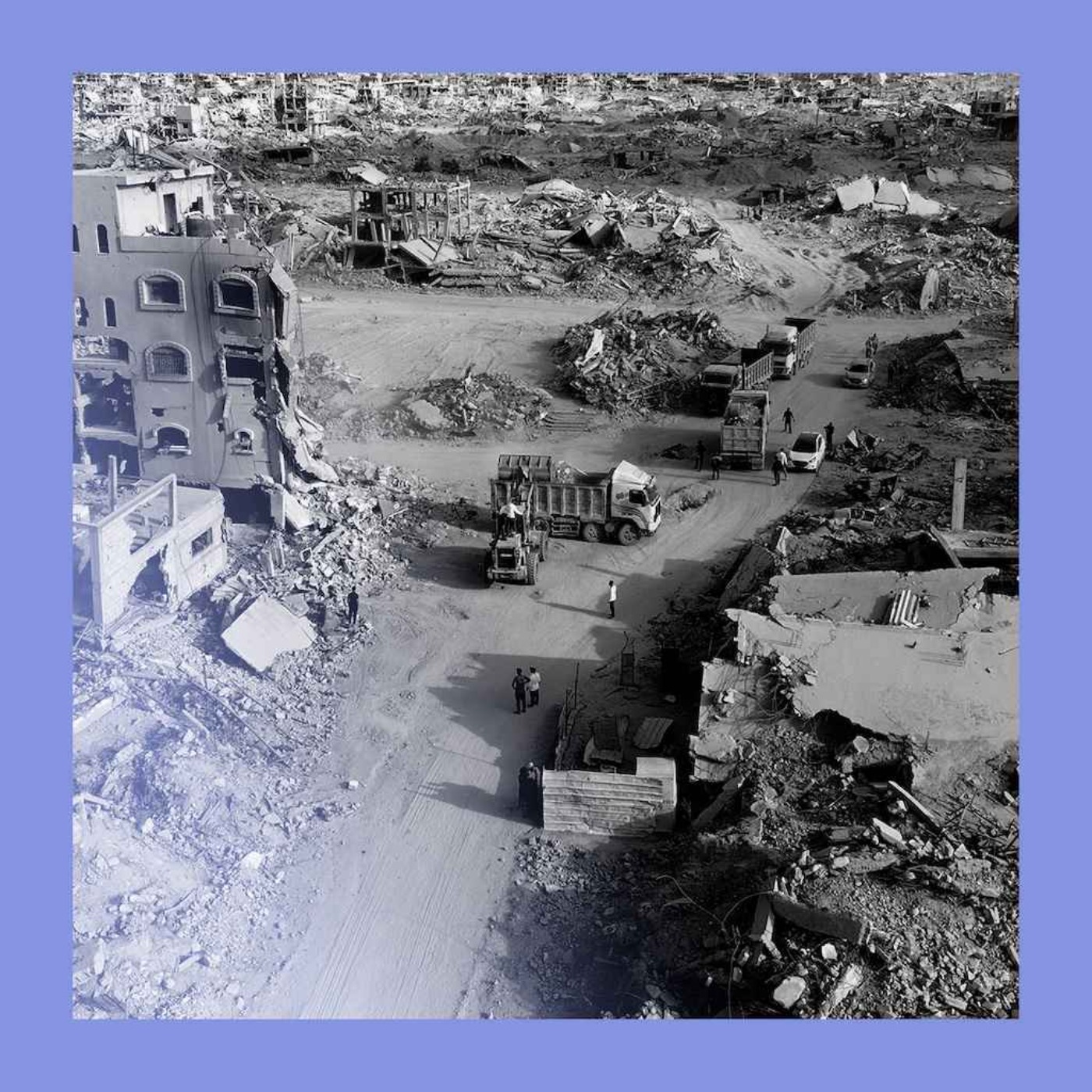
The primary obstacle to rebuilding Gaza isn't just funding but the logistics of clearing 55-60 million tons of debris. Engineers estimate this initial step alone could take over six years, far longer than the six months proposed in reconstruction plans, making immediate rebuilding impossible.
Related Insights
Despite a comprehensive Egyptian-led rebuilding plan, wealthy Gulf monarchies refuse to provide the necessary $55 billion. They will not invest funds that could be destroyed in a future conflict, making Hamas's disarmament a non-negotiable prerequisite for any major rebuilding effort to begin.
Even as a massive LNG supply glut promises lower prices, emerging Asian markets lack the physical capacity to absorb it. A severe shortage of regasification terminals, storage, and gas-fired power plants creates a hard ceiling on demand growth, meaning cheap gas alone is not enough to clear the market.

The promise of factory efficiency in prefab housing is often erased by new costs. Modules must be over-engineered to survive road transport—a primary design constraint—and then require complex, costly on-site work to connect, negating initial savings.

The collapse of Katerra, which burned through $2-3 billion in VC funding, shows that simply applying factory models to construction is not enough. The startup's failure highlights that deep, systemic issues like logistics, regulation, and on-site complexity cannot be solved by capital alone.
Unlike lightweight goods, heavy housing modules are uneconomical to ship more than a day's drive. This physical constraint prevents the creation of massive, centralized factories, forcing a model of smaller, distributed plants that cannot achieve the same economies of scale.
When a team presents a timeline that feels instinctively too long, trust that gut feeling. It likely signals an over-engineered solution. Complex systems never become simple; they only breed more complexity, causing timelines to expand endlessly. It's better to reset the team or the approach early on.

Developed nations are building massive infrastructure projects like data centers, yet the construction workforce is aging and shrinking. This creates a critical bottleneck, as every project fundamentally relies on excavator operators—a role younger generations are avoiding.

Contrary to most industries that see technological gains, housing construction has become less efficient. This stagnation is a key, often overlooked driver of housing affordability issues, as the fundamental cost to build has not decreased with technology.
The viability of a two-state solution depends entirely on the nature of the new Palestinian government. A state cannot achieve stability if it is run by a terrorist organization like Hamas. The international community's push for statehood is meaningless without addressing the internal governance that perpetuates violence.

The loss of US aid didn't just defund specific projects; it dismantled an entire operational 'architecture.' The collapse of shared resources, like UN-funded logistics and transportation, created cascading failures across the sector, showing how the entire humanitarian value chain can depend on a single keystone funder.