Get your free personalized podcast brief
We scan new podcasts and send you the top 5 insights daily.
Microservices were primarily a solution for organizing human teams and managing cognitive load (Conway's Law). Since AI agents lack these limitations, the architectural rationale weakens. Companies can revert to monolithic repositories to avoid network overhead and complexity, as an AI can manage a codebase far too large for any human.

Related Insights
The core needs of AI agents—version control, testing, observability—mirror those of human developers. However, the sheer scale and speed of agentic workflows mean existing tools like Kubernetes are insufficient, requiring a fundamental reimagining of the entire infrastructure stack.

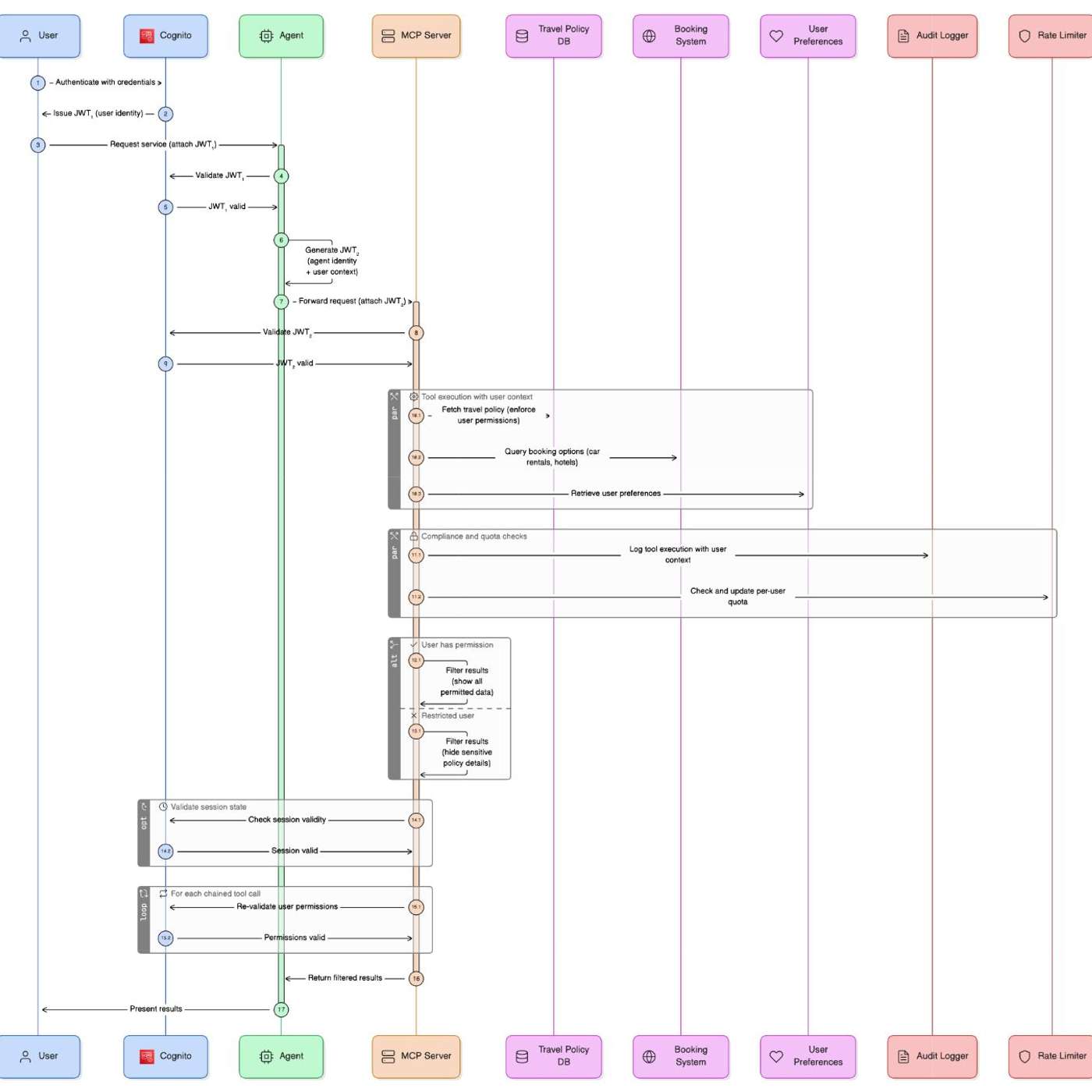
Instead of building one monolithic AI application, this architecture promotes creating smaller, specialized AI services. The Model Context Protocol (MCP) allows an AI agent to discover and use these tools on the fly, treating them like microservices rather than hardcoded functions, which enhances flexibility and scalability.
Tools like Git were designed for human-paced development. AI agents, which can make thousands of changes in parallel, require a new infrastructure layer—real-time repositories, coordination mechanisms, and shared memory—that traditional systems cannot support.

The common narrative of needing hundreds of specialized AI agents is wrong. Instead, agents are collapsing into fewer, more powerful "monorepo" systems that share a common body of knowledge, leading to deeper capabilities.

Adi chose a monorepo over the then-popular microservices architecture. This consolidated codebase made it significantly easier for AI agents to read and operate on, giving them a structural advantage years later when LLMs became viable.
The number of AI agents will soon vastly exceed human employees. This requires a fundamental shift in software development, prioritizing API-first design, reliability, and machine-to-machine interaction over traditional human-centric user interfaces.
Avoid building one AI agent to do everything. Instead, create a hierarchy with a 'manager' agent that delegates tasks to specialized sub-agents (e.g., for coding, research). This prevents context overload and performance degradation, mirroring an effective human team structure for scalable automation.

While developers leverage multiple AI agents to achieve massive productivity gains, this velocity can create incomprehensible and tightly coupled software architectures. The antidote is not less AI but more human-led structure, including modularity, rapid feedback loops, and clear specifications.

The belief that adding people to a late project makes it later (Brooks's Law) may not apply in an AI-assisted world. Early reports from OpenAI suggest that when using agents, adding more developers actually increases velocity, a potential paradigm shift for engineering management and team scaling.

Consolidating multiple applications (e.g., web, mobile, backend) into a single mono-repo gives AI agents access to a much richer, shared context. This allows them to learn from past architectural decisions and apply knowledge across different systems, significantly improving performance.
