Instead of building one monolithic AI application, this architecture promotes creating smaller, specialized AI services. The Model Context Protocol (MCP) allows an AI agent to discover and use these tools on the fly, treating them like microservices rather than hardcoded functions, which enhances flexibility and scalability.
AI agents manage vast state (history, tool results), unlike traditional web apps. Externalizing this state to a service like S3, instead of keeping it in memory, is crucial. This approach enables advanced features like handing off conversations between agents, creating robust audit trails, and facilitating AI-to-AI collaboration.
Move beyond a simple agent-tool interaction by allowing tool servers (MCP servers) to call one another. This creates sophisticated tool hierarchies for complex tasks. For instance, a primary 'booking' tool can sequentially call separate tools for policy checks, pricing, and availability, orchestrating a multi-step workflow.
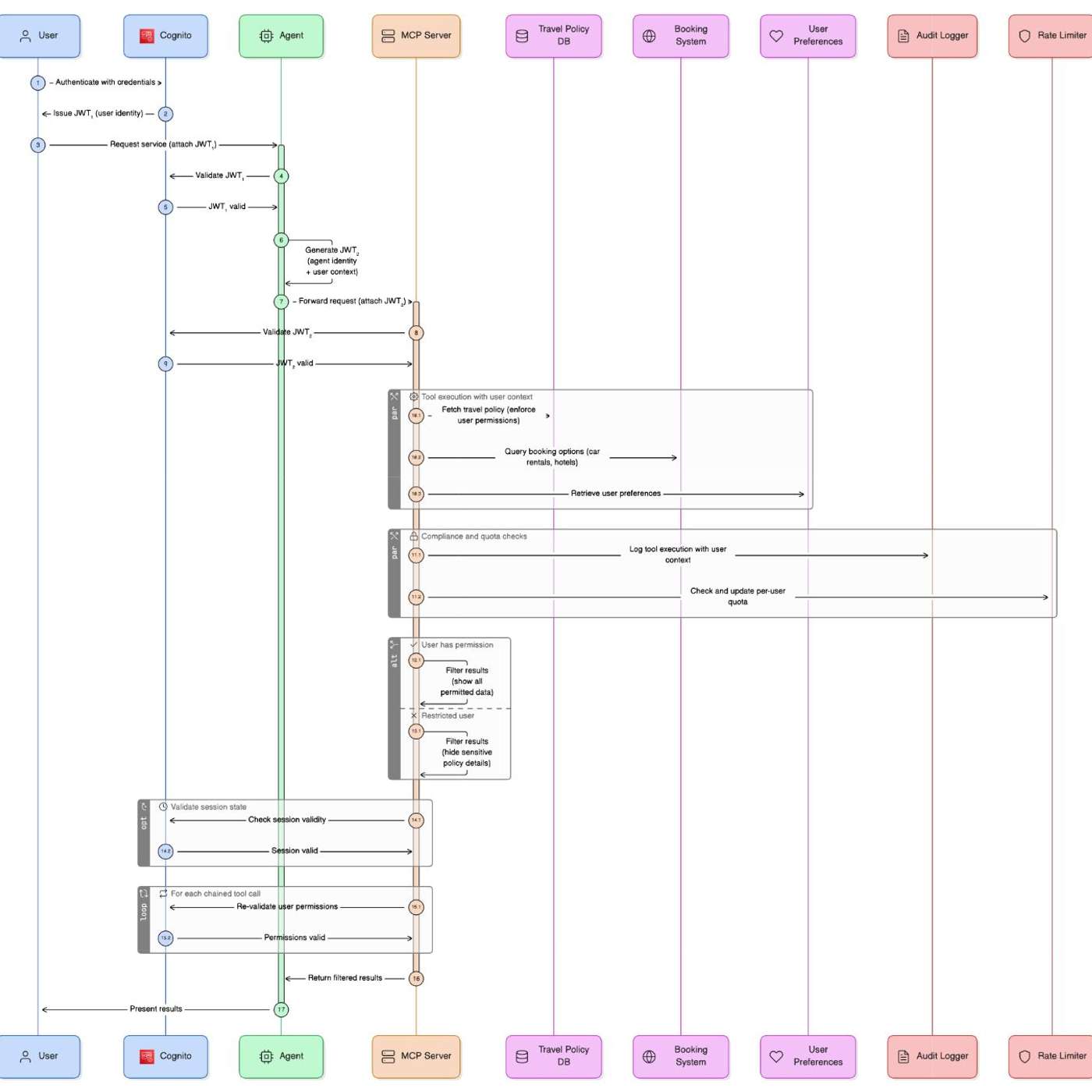
To maintain security across multiple services, a JWT propagation pattern is key. This creates a secure chain of trust where an AI agent's permissions are never inferred from its responses. Instead, the user's identity and permissions are cryptographically verified at every step of the entire request chain, ensuring robust security.