Get your free personalized podcast brief
We scan new podcasts and send you the top 5 insights daily.
The number of AI agents will soon vastly exceed human employees. This requires a fundamental shift in software development, prioritizing API-first design, reliability, and machine-to-machine interaction over traditional human-centric user interfaces.

Related Insights
As AI agents become the primary 'users' of software, design priorities must change. Optimization will move away from visual hierarchy for human eyes and toward structured, machine-legible systems that agents can reliably interpret and operate, making function more important than form.
The next generation of software may lack traditional user interfaces. Instead, they will be 'API-first' or 'agent-first,' integrating directly into existing workflows like Slack or email. Software will increasingly 'visit the user' rather than requiring the user to visit a dashboard.

Unlike humans, AI agents are not influenced by UI polish. They will select backend systems based on objective metrics like durability, cost parameters, and reliability. This forces software companies to compete on the core quality of their systems rather than surface-level aesthetics.
To avoid becoming a valueless database that AI agents simply crawl, SaaS platforms must fundamentally change. The pivot is from being a UI for human data entry to becoming an orchestration layer where humans and agents collaborate, with agents becoming the primary focus of the user experience.

AI agents are becoming the dominant source of internet traffic, shifting the paradigm from human-centric UI to agent-friendly APIs. Developers optimizing for human users may be designing for a shrinking minority, as automated systems increasingly consume web services.

As users increasingly rely on AI agents, traditional graphical user interfaces will become obsolete. SaaS products must evolve to offer conversational interfaces that other agents can interact with directly. The primary user will shift from a human clicking buttons to another AI sending messages.
Unlike previous technologies that integrated into existing workflows, AI agents require us to fundamentally re-engineer our work processes to make them effective. Early adopters who adapt their operations to how agents "think" will gain compounding advantages over competitors.
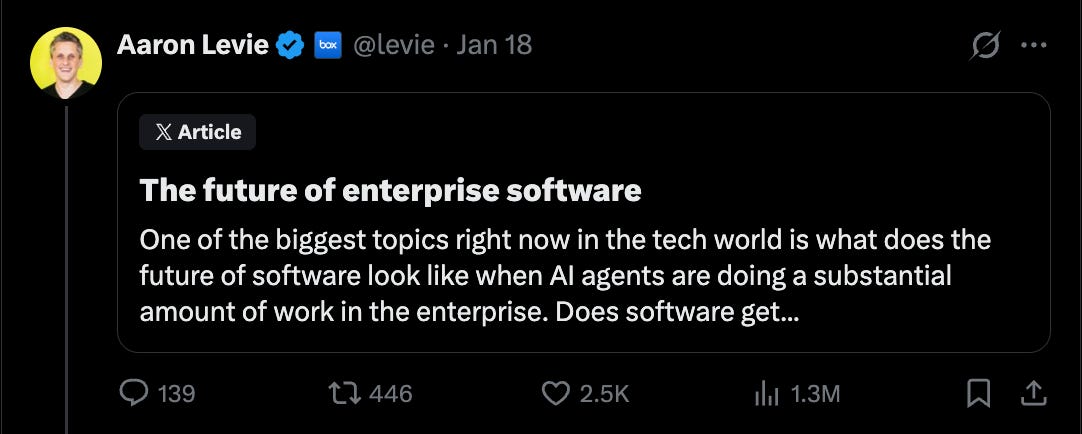
The rise of autonomous agents like OpenClaw dictates that the future of software is API-first. This architecture is necessary for agents to perform tasks programmatically. Crucially, it must also support human interaction for verification, collaboration, and oversight, creating a hybrid workflow between people and AI agents.

A new software paradigm, "agent-native architecture," treats AI as a core component, not an add-on. This progresses in levels: the agent can do any UI action, trigger any backend code, and finally, perform any developer task like writing and deploying new code, enabling user-driven app customization.

The future of software isn't just AI-powered features. It's a fundamental shift from tools that assist humans to autonomous agents that perform tasks. Human roles will evolve from *doing* the work to *orchestrating* thousands of these agents.