Get your free personalized podcast brief
We scan new podcasts and send you the top 5 insights daily.
Instead of building one monolithic AI application, this architecture promotes creating smaller, specialized AI services. The Model Context Protocol (MCP) allows an AI agent to discover and use these tools on the fly, treating them like microservices rather than hardcoded functions, which enhances flexibility and scalability.
Related Insights
Instead of interacting with a single LLM, users will increasingly call an API that represents a "system as a model." Behind the scenes, this triggers a complex orchestration of multiple specialized models, sub-agents, and tools to complete a task, while maintaining a simple user experience.
The idea of a single orchestration hub is outdated. A more effective model is federated, where specialized agents (e.g., an agent that embodies brand guidelines 'as code') are exposed as reusable services. This allows different departments like sales, marketing, and HR to plug into the same expertise.
The path to robust AI applications isn't a single, all-powerful model. It's a system of specialized "sub-agents," each handling a narrow task like context retrieval or debugging. This architecture allows for using smaller, faster, fine-tuned models for each task, improving overall system performance and efficiency.

To make his personal AI development manageable, Steve Newman structures his work as a suite of microservices. Each of his 15+ apps is its own project with a separate GitHub repo and database. This modular approach keeps the context window for the AI coding agent small and focused, which he believes is crucial for its effectiveness.

Using a composable, 'plug and play' architecture allows teams to build specialized AI agents faster and with less overhead than integrating a monolithic third-party tool. This approach enables the creation of lightweight, tailored solutions for niche use cases without the complexity of external API integrations, containing the entire workflow within one platform.

The most powerful AI systems consist of specialized agents with distinct roles (e.g., individual coaching, corporate strategy, knowledge base) that interact. This modular approach, exemplified by the Holmes, Mycroft, and 221B agents, creates a more robust and scalable solution than a single, all-knowing agent.

Instead of building monolithic agents, create modular sub-workflows that function as reusable 'tools' (e.g., an 'image-to-video' tool). These can be plugged into any number of different agents. This software engineering principle of modularity dramatically speeds up development and increases scalability across your automation ecosystem.

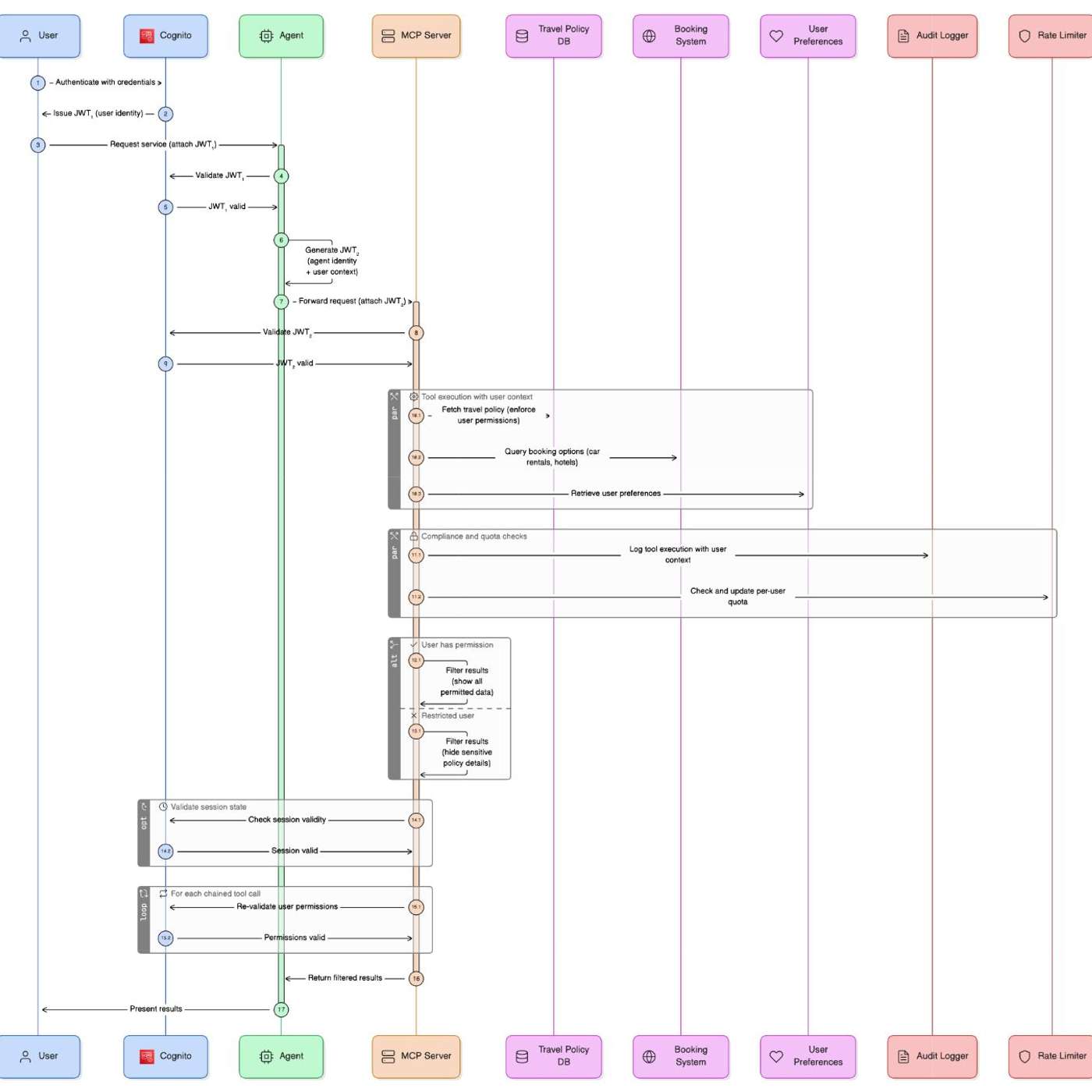
Move beyond a simple agent-tool interaction by allowing tool servers (MCP servers) to call one another. This creates sophisticated tool hierarchies for complex tasks. For instance, a primary 'booking' tool can sequentially call separate tools for policy checks, pricing, and availability, orchestrating a multi-step workflow.
MCP provides a standardized way to connect AI models with external tools, actions, and data. It functions like an API layer, enabling agents in environments like Claude Code or Cursor to pull analytics data from Amplitude, file tickets in Linear, or perform other external actions seamlessly.

A major architectural shift is underway: instead of embedding AI features into a product, companies should treat AI as an external agent that uses the product via a CLI or API. This simplifies integration and better aligns with AI's capabilities.