Get your free personalized podcast brief
We scan new podcasts and send you the top 5 insights daily.
Consolidating multiple applications (e.g., web, mobile, backend) into a single mono-repo gives AI agents access to a much richer, shared context. This allows them to learn from past architectural decisions and apply knowledge across different systems, significantly improving performance.

Related Insights
The next evolution beyond a single agent like Autoresearch is a platform for agent swarms to collaborate on a single codebase. AgentHub is conceptualized as a "GitHub for agents," designed for a sprawling, multi-directional development process.

Instead of using siloed note-taking apps, structure all your knowledge—code, writing, proposals, notes—into a single GitHub monorepo. This creates a unified, context-rich environment that any AI coding assistant can access. This approach avoids vendor lock-in and provides the AI with a comprehensive "second brain" to work from.

Moving PRDs and other product artifacts from Confluence or Notion directly into the codebase's repository gives AI coding assistants persistent, local context. This adjacency means the AI doesn't need external tool access (like an MCP) to understand the 'why' behind the code, leading to better suggestions and iterations.
OpenAI structures its repositories to be a complete, self-contained knowledge base for AI agents. All project artifacts—design docs, historical implementation plans, and even text versions of external library documentation—are checked in, allowing the agent to find any needed context via simple search.

Deploying AI agents in isolated business functions is a missed opportunity. True enterprise value is unlocked when agents share context (e.g., between sales and maintenance), enabling optimization across the entire organization, not just within a silo.

To make his personal AI development manageable, Steve Newman structures his work as a suite of microservices. Each of his 15+ apps is its own project with a separate GitHub repo and database. This modular approach keeps the context window for the AI coding agent small and focused, which he believes is crucial for its effectiveness.

The AI's power stems from creating a holistic knowledge graph. It integrates deep codebase analysis—including regressions and fixes—with contextual data from project management and support tools like Jira and Zendesk. This mimics how a top-tier human engineer synthesizes disparate information to solve problems.
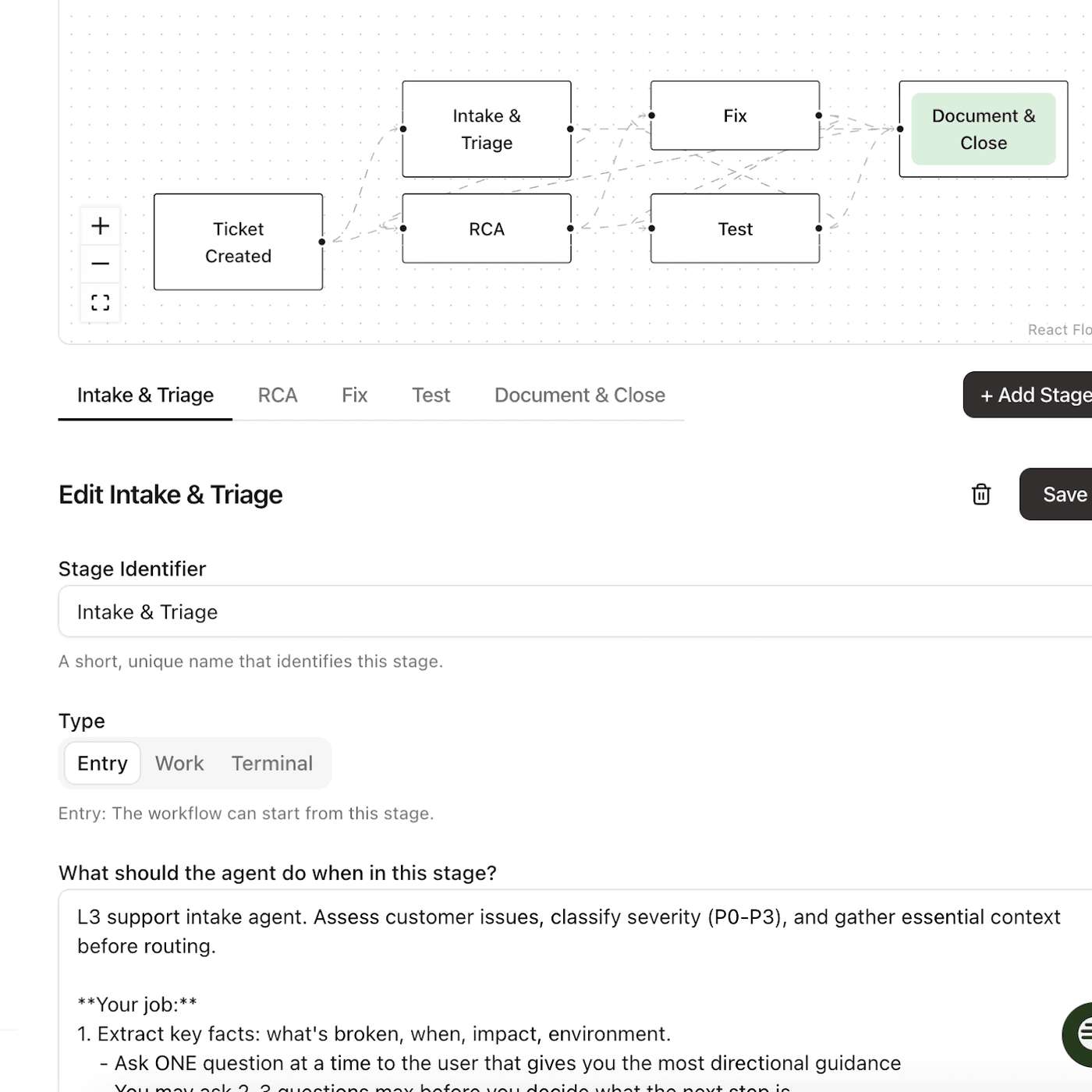
Instead of siloing agents, create a central memory file that all specialized agents can read from and write to. This ensures a coding agent is aware of marketing initiatives or a sales agent understands product updates, creating a cohesive, multi-agent system.
A new software paradigm, "agent-native architecture," treats AI as a core component, not an add-on. This progresses in levels: the agent can do any UI action, trigger any backend code, and finally, perform any developer task like writing and deploying new code, enabling user-driven app customization.

AI agents are simply 'context and actions.' To prevent hallucination and failure, they must be grounded in rich context. This is best provided by a knowledge graph built from the unique data and metadata collected across a platform, creating a powerful, defensible moat.
