Get your free personalized podcast brief
We scan new podcasts and send you the top 5 insights daily.
Our cognitive style shifts with the weather. Sunshine encourages broad, creative thinking and social engagement, whereas cloudy or rainy conditions narrow our focus, making us more careful, analytical, and detail-oriented. This directly impacts decision-making and evaluation.

Related Insights
Breakthroughs often occur in routine environments like the shower or during a walk. These activities promote what psychologists call "divergent thinking," where the relaxed mind makes novel connections. This scientific process can be intentionally triggered to solve complex problems and foster creativity.

Constant productivity keeps the brain in a high-frequency "beta" state, which stifles creativity. To solve complex problems, you must intentionally shift to a slower "alpha" state by disconnecting. This is achieved through simple, non-distracting activities like walking in nature without your phone.

Don't use the same lighting all day. In the first 8-9 hours after waking, use bright overhead lights to maximize alertness-promoting chemicals like dopamine. In the afternoon (9-16 hours after waking), dim the overhead lights to support serotonin release, which is better for creative or abstract work. This syncs your environment with your natural neurochemical cycles.

Our brains are most creative in a wandering, 'diffuse' state, like on a long walk. Constant phone checking keeps us in a 'focused' state, preventing the background connections that lead to novel ideas. We spend our days in a permanent state of distraction, inhibiting true creativity.

The 'Cathedral Effect' shows that your physical environment biases your cognitive state. High ceilings or open skies promote abstract, creative thinking. Conversely, lower ceilings facilitate focused, detailed, and analytical work. You can leverage this by choosing different rooms or even wearing a brimmed hat to create a lower 'virtual' ceiling for detail-oriented tasks.
Conscious thought is like a spotlight, precise and focused, good for analytical tasks. Unconscious thought is like a floodlight, with a vast capacity to process enormous amounts of information, make wild associations, and connect disparate ideas, making it more inherently creative.
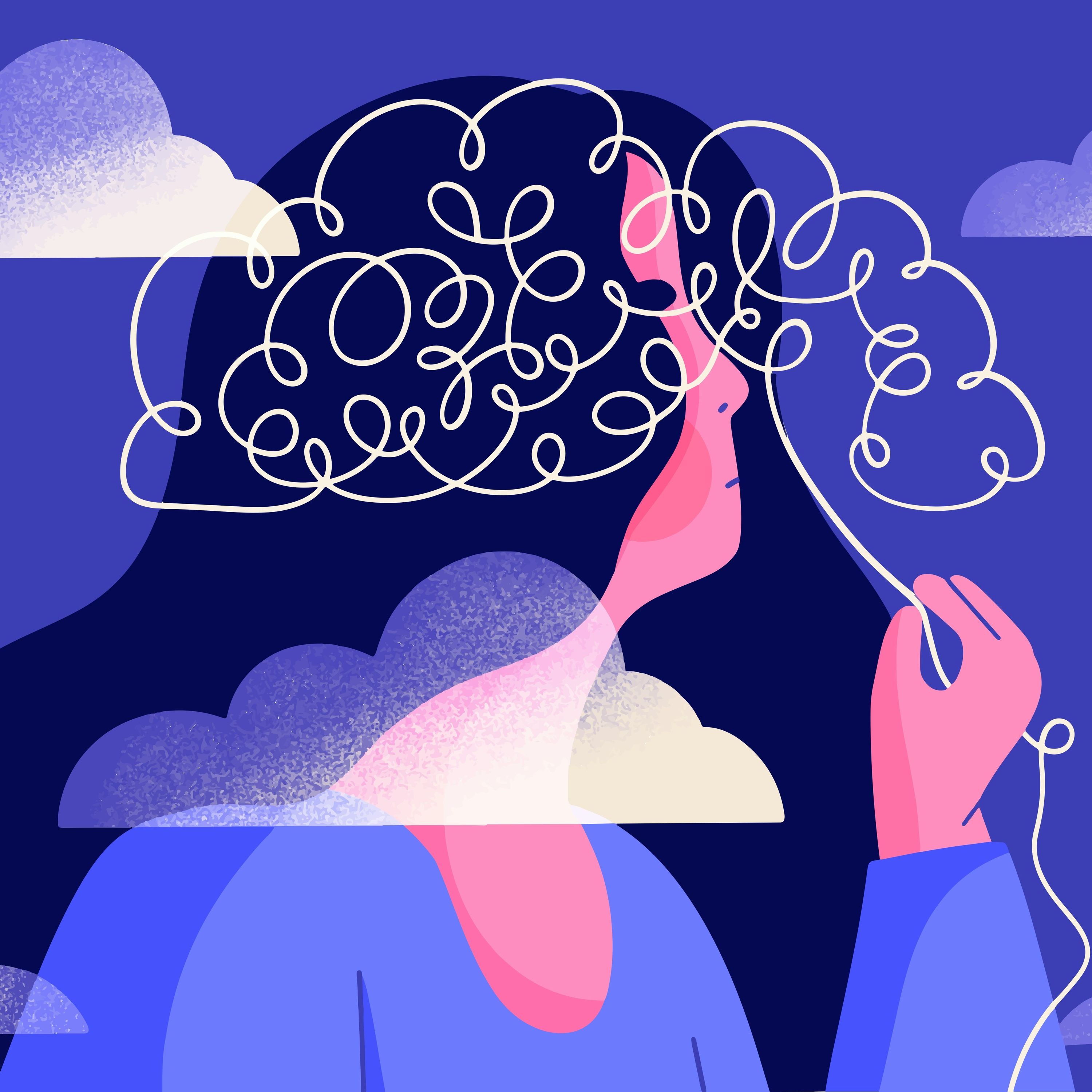
Unlike administrative tasks, creative work can't be 'white-knuckled' through brute force. It requires a receptive state of mind, best cultivated by changing your environment, ensuring you're well-rested, and allowing for unstructured time away from stressful tasks.

To maximize team performance, managers should align work schedules with cognitive peaks. This means scheduling creative or brainstorming sessions early in the day, protecting mid-morning for deep focus tasks, and reserving the post-lunch slump for routine meetings when neither focus nor creativity is at its peak.
Our capacity for focus follows daily rhythms with predictable peaks and valleys. By identifying your personal chronotype (e.g., morning person vs. night owl), you can schedule your most demanding creative and analytical tasks during these high-attention periods to maximize productivity.

Activities like train rides (J.K. Rowling) or walking are mildly stimulating without demanding full attention. This 'softly fascinating' state occupies the conscious mind just enough to allow the unconscious to wander, make connections, and deliver insights, unlike high-stimulation or deep-focus environments.