Get your free personalized podcast brief
We scan new podcasts and send you the top 5 insights daily.
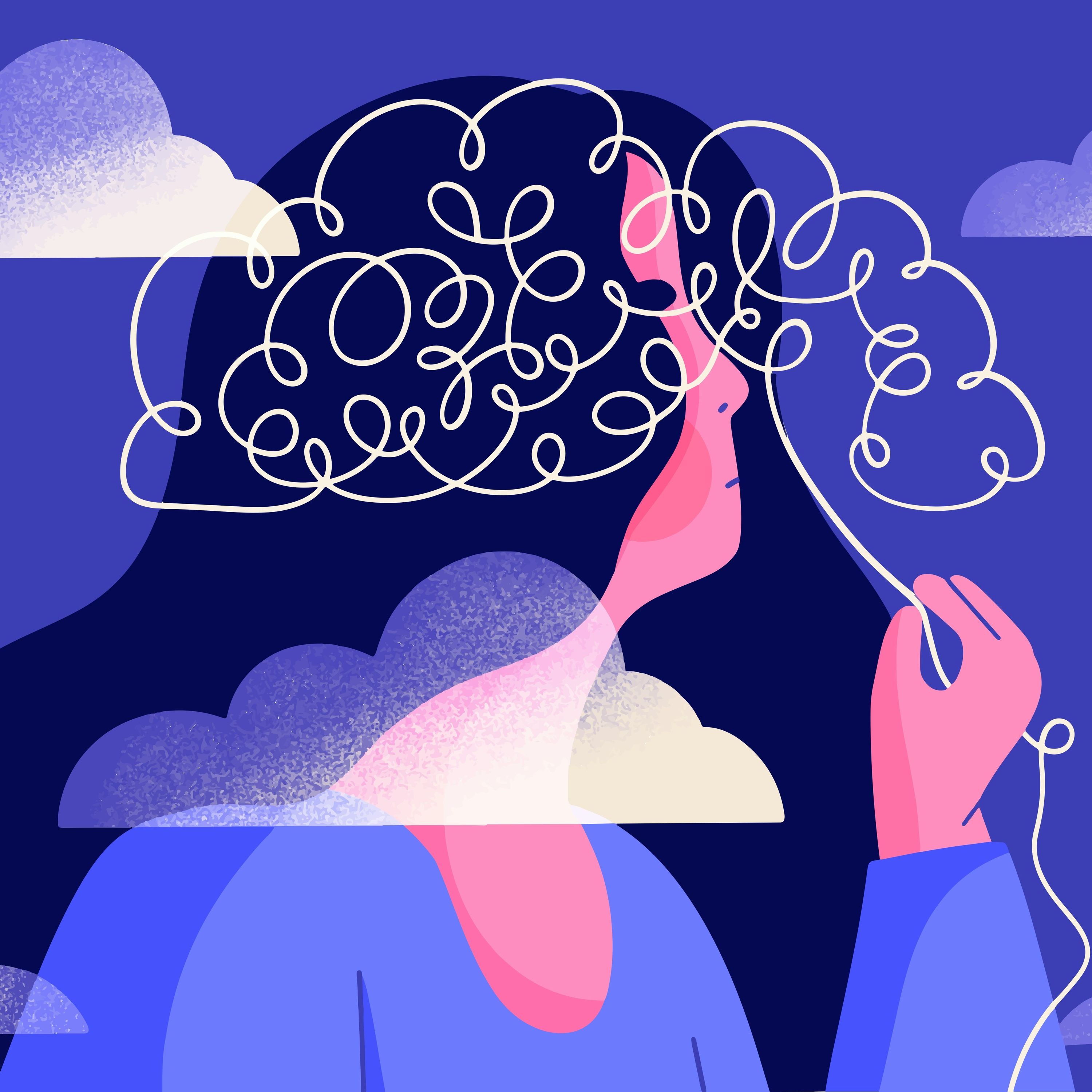
Our brains are most creative in a wandering, 'diffuse' state, like on a long walk. Constant phone checking keeps us in a 'focused' state, preventing the background connections that lead to novel ideas. We spend our days in a permanent state of distraction, inhibiting true creativity.

Related Insights
Breakthroughs often occur in routine environments like the shower or during a walk. These activities promote what psychologists call "divergent thinking," where the relaxed mind makes novel connections. This scientific process can be intentionally triggered to solve complex problems and foster creativity.
Constant stimulation from digital media keeps our brains in a taxed 'work mode.' Intentionally disconnecting and allowing for boredom activates the default mode network, a resting state that fosters inward thinking, problem-solving, and ultimately, enhanced creativity. Our escape from boredom is often 'junk food for the mind.'

Constant productivity keeps the brain in a high-frequency "beta" state, which stifles creativity. To solve complex problems, you must intentionally shift to a slower "alpha" state by disconnecting. This is achieved through simple, non-distracting activities like walking in nature without your phone.

Top creators don't wait for inspiration; they engineer it through structured rest. Activities like taking multiple showers (Sorkin), aimless boating (Einstein), or problem-solving walks (Darwin) look unproductive but are crucial for high-quality creative output. This contrasts with the modern tendency to brute-force solutions at a desk.

The best creative solutions often surface when you're not actively working. After absorbing project information, stepping away for days or weeks allows the subconscious to process and connect ideas, leading to stronger, more innovative outcomes than forced brainstorming.
AI and digital tools create a seductive 'simulacra of productivity.' However, deep, creative work often arises from seemingly unproductive activities like walking without headphones or reading a physical book. We must fight the illusion of constant, machine-like productivity to do our best work.

The most crucial part of creativity is letting ideas "simmer" in the unconscious. After gathering information, step away from the problem completely. Engage in unrelated activities. This allows your mind to make novel connections you can't force through active thought.

By filling every spare moment, we prevent our brains from entering the 'default mode' needed for creativity and contemplating complex questions. This creates lives that feel uninteresting despite constant stimulation. Arthur Brooks advises scheduling tech-free time to allow for this essential 'blank space'.

A CMO's award-winning poem wasn't written at her desk under pressure but came to her spontaneously during an ACDC concert. This illustrates that creative breakthroughs often happen when the mind is disengaged from the problem and in a state of relaxation or high energy, rather than through forced effort.
![What is Marketing? Part 2: Marketing is Poetry with Kory Marchisotto [Uncensored Renegades] thumbnail](https://img.transistorcdn.com/VIH3Rn5ET8-eHQxgBGNydnhXL95pc10_Kq7qTpjezuc/rs:fill:0:0:1/w:1400/h:1400/q:60/mb:500000/aHR0cHM6Ly9pbWct/dXBsb2FkLXByb2R1/Y3Rpb24udHJhbnNp/c3Rvci5mbS9zaG93/LzQ3MzEvMTU3MDAz/MjQ3NC1hcnR3b3Jr/LmpwZw.jpg)
Activities like train rides (J.K. Rowling) or walking are mildly stimulating without demanding full attention. This 'softly fascinating' state occupies the conscious mind just enough to allow the unconscious to wander, make connections, and deliver insights, unlike high-stimulation or deep-focus environments.