Get your free personalized podcast brief
We scan new podcasts and send you the top 5 insights daily.
Canada's vast natural resources, particularly oil, are a strategic asset that should be used as leverage in negotiations with the United States. This approach can secure tariff-free trade and counter an increasingly isolationist American foreign policy by highlighting mutual dependency and strategic importance.

Related Insights
Energy expert Alex Epstein argues the U.S. is "sleeping on Canada" as an energy partner. Canada has vast, untapped oil sands, uranium, and other resources with a friendly government. Strengthening this partnership is a huge, neglected opportunity for North American energy independence.

While the US exports less to Canada by volume, its exports (electronics, pharma) have far higher margins and shareholder value multiples than Canadian exports (lumber, oil). Therefore, for every dollar of trade disrupted by tariffs, the US loses significantly more economic value, making the policy self-defeating.

Canada's long-term economic strategy is built on the belief that the era of increasing integration with the US is permanently over. The leadership anticipates that future American politicians will find it difficult to remove trade barriers, necessitating a fundamental, long-term pivot for Canada's economy away from US dependency.
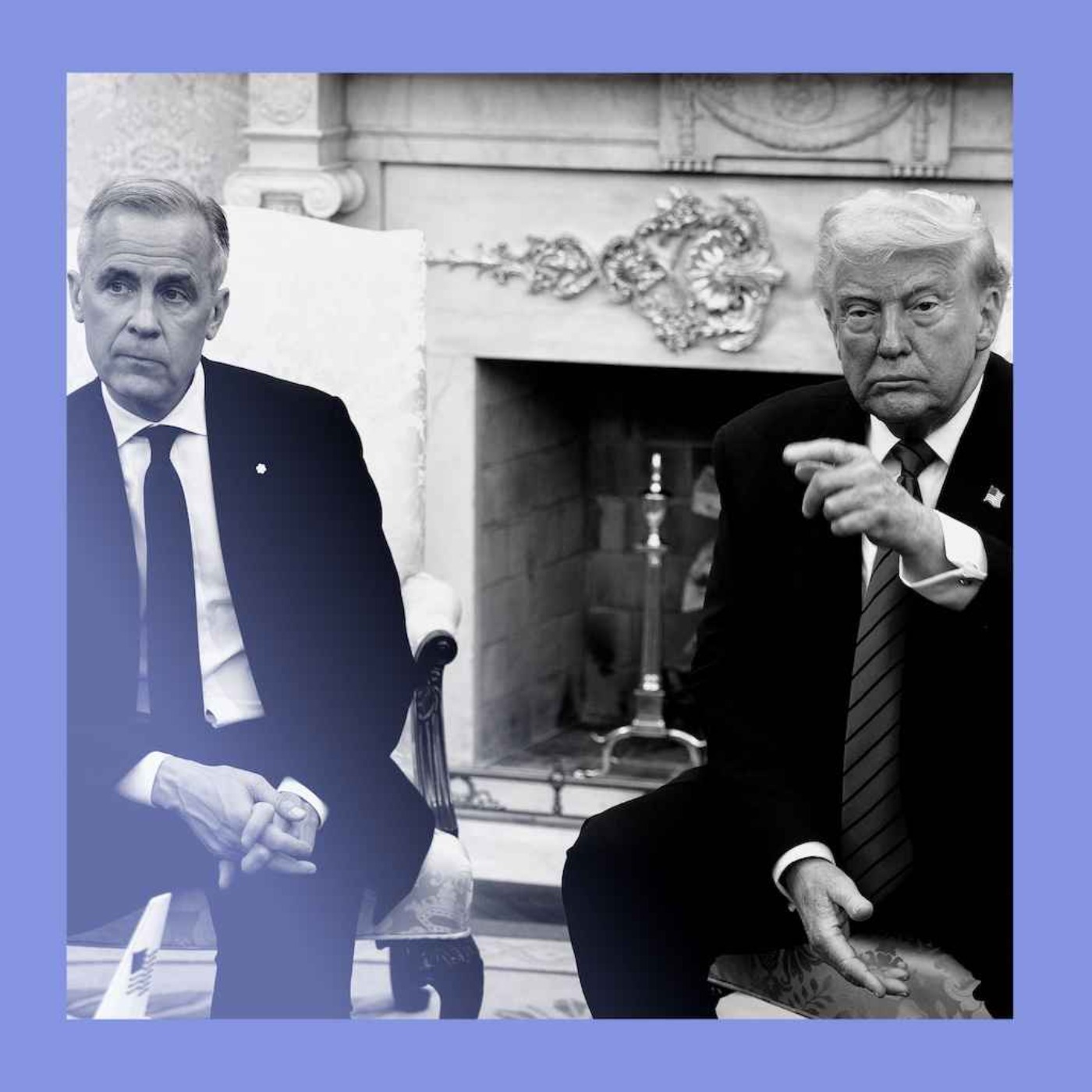
While the US considers unstable nations like Venezuela for oil, it neglects Canada—a friendly neighbor with vast, untapped oil sands and other resources. A US-Canada energy task force could quickly boost supply via rail, offering a more reliable solution than politically fraught alternatives.

To counteract US trade barriers, Canada's long-term strategy involves removing its own internal trade barriers between provinces. This move is projected to boost GDP by a quarter of a trillion dollars, enough to offset even a complete breakdown of the US trade deal.
For a country dependent on a powerful neighbor like the U.S., the path to a fairer relationship is creating leverage. This is achieved by developing independent infrastructure, like pipelines and LNG terminals, to sell resources to other world markets. With viable alternatives, the country can negotiate from a position of strength, not desperation.

The Trump administration perceives its new influence over Venezuela's vast heavy oil resources as a strategic advantage in upcoming USMCA trade negotiations. While not a direct substitute for Canadian crude, the perception of reduced dependence is being wielded as political leverage against a key trading partner.

Contrary to popular belief, Trump's trade strategy isn't protectionism. He uses reciprocity, leverage, and executive flexibility to force other countries to lower their own trade barriers, ultimately aiming for a world with freer trade for the U.S.

While U.S.-Canada trade appears balanced dollar-for-dollar, the U.S. benefits disproportionately. America exports high-margin, high-PE products like software and financial services, while importing lower-margin physical goods like timber and oil. This asymmetry creates significantly more shareholder value for U.S. companies.

During NAFTA talks with the Trump administration, Canada didn't just deal with the executive branch. It actively engaged Congress, governors, unions, and businesses to build broad support for the relationship, effectively creating a network of influence around a single, powerful counterpart.
