Get your free personalized podcast brief
We scan new podcasts and send you the top 5 insights daily.
Companies primarily use AI for chores like writing emails. While efficient, this focus on automation without a parallel emphasis on creative problem-solving can lead to every brand sounding and looking the same, stifling true innovation.

Related Insights
Despite running an AI company, Clay's co-founder warns against using LLMs for marketing. He argues that AI models are designed to synthesize information and find the average, which is the opposite of marketing's goal: to stand out and be original. His team is discouraged from using it for marketing copy.
With 85% of marketers using ChatGPT, brand voices are converging into a generic, AI-generated tone. This erodes a brand's unique identity, making marketing campaigns completely ineffective because they fail to differentiate in a crowded market and are easily ignored by consumers.
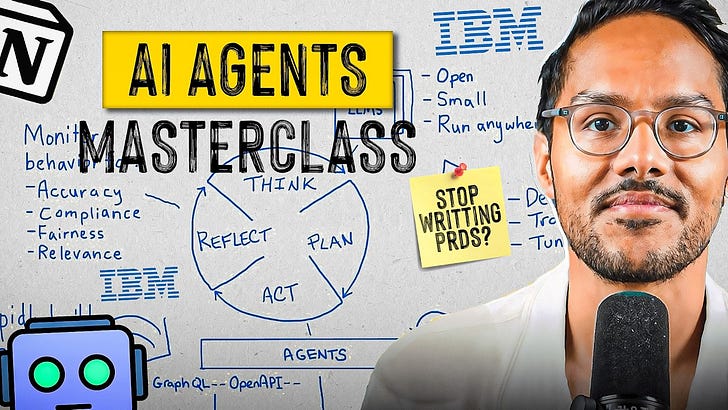
While AI tools once gave creators an edge, they now risk producing democratized, undifferentiated output. IBM's AI VP, who grew to 200k followers, now uses AI less. The new edge is spending more time on unique human thinking and using AI only for initial ideation, not final writing.
When brands use AI tools like LLMs as their primary creative director instead of as an assistant, they produce generic outputs based on existing data. This leads to a "sea of sameness" and a loss of brand distinctiveness.

AI struggles with true creativity because it's designed to optimize for correctness, like proper grammar. Humans, in contrast, optimize for meaning and emotional resonance. This is why ChatGPT would not have generated Apple's iconic "Think Different" slogan—it breaks grammatical rules to create a more powerful idea. Over-reliance on AI risks losing an authentic, human voice.

The true danger of AI in copywriting is not job replacement, but marketers outsourcing their creativity and decision-making. Relying on AI for a final product robs humans of the messy, valuable creative process, leading to generic content that fails to resonate with customers.

Marketers face a choice. The 'Industrial Revolution' path uses AI for mass automation of generic tasks, leading to spam. The 'Renaissance' path uses AI as a tool to empower human creativity, enabling marketers to become craftspeople who produce more remarkable work, faster.

While AI can accelerate tasks like writing, the real learning happens during the creative process itself. By outsourcing the 'doing' to AI, we risk losing the ability to think critically and synthesize information. Research shows our brains are physically remapping, reducing our ability to think on our feet.

The greatest danger of AI content isn't job loss or bad SEO, but a societal one. Since we consume more brand content than educational material, an internet flooded with AI's 'predictive text' based on what's common could relegate collective human knowledge and creativity to a permanent base level.
GM's CMO warns that AI in creative often produces average results because it finds the "most likely next answer," reflecting the category norm, not a distinctive brand voice. Simple edits can also trigger a full re-render, introducing new errors and creating more work.
