Get your free personalized podcast brief
We scan new podcasts and send you the top 5 insights daily.
Despite running an AI company, Clay's co-founder warns against using LLMs for marketing. He argues that AI models are designed to synthesize information and find the average, which is the opposite of marketing's goal: to stand out and be original. His team is discouraged from using it for marketing copy.
Related Insights
With 85% of marketers using ChatGPT, brand voices are converging into a generic, AI-generated tone. This erodes a brand's unique identity, making marketing campaigns completely ineffective because they fail to differentiate in a crowded market and are easily ignored by consumers.
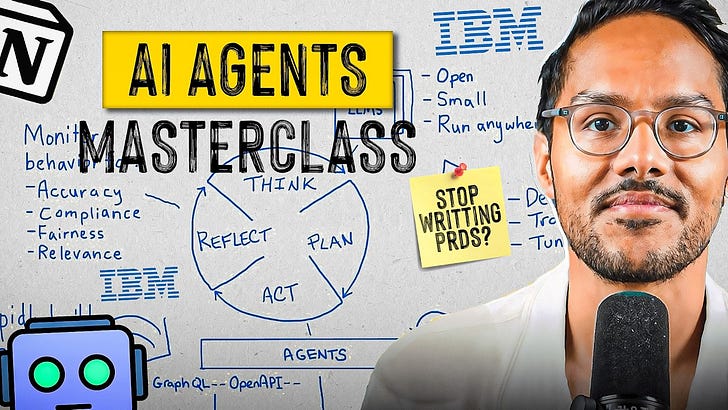
While AI tools once gave creators an edge, they now risk producing democratized, undifferentiated output. IBM's AI VP, who grew to 200k followers, now uses AI less. The new edge is spending more time on unique human thinking and using AI only for initial ideation, not final writing.
As more teams use AI, campaign strategies become homogenized because AI suggests traditional plays based on existing data. The key differentiator becomes human oversight, where marketers add unique, creative insights to AI-generated foundations, ensuring campaigns stand out.

When brands use AI tools like LLMs as their primary creative director instead of as an assistant, they produce generic outputs based on existing data. This leads to a "sea of sameness" and a loss of brand distinctiveness.

AI struggles with true creativity because it's designed to optimize for correctness, like proper grammar. Humans, in contrast, optimize for meaning and emotional resonance. This is why ChatGPT would not have generated Apple's iconic "Think Different" slogan—it breaks grammatical rules to create a more powerful idea. Over-reliance on AI risks losing an authentic, human voice.

True creative mastery emerges from an unpredictable human process. AI can generate options quickly but bypasses this journey, losing the potential for inexplicable, last-minute genius that defines truly great work. It optimizes for speed at the cost of brilliance.
There's a critical distinction in using AI for marketing. Leveraging it to research communities and topics is a powerful efficiency gain. However, outsourcing the final act of content creation and communication to an autonomous agent sacrifices authenticity and is a critical mistake.

GM's CMO warns that AI in creative often produces average results because it finds the "most likely next answer," reflecting the category norm, not a distinctive brand voice. Simple edits can also trigger a full re-render, introducing new errors and creating more work.

As AI tools become commoditized, the exponential differentiator for marketing success will be subjective taste. Teams must double down on unscalable, creative elements that AI cannot replicate, as this is what will truly stand out and build a memorable brand.

AI tools are best used as collaborators for brainstorming or refining ideas. Relying on AI for final output without a "human in the loop" results in obviously robotic content that hurts the brand. A marketer's taste and judgment remain the most critical components.
