Get your free personalized podcast brief
We scan new podcasts and send you the top 5 insights daily.
The greatest danger of AI content isn't job loss or bad SEO, but a societal one. Since we consume more brand content than educational material, an internet flooded with AI's 'predictive text' based on what's common could relegate collective human knowledge and creativity to a permanent base level.

Related Insights
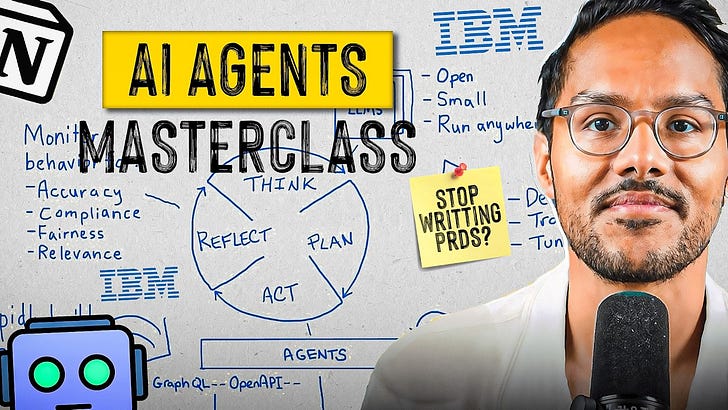
While AI tools once gave creators an edge, they now risk producing democratized, undifferentiated output. IBM's AI VP, who grew to 200k followers, now uses AI less. The new edge is spending more time on unique human thinking and using AI only for initial ideation, not final writing.
Wisdom emerges from the contrast of diverse viewpoints. If future generations are educated by a few dominant AI models, they will all learn from the same worldview. This intellectual monoculture could stifle the fringe thinking and unique perspectives that have historically driven breakthroughs.
The internet's value stems from an economy of unique human creations. AI-generated content, or "slop," replaces this with low-quality, soulless output, breaking the internet's economic engine. This trend now appears in VC pitches, with founders presenting AI-generated ideas they don't truly understand.

While AI can accelerate tasks like writing, the real learning happens during the creative process itself. By outsourcing the 'doing' to AI, we risk losing the ability to think critically and synthesize information. Research shows our brains are physically remapping, reducing our ability to think on our feet.

The proliferation of low-quality, AI-generated content is a structural issue that cannot be solved with better filtering. The ability to generate massive volumes of content with bots will always overwhelm any curation effort, leading to a permanently polluted information ecosystem.

AI experts like Eric Schmidt and Henry Kissinger predict AI will split society into two tiers: a small elite who develops AI and a large class that becomes dependent on it for decisions. This reliance will lead to "cognitive diminishment," where critical thinking skills atrophy, much like losing mental math abilities by overusing a calculator.
The most dangerous long-term impact of AI is not economic unemployment, but the stripping away of human meaning and purpose. As AI masters every valuable skill, it will disrupt the core human algorithm of contributing to the group, leading to a collective psychological crisis and societal decay.

AI scales output based on the user's existing knowledge. For professionals lacking deep domain expertise, AI will simply generate a larger volume of uninformed content, creating "AI slop." It exponentially multiplies ignorance rather than fixing it.

The greatest AI risk isn't a violent takeover but a cultural one. An AI that can generate perfect, endlessly engaging entertainment could be the most subversive technology ever, leading to a society pacified by digital pleasure and devoid of human-driven ambition.

The real danger of new technology is not the tool itself, but our willingness to let it make us lazy. By outsourcing thinking and accepting "good enough" from AI, we risk atrophying our own creative muscles and problem-solving skills.