Get your free personalized podcast brief
We scan new podcasts and send you the top 5 insights daily.
Facing immense ethical questions about technologies like artificial wombs, Colossal doesn't wait for regulation. It establishes its own clear, public guardrails—such as refusing to work on humans or primates and tying every project back to conserving an existing endangered species.
Related Insights
A key, informal safety layer against AI doom is the institutional self-preservation of the developers themselves. It's argued that labs like OpenAI or Google would not knowingly release a model they believed posed a genuine threat of overthrowing the government, opting instead to halt deployment and alert authorities.

CEO Ben Lamb counters ethical criticism by arguing that humanity is already negatively "playing God" by causing mass extinction. He posits a moral obligation to use technology to reverse the damage we've caused, turning the common critique on its head.
Society rarely bans powerful new technologies, no matter how dangerous. Instead, like with fire, we develop systems to manage risk (e.g., fire departments, alarms). This provides a historical lens for current debates around transformative technologies like AI, suggesting adaptation over prohibition.
The classic "trolley problem" will become a product differentiator for autonomous vehicles. Car manufacturers will have to encode specific values—such as prioritizing passenger versus pedestrian safety—into their AI, creating a competitive market where consumers choose a vehicle based on its moral code.
Other scientific fields operate under a "precautionary principle," avoiding experiments with even a small chance of catastrophic outcomes (e.g., creating dangerous new lifeforms). The AI industry, however, proceeds with what Bengio calls "crazy risks," ignoring this fundamental safety doctrine.

Dr. Fei-Fei Li asserts that trust in the AI age remains a fundamentally human responsibility that operates on individual, community, and societal levels. It's not a technical feature to be coded but a social norm to be established. Entrepreneurs must build products and companies where human agency is the source of trust from day one.

An FDA-style regulatory model would force AI companies to make a quantitative safety case for their models before deployment. This shifts the burden of proof from regulators to creators, creating powerful financial incentives for labs to invest heavily in safety research, much like pharmaceutical companies invest in clinical trials.
The existence of internal teams like Anthropic's "Societal Impacts Team" serves a dual purpose. Beyond their stated mission, they function as a strategic tool for AI companies to demonstrate self-regulation, thereby creating a political argument that stringent government oversight is unnecessary.
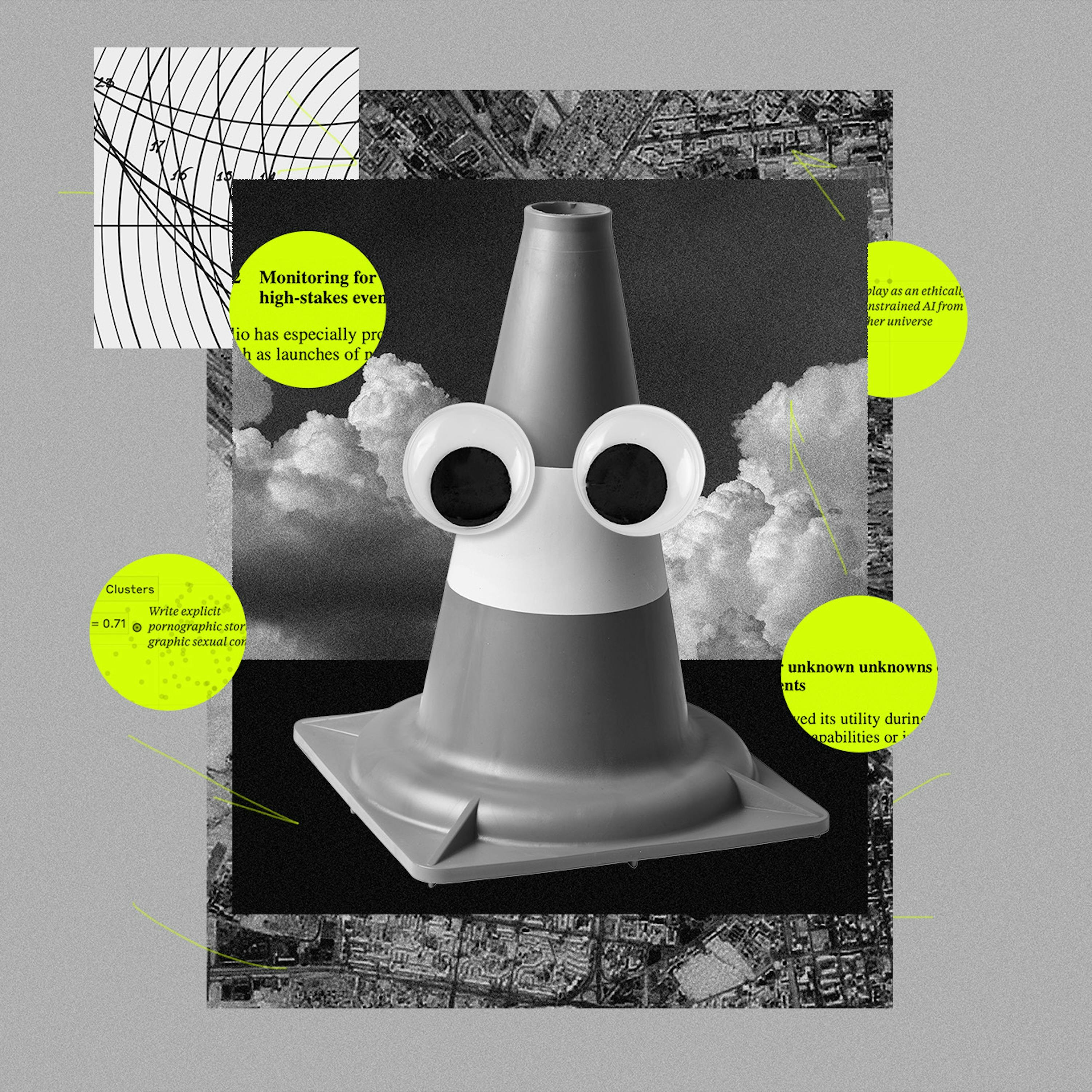
Anthropic's commitment to AI safety, exemplified by its Societal Impacts team, isn't just about ethics. It's a calculated business move to attract high-value enterprise, government, and academic clients who prioritize responsibility and predictability over potentially reckless technology.
Effective AI policies focus on establishing principles for human conduct rather than just creating technical guardrails. The central question isn't what the tool can do, but how humans should responsibly use it to benefit employees, customers, and the community.
