Get your free personalized podcast brief
We scan new podcasts and send you the top 5 insights daily.
According to Buttigieg, Benjamin Netanyahu's actions in Gaza and the West Bank reveal an ideological project to take over "Greater Israel," a vision with little room for Palestinians. This motive transcends stated goals of national security and explains his aggressive policies.

Related Insights
Yitzhak Rabin believed normalizing Arab relations required solving the Palestinian conflict. Benjamin Netanyahu's doctrine flipped this: use US military might to neutralize hostile Arab regimes, thereby bypassing the need to address Palestinian statehood at all, a core tenet of his political career.

The historical establishment of Israel is presented as a playbook for political conquest through demographics. A group can immigrate into a region, grow its numbers until it becomes a dominant political class, and eventually assume control, a strategy potentially being replicated by other groups in modern nations.

Rational analysis is insufficient for understanding the Middle East. A powerful minority of 'Christian Zionists' in the US believe they must accelerate a divine plan, including rebuilding the Third Temple in Jerusalem, to trigger Jesus's return. This religious script actively shapes foreign policy.

Israeli leadership recognizes that American public opinion, particularly among younger generations, is turning against them. They are likely using the current pro-Israel US administration as a final window of opportunity to expand territory and create irreversible facts on the ground before that support evaporates.
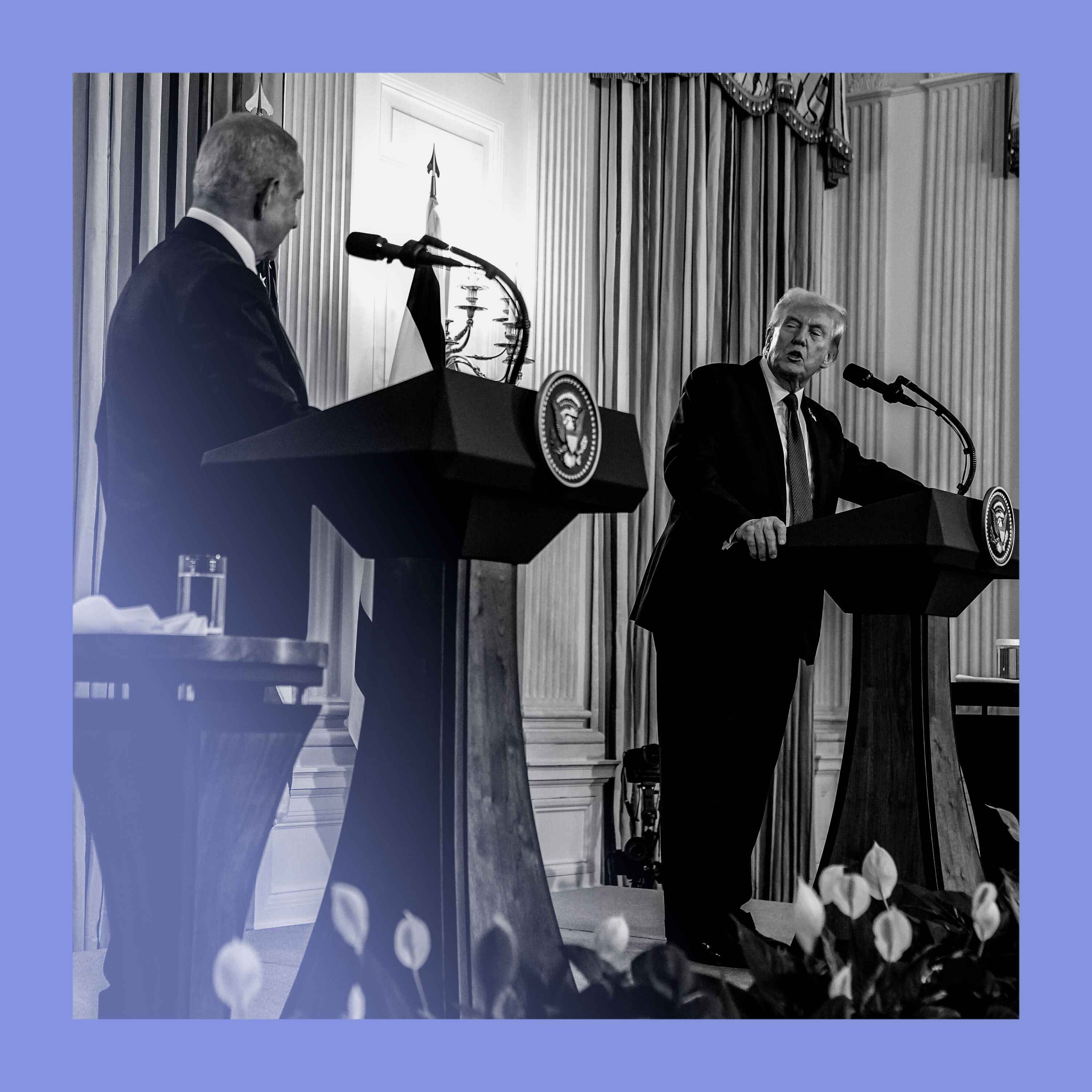
Israeli PM Netanyahu's acceptance of the peace plan is a study in contradiction. While publicly endorsing the deal, he immediately rejected a key component: a role for the Palestinian Authority in post-war Gaza. This tactic creates 'wiggle room' and signals a lack of genuine buy-in, challenging the deal's future.
A key geopolitical theory suggests Israel's grand strategy is the "Greater Israel Project," a plan to expand its influence across the Middle East from the Nile to the Euphrates. This would involve conquering territory in modern-day Egypt, Saudi Arabia, Syria, and Turkey.

Emanuel asserts that Benjamin Netanyahu, unlike predecessors like Rabin or Begin, has failed to pair military action with a viable diplomatic and political strategy. He claims this has trapped Israel in a self-destructive cycle of perpetual conflict.

The Israel-Palestine conflict is often framed as a religious clash, but its root is the political reality of military occupation. The Palestinian response is a predictable human reaction to subjugation, similar to the Irish resisting the British, not a unique feature of their religion.
Despite Trump's stated goal of ending "stupid wars," U.S. foreign policy in the Middle East has aligned more closely with the neoconservative and Israeli lobby's long-term goal of remaking the region. This suggests their influence is a more reliable predictor of U.S. action than the President's own rhetoric.
As an alternative to democracy or a two-state solution, a right-wing Israeli state could grant Palestinians full citizenship rights—property, travel, fair trial—while denying them voting rights to maintain the state's Jewish character. This offers a different, albeit controversial, path to stability over the current occupation.