Get your free personalized podcast brief
We scan new podcasts and send you the top 5 insights daily.
Public speaking anxiety is often a 'spotlight' mindset focused on self-judgment ('What do they think of me?'). Jess Ekstrom suggests shifting to a 'lighthouse' mindset by asking 'What does everyone need of me?' This reframes the act from a performance to an act of service, reducing pressure and fear.

Related Insights
Surrendering your will to a purpose beyond yourself, similar to 12-step programs, is a powerful tool for overcoming performance anxiety. This act of letting go is especially difficult for talented, self-reliant individuals but is key to trading personal stress for universal strength.

The deepest insecurities can be a source of credibility. Performance coach Giselle Ugardi argues her own "crippling anxiety" before speaking makes her more qualified to teach confidence because she intimately understands the struggle. This reframes a perceived weakness into a powerful tool for connection and expertise.

The physiological states of anxiety and excitement are nearly identical. Relabeling the feeling by saying "I'm excited" shifts your mindset from threat-based to opportunity-based, improving performance in tasks like public speaking or negotiation.

The term 'self-promotion' feels self-absorbed and can create anxiety. Instead, view content creation as a selfless act of providing value—either through entertainment or information. This shifts the focus from yourself to the audience, making it easier to share your expertise and stories authentically.

Top performers don't conquer nervousness; they listen to it. Self-doubt is an indicator to lean into, not a signal to stop. Performance coach Giselle Ugardi suggests talking back to your inner critic as a way to reframe and manage the feeling, rather than trying to suppress it.
Instead of treating fear as a psychological flaw, view it as a neutral, physical vibration in the body. This atomic perspective, inspired by physics, allows you to step out of self-judgment and use the energy creatively. You stop managing the 'idea' of anxiety and start experiencing the raw sensation.

Actively trying to "be more confident" makes you self-conscious and forces you into your own head. Instead, shift your focus outward to connecting with and serving the audience. This external focus naturally projects confidence as a byproduct, without the self-surveillance.
Sam Harris argues that the most effective way to conquer stage fright isn't mental exercises like mindfulness, but repeatedly engaging in the feared activity. This process, similar to Cognitive Behavioral Therapy, retrains the nervous system by demonstrating that the outcome is not catastrophic, thereby desensitizing the fear response.
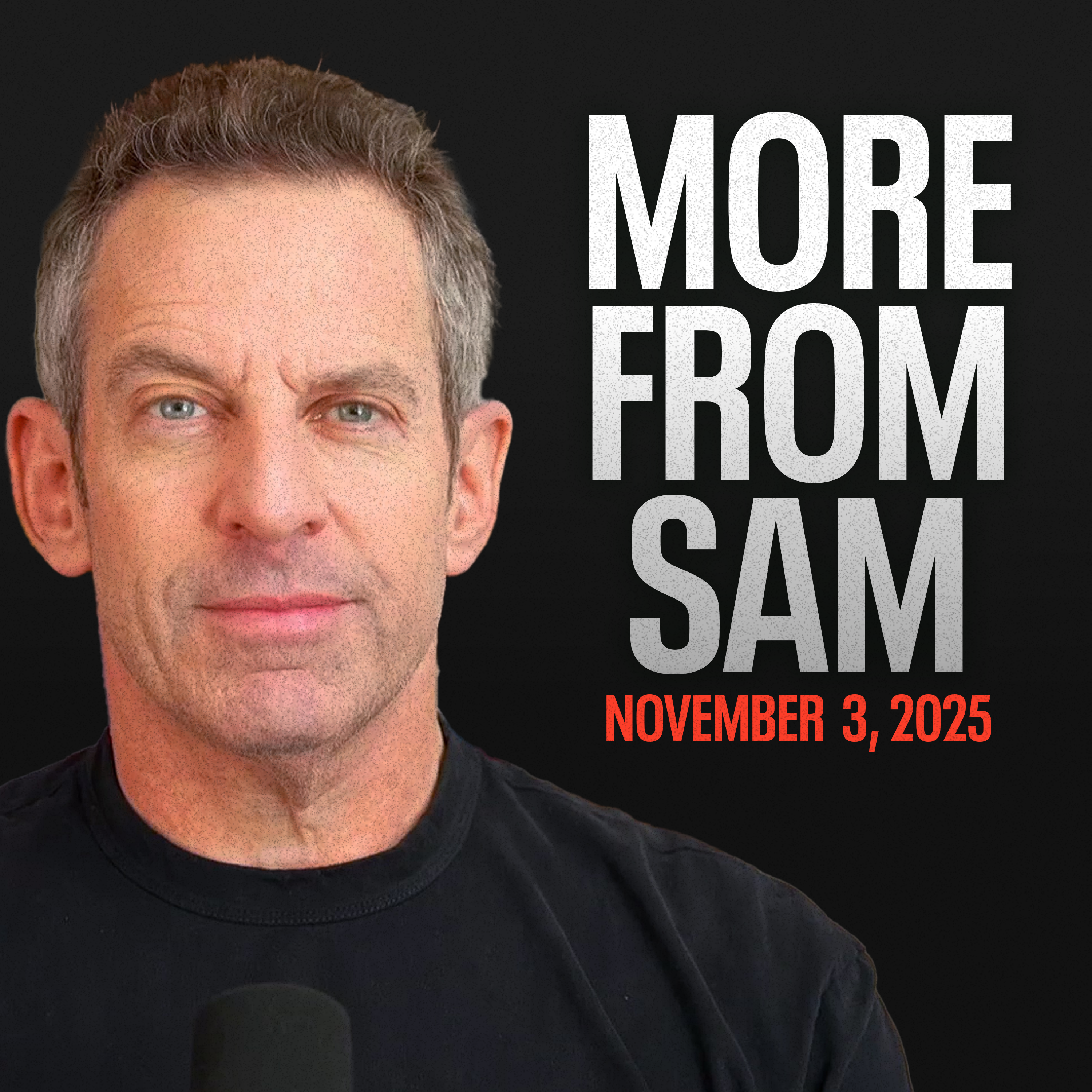
Instead of viewing pre-performance physiological arousal as anxiety, reframe it as excitement or energy. Sam Harris explains that the physical sensations are nearly identical; consciously relabeling them connects the feeling to a positive desire to perform well, rather than a fear of failure.
By simply relabeling the feeling of stress as "excitement," you can trigger a different physiological and psychological response. This technique, known as anxiety reappraisal, can lead to measurably better performance in high-pressure situations like public speaking or presentations.
