Get your free personalized podcast brief
We scan new podcasts and send you the top 5 insights daily.
The process of articulating ideas in writing forces clarity and exposes flaws that remain hidden when they are just thoughts. It serves as a powerful filtering mechanism for bad ideas before they consume resources.

Related Insights
Entrepreneurs often have enough new ideas to kill their focus. A tactical solution is maintaining a dedicated document to fully flesh out every new idea as it arises. This process satisfies the creative urge and provides emotional distance, allowing for more objective evaluation later without disrupting current priorities.

The act of writing forces clarity. Jeff Bezos mandates written narratives over slideshows at Amazon because the process exposes fuzzy thinking. While a clear thinker isn't always a great writer, a clear writer is invariably a clear thinker. This makes writing a critical leadership skill, not just a marketing tactic.

The discipline of writing down your thought process is crucial for decision analysis. AI now amplifies this by creating a searchable, analyzable record of your thinking over time, helping you identify blind spots and get objective feedback on your reasoning.

The act of consistently publishing ideas, such as in a weekly newsletter, imposes a discipline that rewires your brain. It forces you to organize complex thoughts, articulate them clearly, and ultimately improves your entire decision-making process in investing, business, and life.

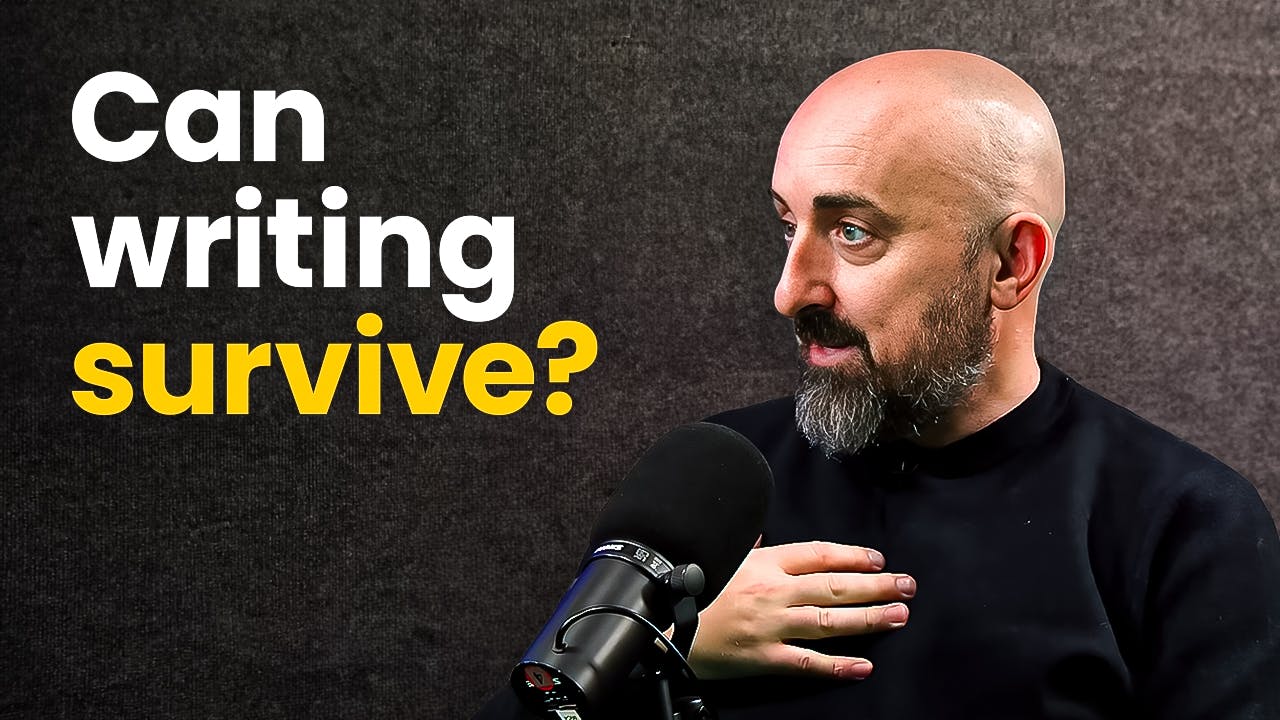
Medium's CEO argues that writing's future is secure because its core function is the process of structured thinking, not just content output. The act of articulating ideas reveals flaws and deepens understanding for the writer—a cognitive benefit that delegating to AI would eliminate.
Great writing is not a stroke of genius but a craft of intense iteration. Observing Y Combinator founder Paul Graham showed that he would rewrite a single sentence dozens of times to achieve clarity and impact. This process of refinement is the key to persuasive and concise communication, demystifying the path to becoming a better writer.

Both the host and guest agree that writing is a powerful tool for refining investment ideas. The process forces clarity and exposes unanswered questions, a discipline Warren Buffett also advocates. If you can't cogently explain your thesis on paper, it's likely flawed.

An investor can have pages of notes yet still lack clarity. The most critical step is synthesizing this raw data by writing a cohesive narrative. This act of writing forces critical thinking, connects disparate points, and elevates understanding in a way that passive consumption cannot.

The process of writing is an invaluable tool for refining your ideas and achieving clarity of thought. Relying on LLMs to generate text for you bypasses this critical thinking process, ultimately hindering your own intellectual growth and ability to articulate complex concepts.

Writing is not just the documentation of pre-formed thoughts; it is the process of forming them. By wrestling with arguments on the page, you clarify your own thinking. Outsourcing this "hard part" to AI means you skip the essential step of developing a unique, well-reasoned perspective.
