Get your free personalized podcast brief
We scan new podcasts and send you the top 5 insights daily.
For the first time in metastatic gastric cancer, a clinical trial (Horizon) has demonstrated a median overall survival exceeding two years. This was achieved with zanidatumab-based combinations in HER2-positive patients, establishing a new benchmark for outcomes in this historically difficult-to-treat disease.

Related Insights
In the HORIZON-BTC-01 trial, early response to zanidatumab is a powerful prognostic indicator. A landmark analysis showed that patients who responded by week nine had a median overall survival of 25 months, highlighting the importance of early tumor assessment in predicting long-term outcomes.

Unlike previous trastuzumab-IO combinations that harmed PD-L1 negative patients, the zanidatumab-IO regimen benefits HER2+ patients regardless of PD-L1 status. This is likely because zanidatumab is a more immunogenic molecule, potentiating the checkpoint inhibitor's effect even in a less inflamed tumor microenvironment.
The combination of Zanidatamab, chemotherapy, and the PD-1 inhibitor Tisilzumab achieved a median overall survival of 26.4 months. This crosses the two-year threshold for the first time in this patient population, establishing a new and significantly higher benchmark for first-line HER2+ gastric cancer treatment.

Unlike existing standards that often require PD-L1 positivity for immunotherapy benefit, the Zanidatamab/Tisilzumab combination showed efficacy irrespective of PD-L1 status. This significantly expands first-line immunotherapy-based options to the minority of HER2+ patients who are PD-L1 negative and currently have fewer effective treatments.
Comparing control arms from the TOGA (11 months OS), KEYNOTE-811 (16 months), and HORIZON (19 months) trials reveals a steady improvement in patient outcomes. This trend, likely due to better second-line therapies and supportive care, makes it harder for new agents to show a relative benefit.
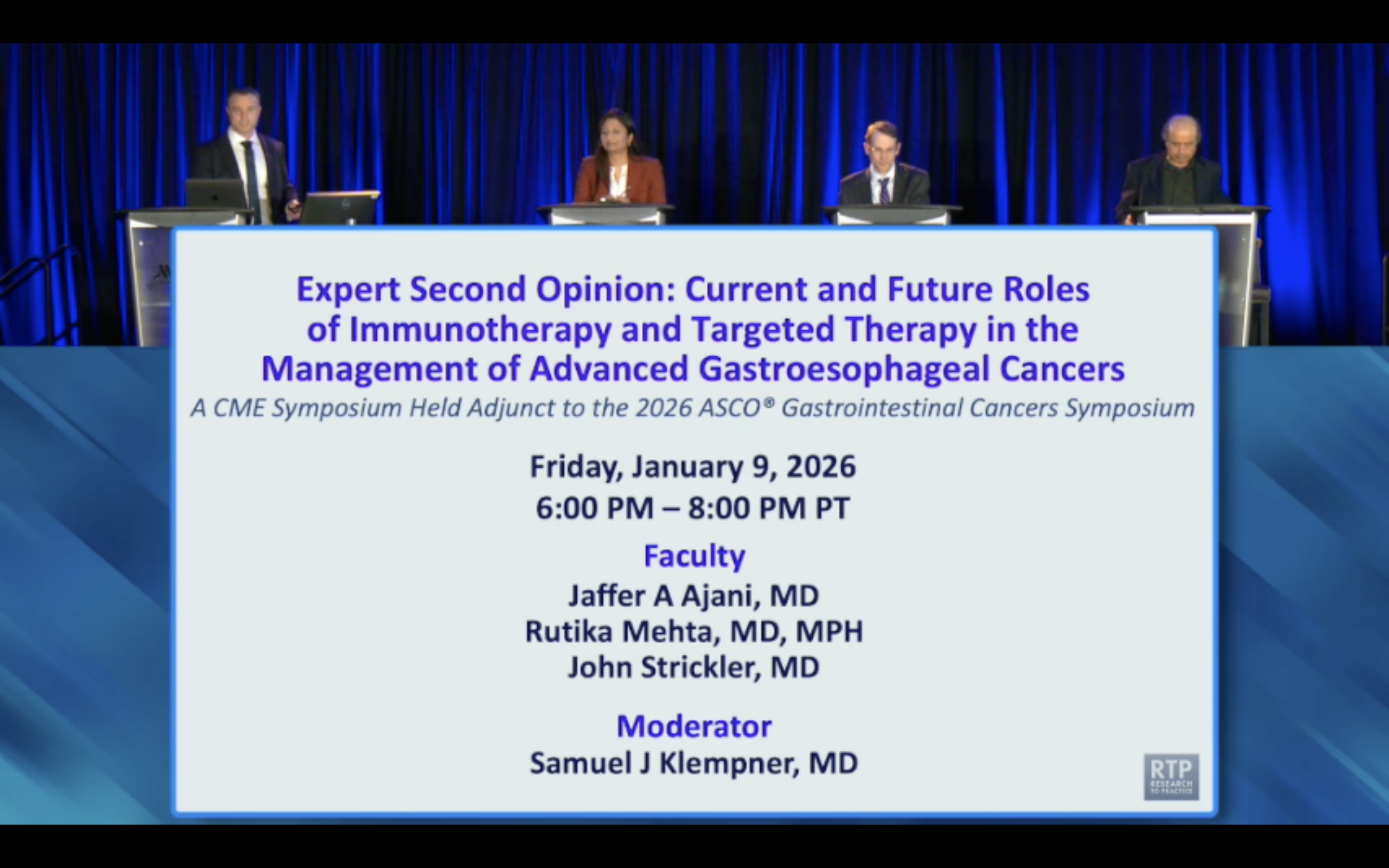
For HER2-positive gastric cancer, treatment choice depends on patient fitness. For young, fit patients, the more potent but toxic HORIZON-GA regimen (zanidatamab-based) is preferred. For elderly or less fit patients, the better-tolerated KEYNOTE-811 regimen (pembrolizumab/trastuzumab) remains the standard of care.
Experts recommend using the most effective first-line therapy, like zanidatumab combinations, for HER2-positive gastric cancer, despite the risk of the tumor losing HER2 expression upon progression. The substantial upfront survival benefit outweighs the concern of losing a second-line target like T-DXd.

In the increasingly common scenario of a patient with multiple positive biomarkers, a clear hierarchy exists for treatment decisions. Based on the robustness and maturity of clinical trial data, HER2-directed therapy is the top priority, followed by PD-L1 immunotherapy, with Claudin-18.2 targeting considered third.
Unlike trastuzumab, zanidatumab's effectiveness in the HORIZON-GEA-01 trial did not seem to depend on PD-L1 status. This surprising finding suggests a novel, possibly immune-mediated, mechanism of action that could expand its use to a broader patient population, including those who are PD-L1 negative.

The HORIZON-GEA1 trial demonstrated that zanidatumab, a bispecific antibody, provides a significant survival benefit in HER2-positive gastroesophageal cancers, even in patients with PD-L1 negative tumors. This finding challenges the conventional wisdom that checkpoint inhibitors are the primary driver of benefit in combination therapies.