Get your free personalized podcast brief
We scan new podcasts and send you the top 5 insights daily.
For HER2-positive gastric cancer, treatment choice depends on patient fitness. For young, fit patients, the more potent but toxic HORIZON-GA regimen (zanidatamab-based) is preferred. For elderly or less fit patients, the better-tolerated KEYNOTE-811 regimen (pembrolizumab/trastuzumab) remains the standard of care.

Related Insights
While Trastuzumab deruxtecan (TDXD) is effective in HER2-low breast cancer, there is no evidence that it benefits patients with HER2-low or HER2-intermediate (IHC 2+/FISH negative) gastric cancer. Its use should be strictly limited to truly HER2-positive cases in this disease.

For HER2+ biliary tract cancer patients with hyperbilirubinemia where stenting isn't possible, zanidatumab is a preferable option over TDXD. Zanidatumab lacks significant hepatotoxicity, whereas TDXD's irinotecan-like payload poses a risk in patients with moderate hepatic impairment.
For frail elderly patients with HER2+ gastric cancer, starting with targeted therapy and immunotherapy alone can gauge response and tolerance. Cytotoxic chemotherapy can be added later if the patient's performance status improves, distinguishing disease-related frailty from baseline comorbidities.
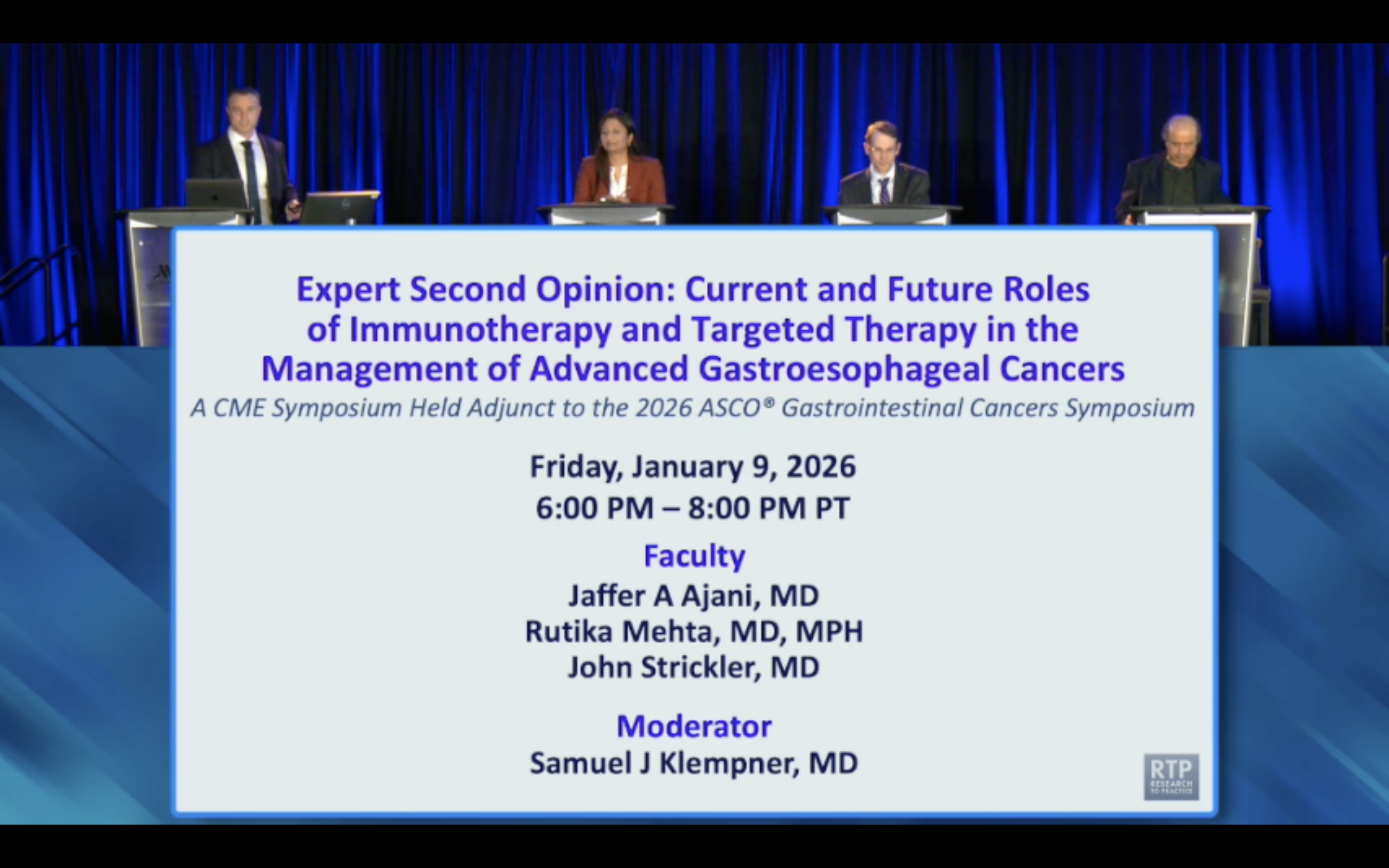
New targeted therapies like Zanidatamab and Zolbetuximab show great promise but cause significant side effects like diarrhea and nausea. Their successful clinical adoption hinges on proactive management using detailed guidelines and prophylactic medications, as toxicity can be severe enough to force treatment discontinuation despite the drug's efficacy.

In the increasingly common scenario of gastric cancer with multiple biomarkers (HER2, PD-L1, Claudin), experts recommend a clear hierarchy. Based on data maturity, HER2-targeted therapy is the first choice, followed by PD-L1 immunotherapy, with Claudin-targeted therapy third.

For highly symptomatic gastric cancer patients needing rapid cytoreduction, oncologists may initiate treatment with chemotherapy alone. This approach aims to quickly control the disease and avoids confounding potential drug toxicities with rapid progression before adding biomarker-driven agents.
Comparing control arms from the TOGA (11 months OS), KEYNOTE-811 (16 months), and HORIZON (19 months) trials reveals a steady improvement in patient outcomes. This trend, likely due to better second-line therapies and supportive care, makes it harder for new agents to show a relative benefit.
In metastatic gastroesophageal cancer, physicians should use their most effective therapies first. With data showing 40-50% of patients in trials never receive second-line treatment due to disease progression, holding potent agents in reserve means a large portion of patients will never benefit from them.
For metastatic biliary tract cancer patients with short life expectancies, oncologists are more willing to use HER2-targeted therapies despite potential cardiac dysfunction. The risk of long-term cardiotoxicity is secondary to the immediate need for an effective cancer treatment in a palliative setting.

In the increasingly common scenario of a patient with multiple positive biomarkers, a clear hierarchy exists for treatment decisions. Based on the robustness and maturity of clinical trial data, HER2-directed therapy is the top priority, followed by PD-L1 immunotherapy, with Claudin-18.2 targeting considered third.