Get your free personalized podcast brief
We scan new podcasts and send you the top 5 insights daily.
Experts recommend using the most effective first-line therapy, like zanidatumab combinations, for HER2-positive gastric cancer, despite the risk of the tumor losing HER2 expression upon progression. The substantial upfront survival benefit outweighs the concern of losing a second-line target like T-DXd.

Related Insights
While Trastuzumab deruxtecan (TDXD) is effective in HER2-low breast cancer, there is no evidence that it benefits patients with HER2-low or HER2-intermediate (IHC 2+/FISH negative) gastric cancer. Its use should be strictly limited to truly HER2-positive cases in this disease.

Oncologists distinguish between HER2 amplification (the target for ADCs like TDXD) and activating mutations. A patient whose tumor loses amplification but retains a mutation is considered "HER2 mutated," not "HER2 positive," and is generally not a candidate for ADC therapy.

Before starting a second-line HER2-targeted therapy like trastuzumab deruxtecan, it is critical to re-biopsy the tumor if feasible. HER2 status can change after first-line treatment, and confirming persistent HER2 positivity is essential to ensure the subsequent therapy will be effective.
In the increasingly common scenario of gastric cancer with multiple biomarkers (HER2, PD-L1, Claudin), experts recommend a clear hierarchy. Based on data maturity, HER2-targeted therapy is the first choice, followed by PD-L1 immunotherapy, with Claudin-targeted therapy third.

The antibody-drug conjugate TDxD is a promising first-line therapy for HER2+ gastric cancer because of its bystander effect. The chemotherapy payload can kill adjacent HER2-low or negative cells, directly addressing the tumor heterogeneity that limits the efficacy of traditional HER2-targeted agents in this disease.

For HER2-positive gastric cancer, treatment choice depends on patient fitness. For young, fit patients, the more potent but toxic HORIZON-GA regimen (zanidatamab-based) is preferred. For elderly or less fit patients, the better-tolerated KEYNOTE-811 regimen (pembrolizumab/trastuzumab) remains the standard of care.
Due to selective pressure from first-line treatment, 30-40% of HER2-positive gastroesophageal cancers lose HER2 expression by the time of progression. It is crucial to re-test these patients, either via tissue biopsy or ctDNA, to confirm continued HER2 positivity before initiating second-line HER2-targeted therapy like TDXD.
In metastatic gastroesophageal cancer, physicians should use their most effective therapies first. With data showing 40-50% of patients in trials never receive second-line treatment due to disease progression, holding potent agents in reserve means a large portion of patients will never benefit from them.
In the increasingly common scenario of a patient with multiple positive biomarkers, a clear hierarchy exists for treatment decisions. Based on the robustness and maturity of clinical trial data, HER2-directed therapy is the top priority, followed by PD-L1 immunotherapy, with Claudin-18.2 targeting considered third.
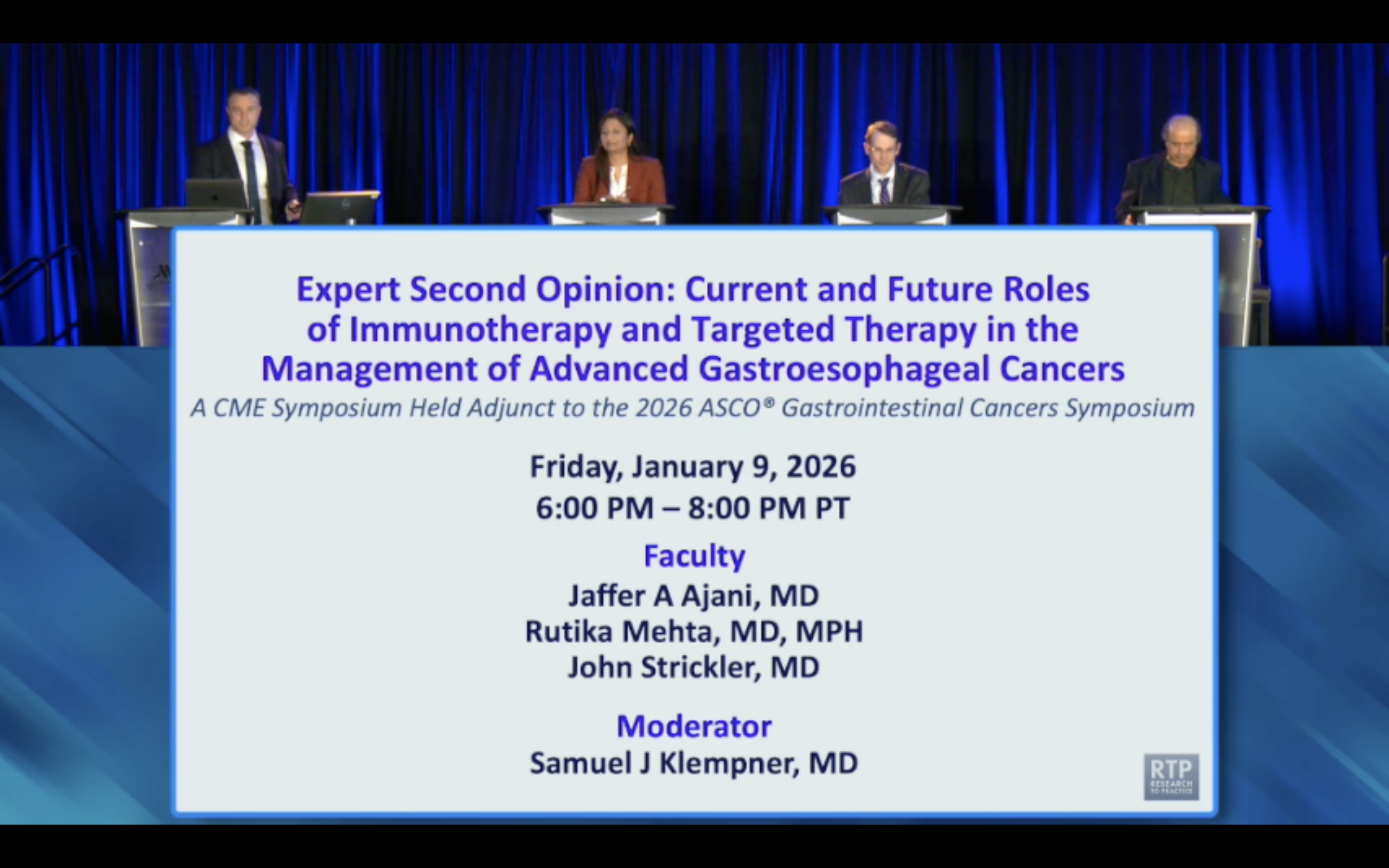
The HORIZON-GEA1 trial demonstrated that zanidatumab, a bispecific antibody, provides a significant survival benefit in HER2-positive gastroesophageal cancers, even in patients with PD-L1 negative tumors. This finding challenges the conventional wisdom that checkpoint inhibitors are the primary driver of benefit in combination therapies.