Get your free personalized podcast brief
We scan new podcasts and send you the top 5 insights daily.
The U.S. ban on DJI drones is proving ineffective. Bill Bishop argues it's premature because DJI's products are superior in both performance and cost. Without competitive American alternatives, key users like law enforcement still need DJI products, leading to loopholes and a weakening of the regulation's intent.

Related Insights
By banning only *new models* of foreign drones, the FCC is signaling a long-term protected market for U.S. manufacturers. This gradual approach acknowledges that the current domestic industry is uncompetitive and needs time and incentive to scale up to compete with firms like DJI.

To overcome US regulations banning autonomous flight, Zipline found a life-saving use case (blood delivery) so critical that a foreign government would create a legal framework, allowing them to scale and prove their technology.

The proliferation of drones is fueled by consumer electronics. Companies like Qualcomm and Nvidia provide powerful "system on a chip" components and even reference designs, making it easy for non-state actors and smaller nations to build and deploy advanced military hardware that was previously inaccessible.

Sophisticated gangs are using drones with their ADS-B trackers removed to scout wealthy homes without detection. Meanwhile, federal regulations prevent local law enforcement from deploying counter-drone technology, creating a situation where criminals have superior aerial capabilities and police have their hands tied.

By coining the term 'low altitude economy,' China is signaling a deliberate, top-down industrial strategy to own the market for autonomous flying vehicles (EVTOLs) and delivery drones. This isn't just about a single company; it's about creating and regulating a new economic sector to establish a global manufacturing and operational lead.

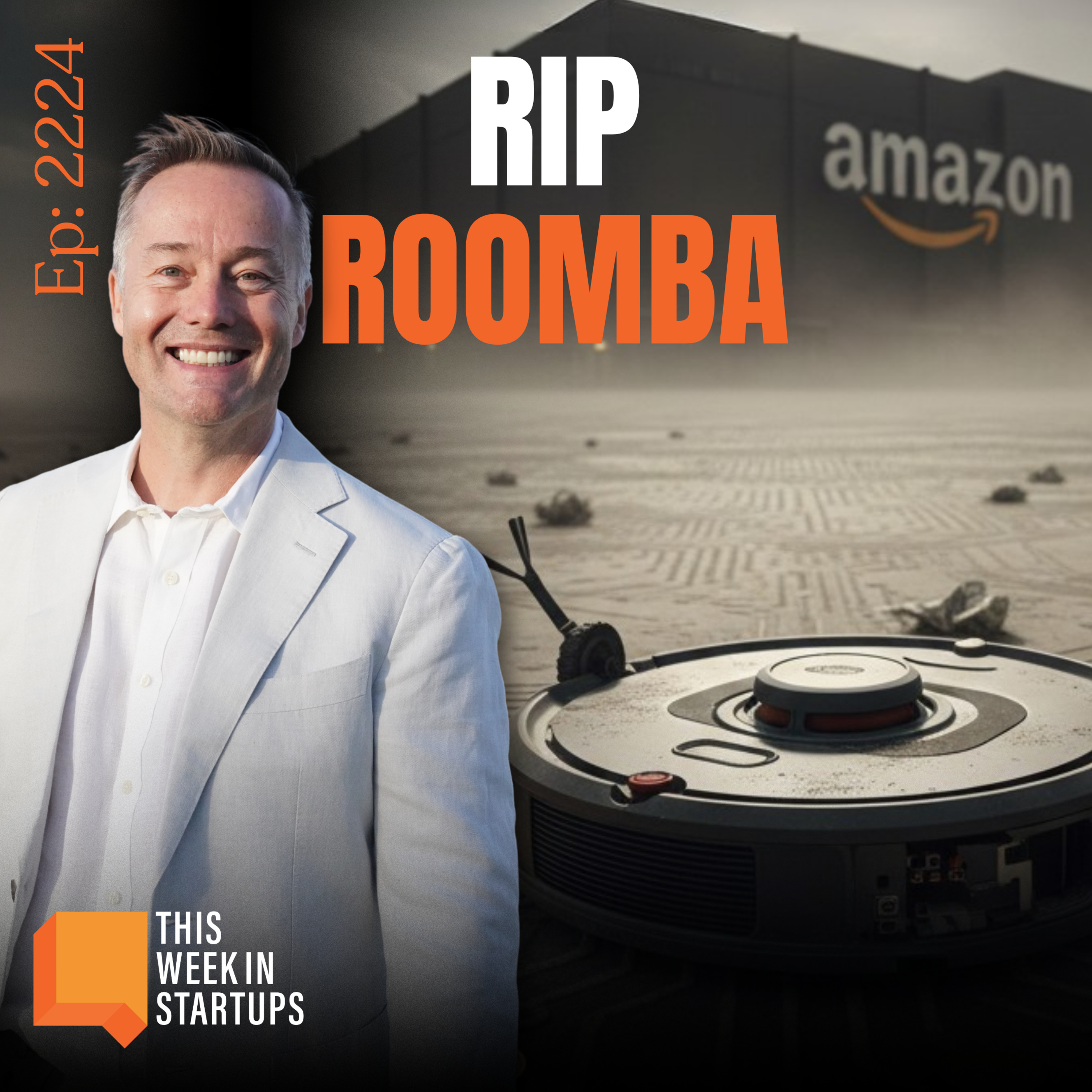
After regulators blocked Amazon’s $1.7B acquisition of iRobot, the robotics company went bankrupt. Its assets and IP were then acquired by its Chinese contract manufacturer, illustrating how antitrust actions intended to protect competition can inadvertently destroy American companies and cede technology to foreign entities.
Building hardware compliant with US defense standards (NDAA) presents a major cost hurdle. Marine robotics company CSATS notes that switching from a mass-produced Chinese component to a US-made alternative can increase the price by 8x to 15x, a significant economic challenge for re-shoring manufacturing.

Zipline's CEO argues the US can't compete with China's scale on simple drones. The winning strategy is to innovate on complex, state-of-the-art aircraft where America leads, and then scale that manufacturing advantage.
The US ban on selling Nvidia's most advanced AI chips to China backfired. It forced China to accelerate its domestic chip industry, with companies like Huawei now producing competitive alternatives, ultimately reducing China's reliance on American technology.

The U.S. ban on new foreign drones is a strategic industrial policy. By eliminating competition from market leader DJI, the policy is designed to foster a domestic drone industry that can serve consumer needs while building the capacity to scale production for potential military conflicts.