Get your free personalized podcast brief
We scan new podcasts and send you the top 5 insights daily.
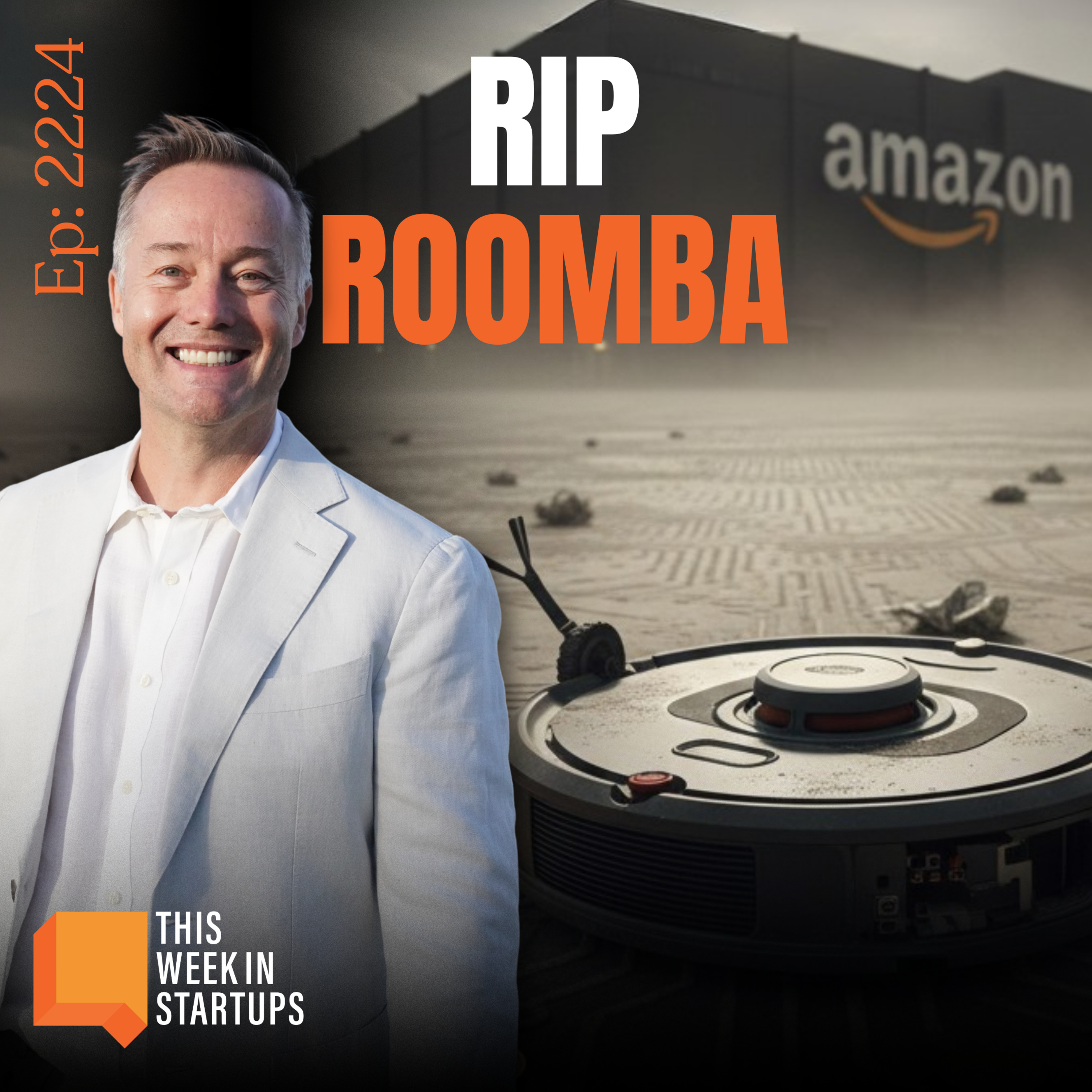
After regulators blocked Amazon’s $1.7B acquisition of iRobot, the robotics company went bankrupt. Its assets and IP were then acquired by its Chinese contract manufacturer, illustrating how antitrust actions intended to protect competition can inadvertently destroy American companies and cede technology to foreign entities.
Related Insights
To prevent its suppliers from going bankrupt if contracts were cut, Apple mandated that no supplier could be more than 50% dependent on its business. This forced highly-trained manufacturers to find other customers, directly enabling the rise of sophisticated Chinese smartphone brands like Huawei and Xiaomi.

Platforms grew dominant by acquiring competitors, a direct result of failed antitrust enforcement. Cory Doctorow argues debates over intermediary liability (e.g., Section 230) are a distraction from the core issue: a decades-long drawdown of anti-monopoly law.

As traditional economic-based antitrust enforcement weakens, a new gatekeeper for M&A has emerged: political cronyism. A deal's approval may now hinge less on market concentration analysis and more on a political leader’s personal sentiment towards the acquiring CEO, fundamentally changing the risk calculus for corporate strategists.

Restricting sales to China is a catastrophic mistake that creates a protected, trillion-dollar market for domestic rivals like Huawei. This funds their R&D and global expansion with monopoly profits. To win the long-term AI race, American tech must be allowed to compete everywhere.

While China bans many US tech giants, it welcomed Tesla. A compelling theory suggests this was a strategic move to observe and learn Tesla's methods for mass-producing EVs at scale, thereby accelerating the development of domestic champions like BYD, mirroring its past strategy with Apple's iPhone.

Apple wasn't a visionary in offshoring; it was a laggard. Its move to China was driven by the inability to manufacture the radically different iMac, a product designed to save the company. This desperation forced it to abandon its long-held control over manufacturing and partner with Asian suppliers.
Contrary to their intent, U.S. export controls on AI chips have backfired. Instead of crippling China's AI development, the restrictions provided the necessary incentive for China to aggressively invest in and accelerate its own semiconductor industry, potentially eroding the U.S.'s long-term competitive advantage.

The AI lobby's argument to ignore IP rights to outpace China is shortsighted. The US's global strength is built on robust IP protection. Eroding this standard domestically jeopardizes the ability to protect American innovations, like OpenAI's own models, abroad. Respecting IP is the long-term strategic play.

To mitigate its own risk, Apple's "50% rule" required suppliers to find other customers. This policy forced them to share advanced manufacturing processes co-developed with Apple, directly enabling the rise of Chinese smartphone rivals like Xiaomi and Huawei.
The FTC's failure to prove Meta held a monopoly set a powerful legal precedent, signaling that regulators face a high burden of proof. This has effectively given a green light to large-scale acquisitions, kicking off a "golden age of M&A" as companies feel emboldened to pursue mega-deals without fear of being blocked.
