Get your free personalized podcast brief
We scan new podcasts and send you the top 5 insights daily.
The proliferation of drones is fueled by consumer electronics. Companies like Qualcomm and Nvidia provide powerful "system on a chip" components and even reference designs, making it easy for non-state actors and smaller nations to build and deploy advanced military hardware that was previously inaccessible.

Related Insights
Warfare has evolved to a "sixth domain" where cyber becomes physical. Mass drone swarms act like a distributed software attack, requiring one-to-many defense systems analogous to antivirus software, rather than traditional one-missile-per-target defenses which cannot scale.
Successful "American Dynamism" companies de-risk hardware development by initially using off-the-shelf commodity components. Their unique value comes from pairing this accessible hardware with sophisticated, proprietary software for AI, computer vision, and autonomy. This approach lowers capital intensity and accelerates time-to-market compared to traditional hardware manufacturing.

The conflict in Ukraine exposed the vulnerability of expensive, "exquisite" military platforms (like tanks) to inexpensive technologies (like drones). This has shifted defense priorities toward cheap, mass-producible, "attritable" systems. This fundamental change in product and economics creates a massive opportunity for startups to innovate outside the traditional defense prime model.
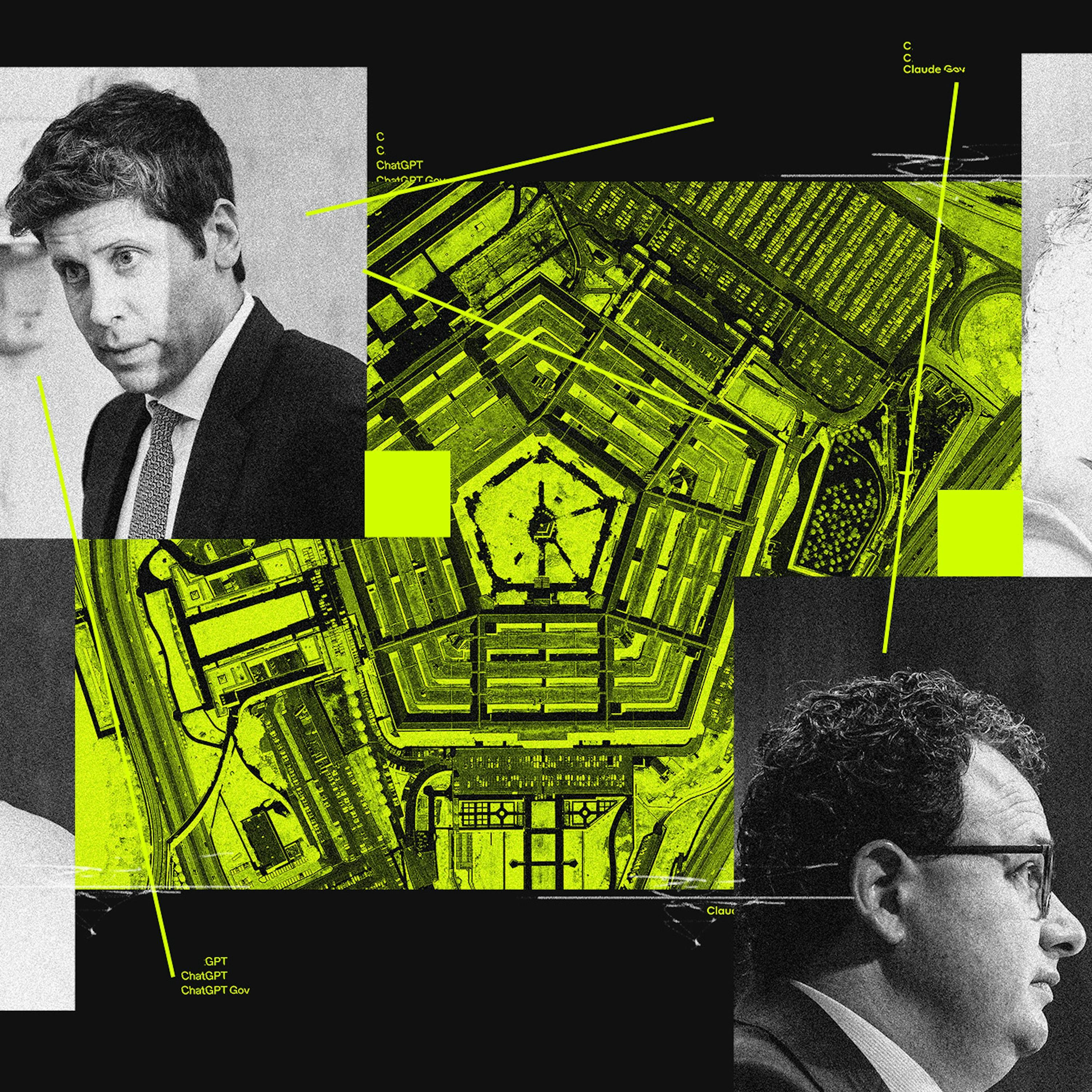
Leading AI companies, facing high operational costs and a lack of profitability, are turning to lucrative government and military contracts. This provides a stable revenue stream and de-risks their portfolios with government subsidies, despite previous ethical stances against military use.
Seemingly strange deals, like NVIDIA investing in companies that then buy its GPUs, serve a deep strategic purpose. It's not just financial engineering; it's a way to forge co-dependent alliances, secure its central role in the ecosystem, and effectively anoint winners in the AI arms race.

The venture capital mantra that "hardware is hard" is outdated for the American Dynamism category. Startups in this space mitigate risk by integrating off-the-shelf commodity hardware with sophisticated software. This avoids the high capital costs and unpredictable sales cycles of consumer electronics.

While the West may lead in AI models, China's key strategic advantage is its ability to 'embody' AI in hardware. Decades of de-industrialization in the U.S. have left a gap, while China's manufacturing dominance allows it to integrate AI into cars, drones, and robots at a scale the West cannot currently match.
Unlike mass manufacturers, defense tech requires flexibility for a high mix of low-volume products. Anduril addresses this by creating a core platform of reusable software, hardware, and sensor components, enabling fast development and deployment of new systems without starting from scratch.

The competitive threat from custom ASICs is being neutralized as NVIDIA evolves from a GPU company to an "AI factory" provider. It is now building its own specialized chips (e.g., CPX) for niche workloads, turning the ASIC concept into a feature of its own disaggregated platform rather than an external threat.

The war in Ukraine has evolved from a traditional territorial conflict into a "robot war," with drones dominating the front lines. This real-world battlefield is accelerating innovation at an "unbelievable" pace, driving new solutions for secure communications and autonomous targeting, providing critical lessons for US drone strategy.