Get your free personalized podcast brief
We scan new podcasts and send you the top 5 insights daily.
Teams often default to convenient embedding models from their cloud provider, treating them as interchangeable. This is a critical mistake. The choice of embedding model directly impacts retrieval quality, with specialized models offering double-digit performance gains that can unlock new capabilities.

Related Insights
Instead of using massive, expensive LLMs for every task, companies can solve the "tokenpocalypse" (runaway token costs) by pairing smaller models with high-quality retrieval systems. This allows cheap models to act like large ones, saving significant costs.

Google's Embedding 2 model is a significant infrastructure upgrade because it is 'natively multimodal.' This allows AI to directly understand and retrieve images, diagrams, and text without first converting non-text data into lossy captions. This makes internal knowledge bases and co-pilots dramatically more effective and accurate for enterprises.

Use a tiered approach for model selection based on parameter count. Models under 10B are for simple tasks like RAG. The 10-100B range is the sweet spot for agentic systems. Models over 100B parameters are for complex, multi-lingual, enterprise-wide deployments.

Before considering expensive model fine-tuning, implement Retrieval-Augmented Generation (RAG). RAG dynamically retrieves information from a knowledge base to augment the prompt, solving most domain-specific problems efficiently. The recommended hierarchy is: Prompt Optimization -> Context Engineering -> RAG -> Fine-tuning.

To avoid frantic, high-pressure migrations when an embedding model is deprecated, teams should treat model selection as a dependency that requires planned updates, like any other software library. This mindset shifts the process from an emergency scramble to routine, planned maintenance, making upgrades predictable and manageable.
Standard Retrieval-Augmented Generation (RAG) systems often fail because they treat complex documents as pure text, missing crucial context within charts, tables, and layouts. The solution is to use vision language models for embedding and re-ranking, making visual and structural elements directly retrievable and improving accuracy.
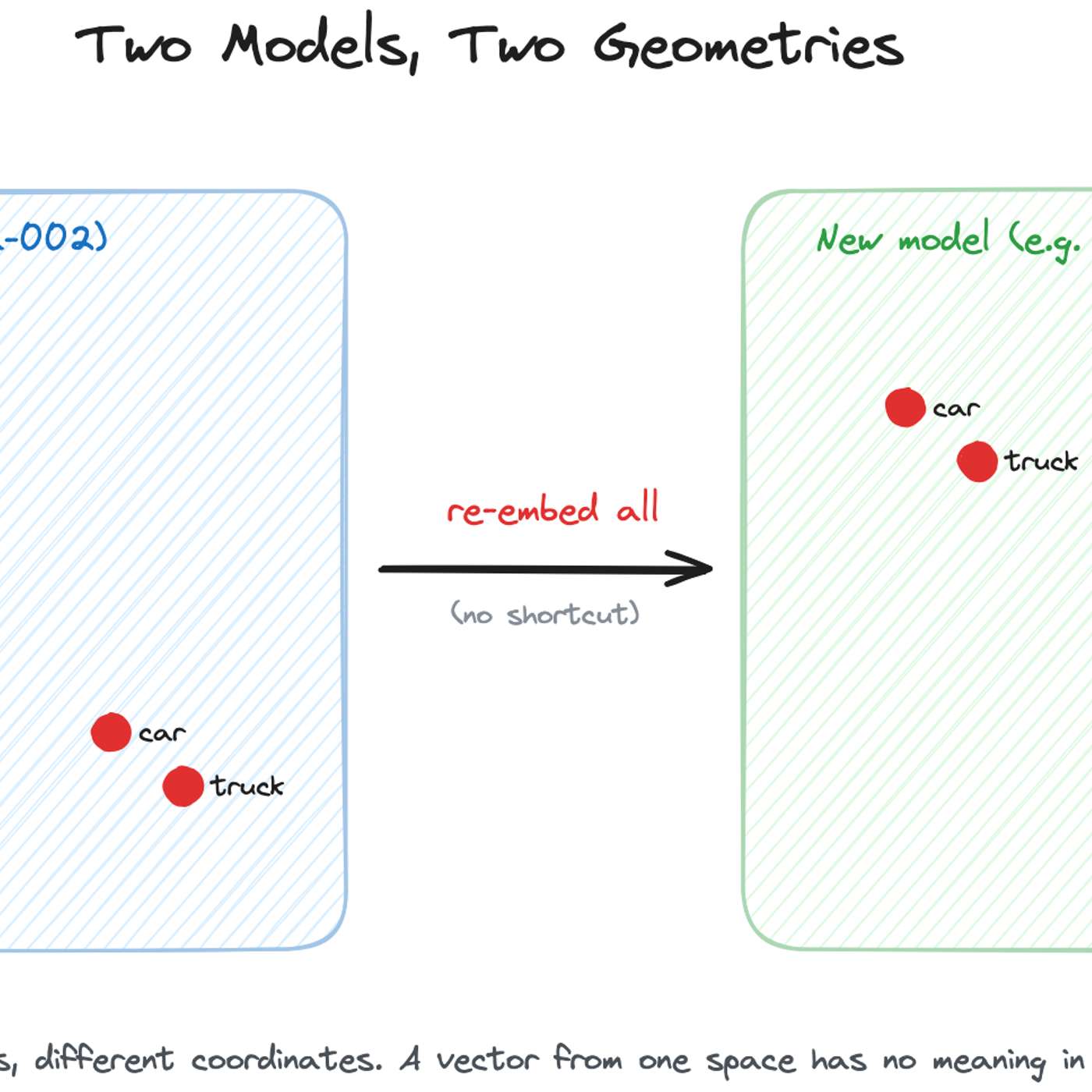
A typical A/B test re-ranks the same set of results. However, changing the embedding model alters the fundamental retrieval step, meaning the two versions return entirely different sets of documents for the same query. This complicates analysis, as performance differences reflect both model quality and the content of the newly retrieved documents.
Vector similarity does not equal relevance. A lightweight re-ranker model, placed between retrieval and generation, rescores search results for usefulness. This significantly improves performance on ambiguous queries and is one of the highest-impact additions to a RAG pipeline.
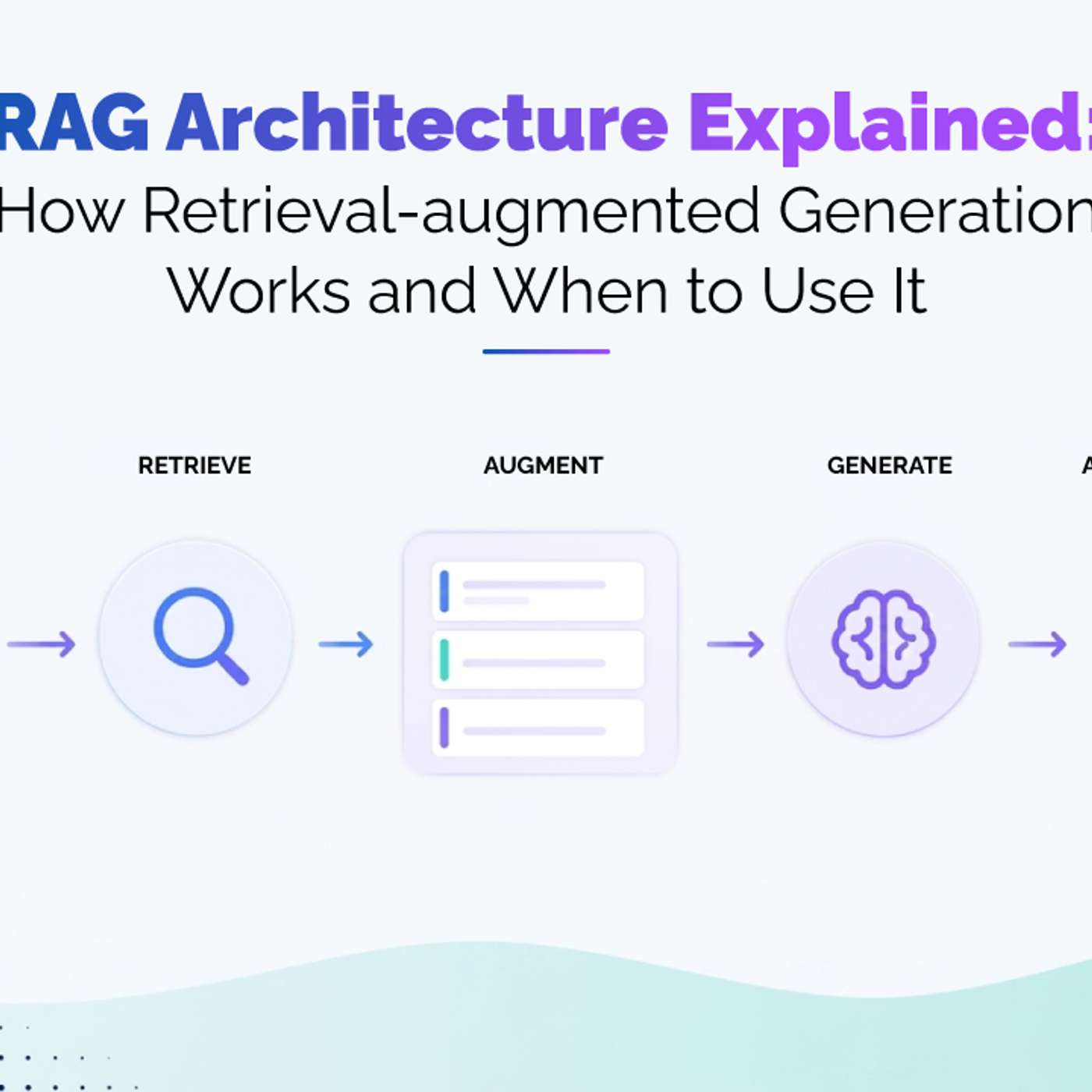
Teams often agonize over which vector database to use for their Retrieval-Augmented Generation (RAG) system. However, the most significant performance gains come from superior data preparation, such as optimizing chunking strategies, adding contextual metadata, and rewriting documents into a Q&A format.
An emerging rule from enterprise deployments is to use small, fine-tuned models for well-defined, domain-specific tasks where they excel. Large models should be reserved for generic, open-ended applications with unknown query types where their broad knowledge base is necessary. This hybrid approach optimizes performance and cost.