Get your free personalized podcast brief
We scan new podcasts and send you the top 5 insights daily.
The UK government's decision to drop charges against two alleged spies for China created a massive political scandal. Rather than containing the issue, the collapse of the case fueled widespread suspicion that the government was appeasing Beijing. This turned the public focus away from the alleged spies and onto the government's perceived weakness and foreign policy failures.

Related Insights
A former CIA operative suggests that government secrecy is frequently a tool to hide administrative incompetence, premature announcements, or procedural errors, rather than to cover up nefarious, large-scale conspiracies. This perspective reframes public distrust from calculated malice to bureaucratic failure.

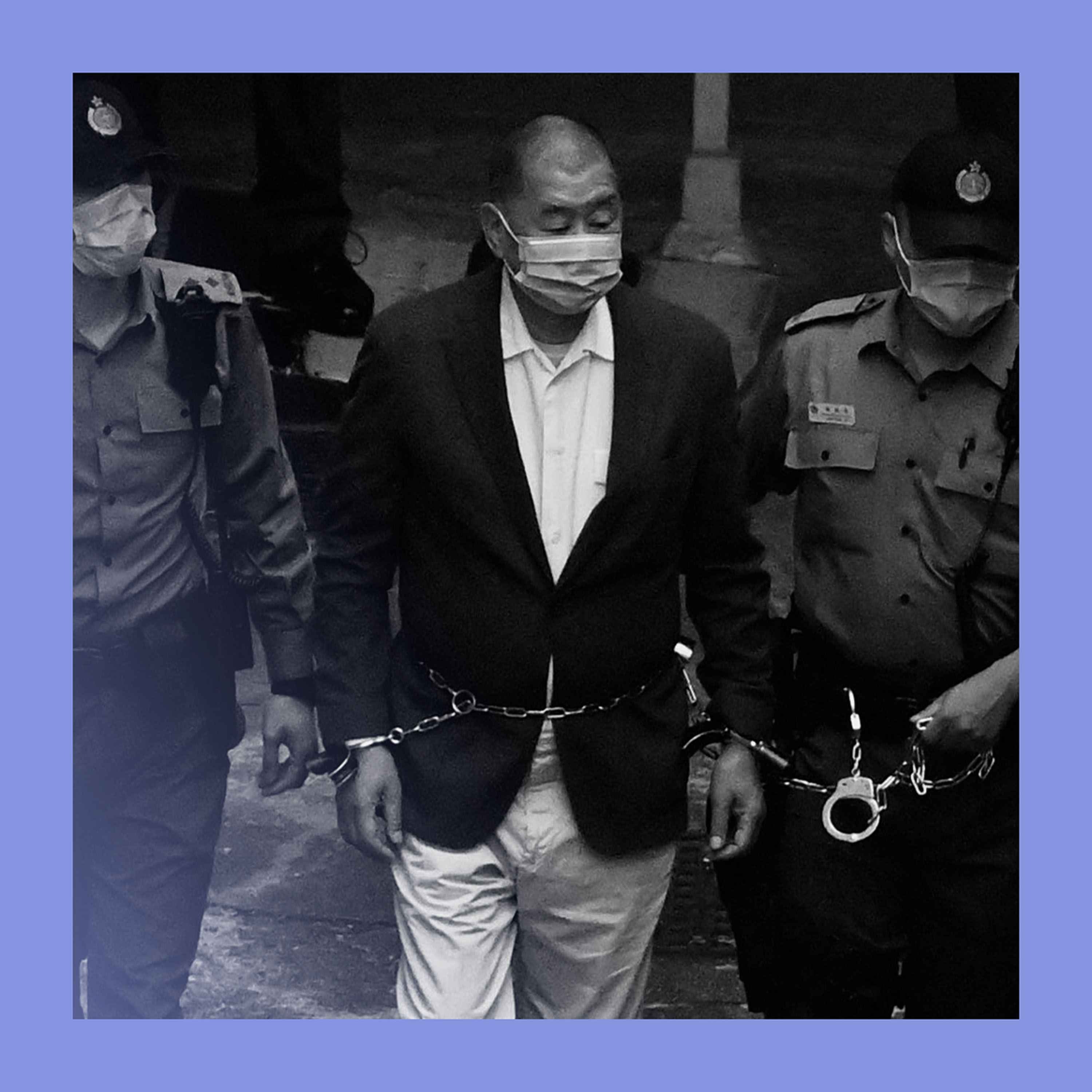
The conviction of media mogul Jimmy Lai underscores the sweeping power of the 2020 national security law imposed by Beijing. This legislation has fundamentally altered Hong Kong's legal system, with an expected 95% of cases ending in conviction, effectively creating a legal apparatus for silencing dissent.
When the investigation reached the President's inner circle, the government machine mobilized against the anti-corruption bodies. Ukraine's security services arrested several detectives involved in the probe, accusing them of collaborating with Russia. This tactic attempts to reframe a legitimate investigation as a threat to national security.

Hong Kong's leadership is leveraging aid from mainland China, such as a rescue task force, to showcase the benefits of closer ties with Beijing. This narrative strategically shifts focus away from local government accountability for the disaster and reinforces the mainland's growing influence over the city.

Intelligence agencies' biggest concern is "blowback"—the severe diplomatic, economic, and intelligence-sharing penalties from allies if a covert operation is exposed. The risk of alienating a critical ally, such as the U.S., far outweighs any potential gain from an operation like a political assassination on their soil.
The UK government's attempt to balance economic engagement with security concerns by labeling China an "epoch-defining challenge" rather than a direct "threat" proved untenable in court. Prosecuting espionage under the Official Secrets Act required a clear declaration of threat, a black-and-white stance that the government's nuanced foreign policy could not provide, leading to the case's collapse.
An administration has no incentive to fully resolve a major public scandal because its unresolved nature makes it a perfect "red herring." It can be used repeatedly to distract the public and media from current policy failures or other damaging news, making perpetual ambiguity more politically useful than transparency.
The global response to Jimmy Lai's conviction is more subdued than in previous years. Western leaders who once advocated for his release are now prioritizing trade deals and diplomatic engagement with China, showing how immediate economic interests can override and mute stated human rights concerns.
The massive "Operation Midas" investigation didn't start with the main crime. It began when a politician worked with investigators on a sting against a developer. The developer's seized devices provided the crucial next lead, ultimately exposing a vast money-laundering network connected to the president's inner circle.
In a classic quid pro quo, China is stalling refurbishment on the aging British embassy in Beijing. This delay is tactical, used as leverage to pressure the UK government into approving plans for a massive, controversial new Chinese embassy in London. This turns a standard planning decision into a high-stakes diplomatic litmus test for the UK-China relationship.