Get your free personalized podcast brief
We scan new podcasts and send you the top 5 insights daily.
Clay CEO Kareem Amin runs his company based on three core principles imagined as statues: Courage to take real risks, Truth in communication and vision, and Justice in treating people fairly. This philosophical framework guides culture and high-stakes decisions, moving beyond typical corporate values.
![Kareem Amin - Re-Enchanting the World - [Invest Like the Best, EP.478] thumbnail](https://megaphone.imgix.net/podcasts/ef669774-cccd-11ed-889b-c36caad6646f/image/158efdddfb983d2678b3530d484e8aa2.jpg?ixlib=rails-4.3.1&max-w=3000&max-h=3000&fit=crop&auto=format,compress)
Related Insights
Don't ask "what should our values be?" Instead, identify the 5-10 things that are the reason you are succeeding. Codify those real, existing behaviors—like "speed above everything"—into your company's operating principles. This makes them authentic and effective.

To prevent values from becoming empty platitudes, integrate them into your company's core operating system. At Applied Intuition, managers are assessed, compensated, and promoted based on their adherence to values. For example, "decisiveness" is a key metric evaluated under the value of "speed."
Most corporate values statements (e.g., "integrity") are unactionable and don't change internal culture. Effective leaders codify specific, observable behaviors—the "how" of working together. This makes unspoken expectations explicit and creates a clear standard for accountability that a vague value never could.

Instead of a long list of values, high-performing CEOs create an energized culture by defining and rigorously enforcing a minimal set of core values, such as "be competent and be kind." This simplicity makes them easy to remember, measure, and act upon decisively.

Courage cannot be demanded or simply listed as a corporate value. A leader's key role is to be a 'context architect,' creating the organizational conditions for brave behavior. This includes allowing for failure, resourcing experimentation, and embodying courage personally, thereby enabling the entire organization to act bravely.
To maintain brand integrity while scaling, Crunch Labs translated its ethos into three actionable pillars: 'Spark Curiosity, Embrace Failure, Build Creative Confidence.' This framework is now a universal filter used by every team to evaluate all projects, from new products to ad campaigns, ensuring consistent alignment.

Values are not just words on a wall; they are an active management system. They should be a filter in the hiring process, a reason for public celebration when embodied, and a non-negotiable standard for performance. A company's true values are defined by the behavior it is willing to tolerate.

Taza's founders established a mission and core values like "True Grit" and "Seriously Bold" at the very beginning. They attribute their longevity and ability to navigate crises directly to these principles, noting that their biggest business stumbles happened whenever they deviated from this North Star.

Using a mythological framework, founders are not the dutiful, rule-following 'Ram' archetype. They are 'Krishnas': driven by strong core values but willing to bend or break conventional rules to achieve their mission. Dutiful 'Rams' are better for scaling a company, not starting one.
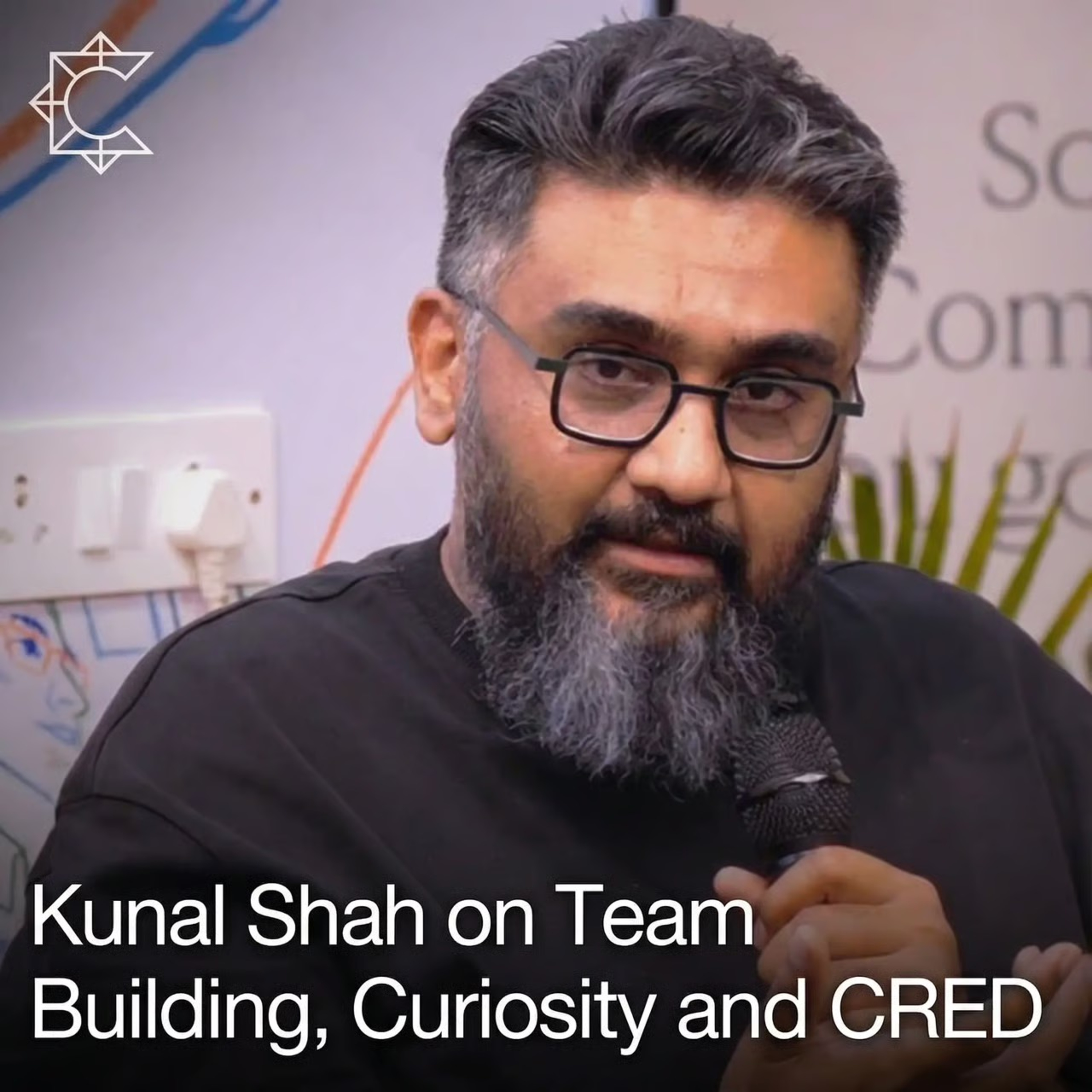
A-Frame's CEO argues that early-stage companies shouldn't try to manufacture a value system. The most effective and sustainable values are an authentic extension of the founder's own personal beliefs. Trying to fake it or hide what's important to you will ultimately fail.
