Get your free personalized podcast brief
We scan new podcasts and send you the top 5 insights daily.
AI tools like ambient scribing are preventing physician and nurse burnout by automating administrative tasks and saving hours each day. This serves as a critical retention tool for a system facing a massive labor shortage, allowing experienced professionals to stay in their jobs longer.

Related Insights
While fears of AI-driven job loss are valid in some industries, healthcare faces a massive and growing supply-demand mismatch. With record shortages of clinicians and unlimited demand, AI is less a job destroyer and more a critical tool to augment existing workers.

Doctronic's AI-native care platform dramatically increases physician productivity. By using AI to handle initial intake and summarization, doctors can see 15 or more patients an hour, compared to the traditional telehealth rate of four. This demonstrates AI's potential to address the supply-demand mismatch in healthcare.

The most effective AI strategy focuses on 'micro workflows'—small, discrete tasks like summarizing patient data. By optimizing these countless small steps, AI can make decision-makers 'a hundred-fold more productive,' delivering massive cumulative value without relying on a single, high-risk autonomous solution.

While clinical AI is promising, the most immediate ROI is in tackling the $1 trillion in administrative waste (20-25% of total costs). AI can automate friction points like scheduling and prior authorizations, directly improving the patient experience and bending the cost curve.

An effective AI strategy in healthcare is not limited to consumer-facing assistants. A critical focus is building tools to augment the clinicians themselves. An AI 'assistant' for doctors to surface information and guide decisions scales expertise and improves care quality from the inside out.

The successful early adoption of AI in healthcare was brilliant because it first targeted the administrative burdens that clinicians hate, such as documentation (scribes) and billing. By winning the hearts and minds of powerful incumbents with immediate quality-of-life improvements, the industry built momentum for more complex clinical applications.

The most tangible ROI for AI in healthcare today isn't in complex diagnostics, but in operational efficiency. AI scribes that free up doctors, intelligent call centers that triage patients correctly, and automated claim management are solving major bottlenecks and fighting burnout right now.

Instead of replacing doctors, AI will serve as a force multiplier for scarce General Practitioners. By automating paperwork and answering repetitive patient questions, AI frees doctors to focus on high-value human interaction and complex diagnosis.

A primary driver of physician burnout isn't the difficulty of medicine but the overwhelming administrative load. Talented doctors are leaving the profession because their time is consumed by paperwork and fighting with insurance companies, creating a huge opportunity for automation.
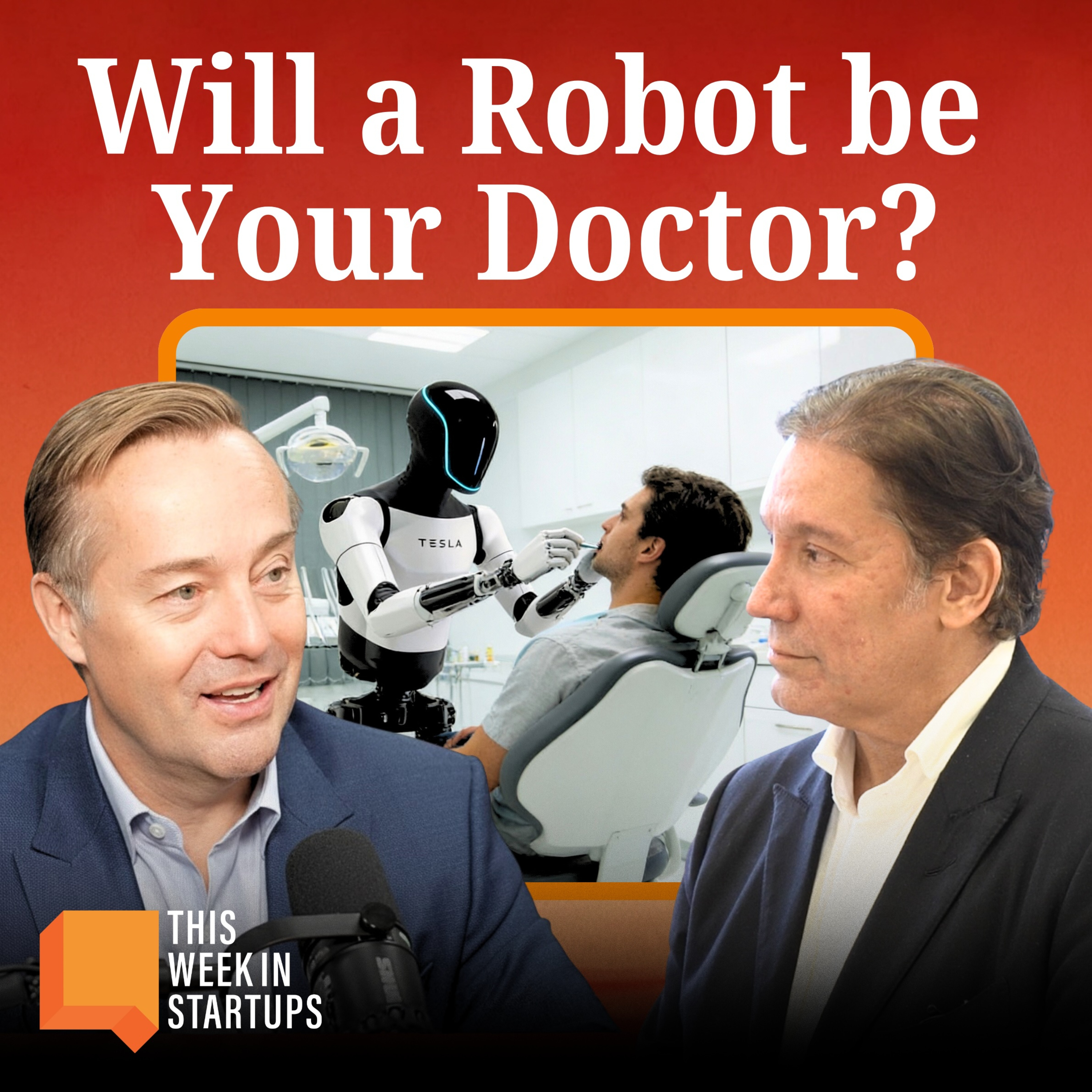
Instead of replacing clinicians, AI's promise lies in offloading work to virtual assistants. These agents will prepare pre-visit summaries, ask patients questions beforehand, and manage post-visit follow-ups like checking on prescriptions and lab tests, acting as a force multiplier for the human care team.