Get your free personalized podcast brief
We scan new podcasts and send you the top 5 insights daily.
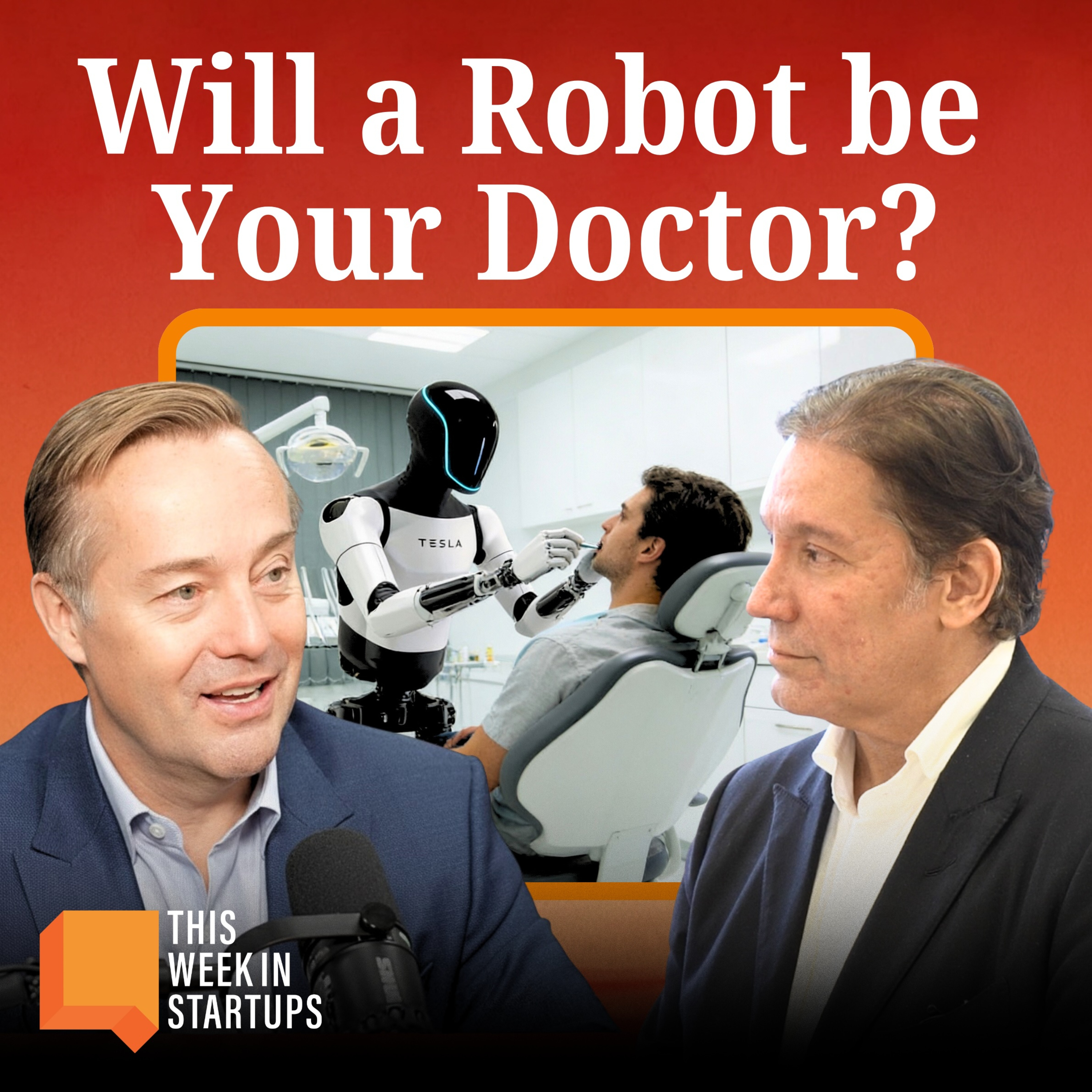
A primary driver of physician burnout isn't the difficulty of medicine but the overwhelming administrative load. Talented doctors are leaving the profession because their time is consumed by paperwork and fighting with insurance companies, creating a huge opportunity for automation.
Related Insights
The new Medicare 'Access' code for AI in chronic care is priced too low to be profitable if humans are kept in the loop. This clever incentive design forces providers to adopt genuine AI-driven leverage rather than simply relabeling human effort, a first for healthcare technology.

The most significant opportunity for AI in healthcare lies not in optimizing existing software, but in automating 'net new' areas that once required human judgment. Functions like patient engagement, scheduling, and symptom triage are seeing explosive growth as AI steps into roles previously held only by staff.
The friction of navigating insurance and pharmacies is so high that chronic disease patients often give up, skipping tests or medications and directly worsening their health. AI can automate these tedious tasks, removing the barriers that lead to non-compliance and poor health outcomes.

The conversation around AI in healthcare often focuses on patient-facing chatbots. However, the more significant, unspoken trend is adoption by clinicians themselves. As of last year, two out of three American doctors were already using AI for administrative tasks, translation, and even as a 'wingman' for clinical diagnosis.

Jensen Huang uses radiology as an example: AI automated the *task* of reading scans, but this freed up radiologists to focus on their *purpose*: diagnosing disease. This increased productivity and demand, ultimately leading to more jobs, not fewer.

The immense regulatory complexity in U.S. healthcare creates an estimated $500 billion "tax" of administrative bloat. The non-obvious opportunity is that by using AI to eliminate this waste, the savings could be redirected to fund expanded patient care, rather than just being captured as profit.

While AI has vast potential, its most immediate and successful entry point is automating prior authorizations. This administrative bottleneck is considered an 'easy win' because it's non-patient-facing, has a clear ROI, and sits at the front of treatment, leading to natural and rapid adoption.
Chronic disease patients face a cascade of interconnected problems: pre-authorizations, pharmacy stockouts, and incomprehensible insurance rules. AI's potential lies in acting as an intelligent agent to navigate this complex, fragmented system on behalf of the patient, reducing waste and improving outcomes.
PE acquisitions in healthcare impose rigid, cost-cutting operational models that strip physicians of their professional autonomy. This transforms them into cogs in a machine, driving burnout and fueling unionization efforts among doctors.

Approximately 30% of U.S. healthcare costs are administrative. AI tools like ChatGPT Health can dramatically reduce this bloat for both providers (paperwork automation) and patients (avoiding unnecessary visits for false alarms), effectively slimming down systemic expenses like the popular weight-loss drug.