Get your free personalized podcast brief
We scan new podcasts and send you the top 5 insights daily.
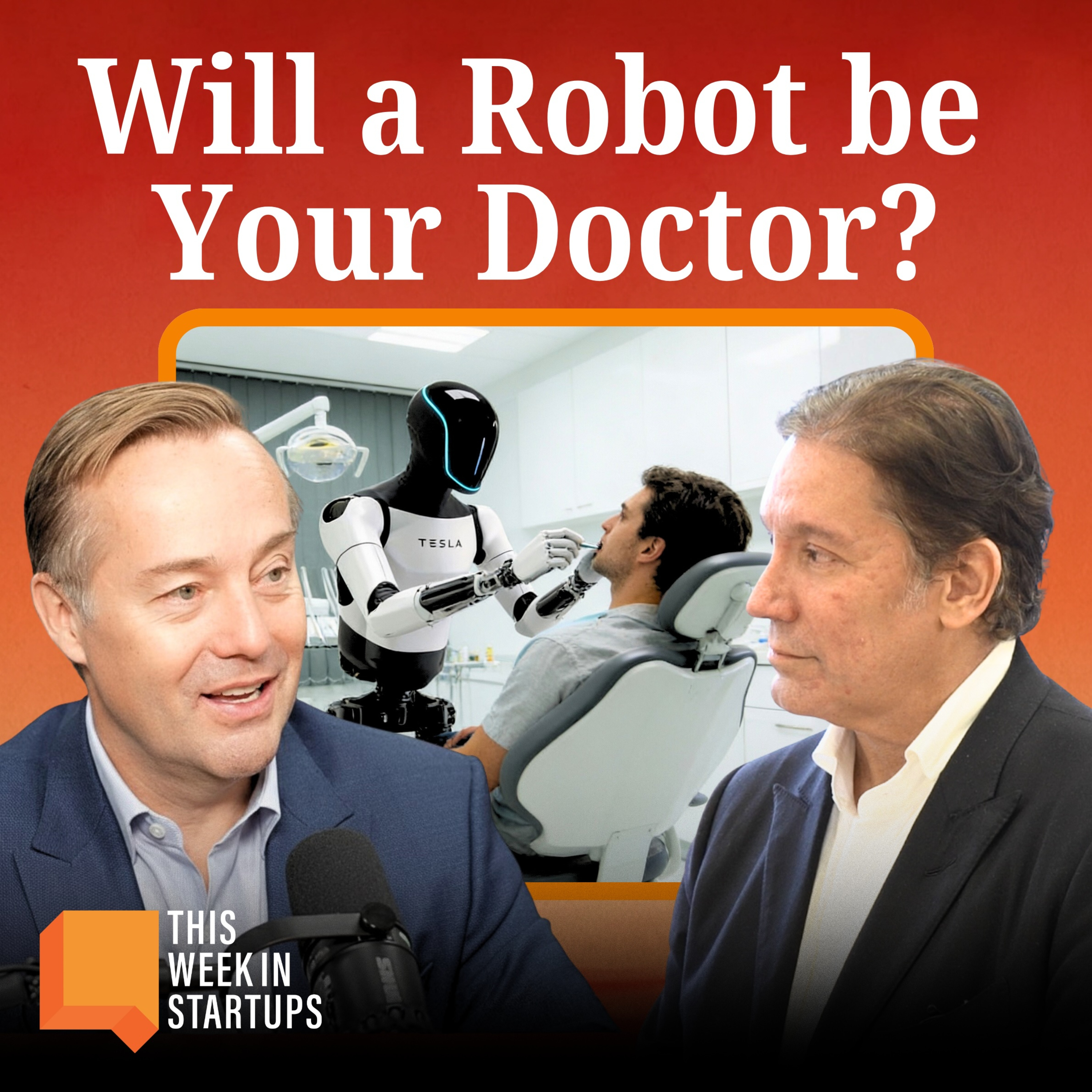
Instead of replacing doctors, AI will serve as a force multiplier for scarce General Practitioners. By automating paperwork and answering repetitive patient questions, AI frees doctors to focus on high-value human interaction and complex diagnosis.

Related Insights
As AI handles complex diagnoses and treatment data, the doctor's primary role will shift to the 'biopsychosocial' aspects of care—navigating family dynamics, patient psychology, and social support for life-and-death decisions that AI cannot replicate.

The future of healthcare will see AI handling initial patient consultations, effectively becoming the primary care doctor. This will streamline the process, sending patients directly to specialized clinics for diagnostic tests, bypassing traditional, inefficient doctor visits.
The most effective AI strategy focuses on 'micro workflows'—small, discrete tasks like summarizing patient data. By optimizing these countless small steps, AI can make decision-makers 'a hundred-fold more productive,' delivering massive cumulative value without relying on a single, high-risk autonomous solution.

The most significant opportunity for AI in healthcare lies not in optimizing existing software, but in automating 'net new' areas that once required human judgment. Functions like patient engagement, scheduling, and symptom triage are seeing explosive growth as AI steps into roles previously held only by staff.
The conversation around AI in healthcare often focuses on patient-facing chatbots. However, the more significant, unspoken trend is adoption by clinicians themselves. As of last year, two out of three American doctors were already using AI for administrative tasks, translation, and even as a 'wingman' for clinical diagnosis.

Jensen Huang uses radiology as an example: AI automated the *task* of reading scans, but this freed up radiologists to focus on their *purpose*: diagnosing disease. This increased productivity and demand, ultimately leading to more jobs, not fewer.

An effective AI strategy in healthcare is not limited to consumer-facing assistants. A critical focus is building tools to augment the clinicians themselves. An AI 'assistant' for doctors to surface information and guide decisions scales expertise and improves care quality from the inside out.

The widespread use of AI for health queries is set to change doctor visits. Patients will increasingly arrive with AI-generated analyses of their lab results and symptoms, turning appointments into a three-way consultation between the patient, the doctor, and the AI's findings, potentially improving diagnostic efficiency.

A primary driver of physician burnout isn't the difficulty of medicine but the overwhelming administrative load. Talented doctors are leaving the profession because their time is consumed by paperwork and fighting with insurance companies, creating a huge opportunity for automation.
Approximately 30% of U.S. healthcare costs are administrative. AI tools like ChatGPT Health can dramatically reduce this bloat for both providers (paperwork automation) and patients (avoiding unnecessary visits for false alarms), effectively slimming down systemic expenses like the popular weight-loss drug.