Get your free personalized podcast brief
We scan new podcasts and send you the top 5 insights daily.
Instead of replacing clinicians, AI's promise lies in offloading work to virtual assistants. These agents will prepare pre-visit summaries, ask patients questions beforehand, and manage post-visit follow-ups like checking on prescriptions and lab tests, acting as a force multiplier for the human care team.

Related Insights
The future of healthcare will see AI handling initial patient consultations, effectively becoming the primary care doctor. This will streamline the process, sending patients directly to specialized clinics for diagnostic tests, bypassing traditional, inefficient doctor visits.
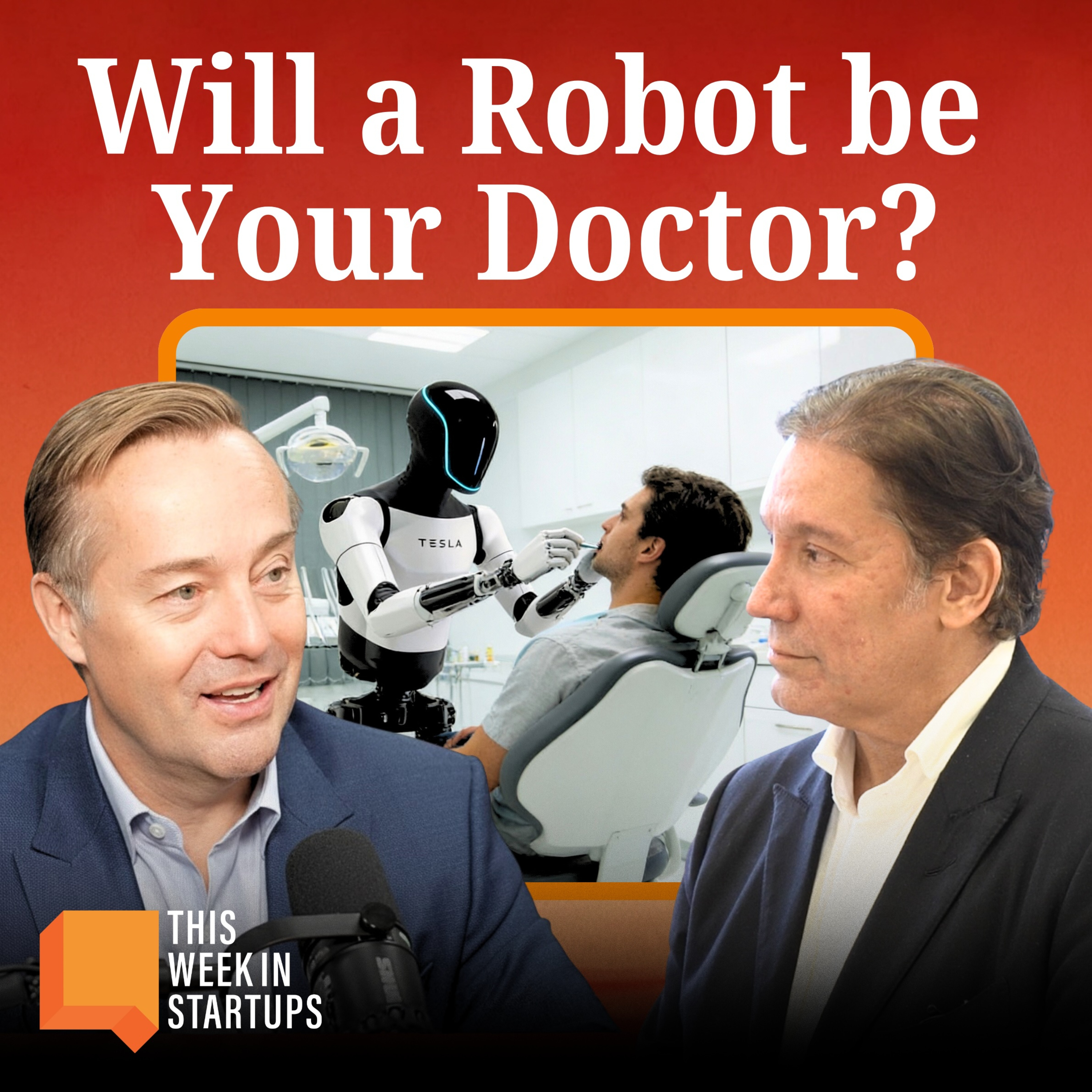
The future of patient interaction involves personal AI assistants (like Siri) managing healthcare tasks. A patient will tell their phone's AI to refill a prescription, which will then communicate directly with the pharmacy's AI to process the request, schedule pickup, and even navigate dependencies like renewing a doctor's visit.
AI's most significant impact won't be on broad population health management, but as a diagnostic and decision-support assistant for physicians. By analyzing an individual patient's risks and co-morbidities, AI can empower doctors to make better, earlier diagnoses, addressing the core problem of physicians lacking time for deep patient analysis.

The next evolution in personalized medicine will be interoperability between personal and clinical AIs. A patient's AI, rich with daily context, will interface with their doctor's AI, trained on clinical data, to create a shared understanding before the human consultation begins.
To overcome resistance, AI in healthcare must be positioned as a tool that enhances, not replaces, the physician. The system provides a data-driven playbook of treatment options, but the final, nuanced decision rightfully remains with the doctor, fostering trust and adoption.

The most effective AI strategy focuses on 'micro workflows'—small, discrete tasks like summarizing patient data. By optimizing these countless small steps, AI can make decision-makers 'a hundred-fold more productive,' delivering massive cumulative value without relying on a single, high-risk autonomous solution.

The most significant opportunity for AI in healthcare lies not in optimizing existing software, but in automating 'net new' areas that once required human judgment. Functions like patient engagement, scheduling, and symptom triage are seeing explosive growth as AI steps into roles previously held only by staff.
An effective AI strategy in healthcare is not limited to consumer-facing assistants. A critical focus is building tools to augment the clinicians themselves. An AI 'assistant' for doctors to surface information and guide decisions scales expertise and improves care quality from the inside out.

The widespread use of AI for health queries is set to change doctor visits. Patients will increasingly arrive with AI-generated analyses of their lab results and symptoms, turning appointments into a three-way consultation between the patient, the doctor, and the AI's findings, potentially improving diagnostic efficiency.

Instead of replacing doctors, AI will serve as a force multiplier for scarce General Practitioners. By automating paperwork and answering repetitive patient questions, AI frees doctors to focus on high-value human interaction and complex diagnosis.
