Get your free personalized podcast brief
We scan new podcasts and send you the top 5 insights daily.
Early internal tests of a driver-assist feature revealed a critical flaw: employees became dangerously inattentive, trusting the technology beyond its capabilities. This pivotal insight caused Waymo to commit exclusively to fully autonomous systems where the human is never expected to intervene.

Related Insights
Unlike typical tech development that focuses on capabilities first, Waymo embeds safety as a "non-negotiable foundation" from the start. This means building safety into the model architecture and team mindset, as the approach to achieving 90% performance is fundamentally different from reaching the final "nines" of reliability.
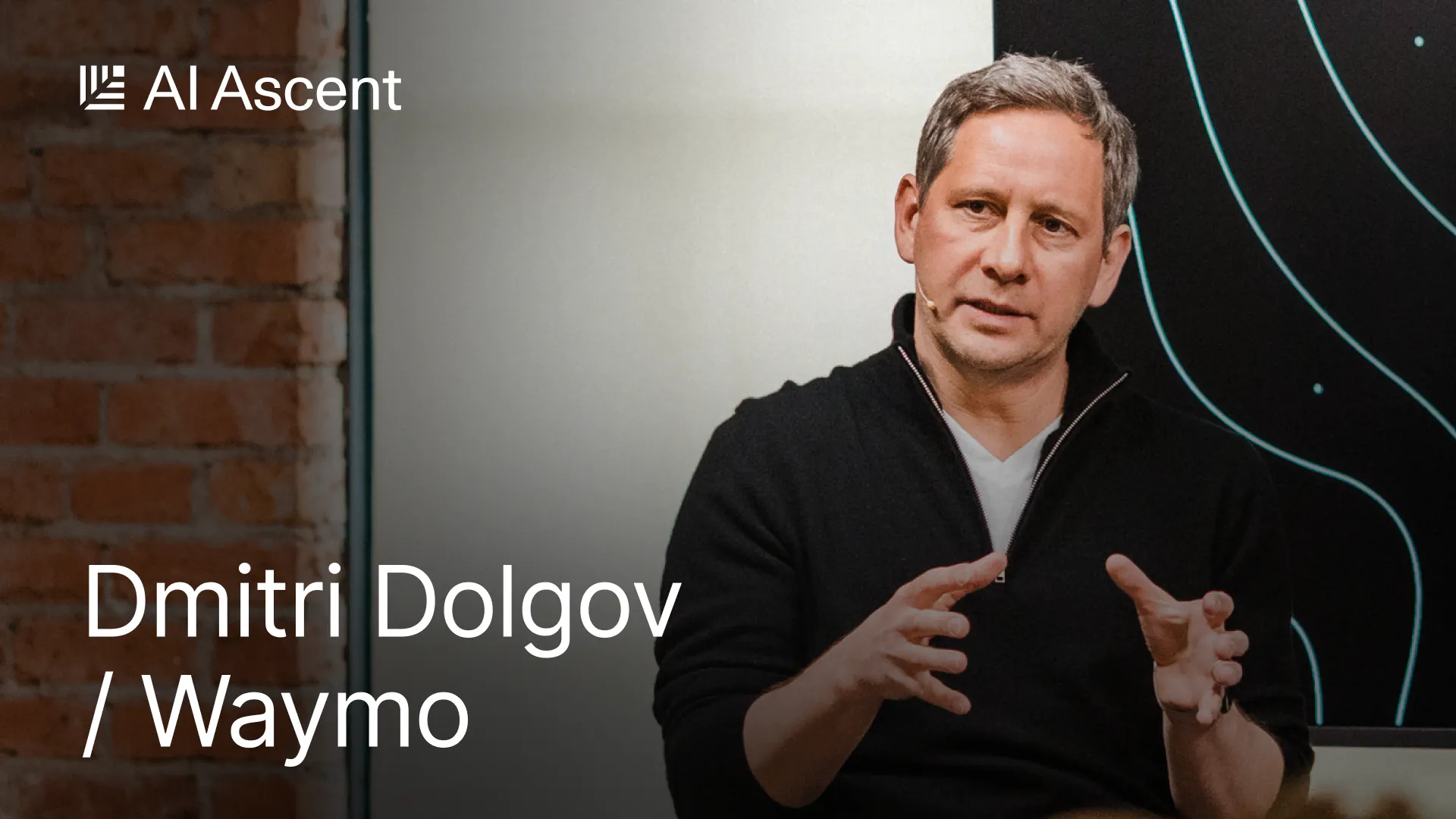
After proving its robo-taxis are 90% safer than human drivers, Waymo is now making them more "confidently assertive" to better navigate real-world traffic. This counter-intuitive shift from passive safety to calculated aggression is a necessary step to improve efficiency and reduce delays, highlighting the trade-offs required for autonomous vehicle integration.

Waymo's co-CEO argues that Level 4/5 autonomy will not emerge by incrementally improving Level 2/3 driver-assist systems. The hardest challenges of operating without a human driver are entirely absent in assist systems, requiring a "qualitative jump" and a completely different approach from the outset.

Early self-driving cars were too cautious, becoming hazards on the road. By strictly adhering to the speed limit or being too polite at intersections, they disrupted traffic flow. Waymo learned its cars must drive assertively, even "aggressively," to safely integrate with human drivers.
Waabi's CEO argues that achieving Level 4 (eyes-off) autonomy isn't a linear progression from Level 2 (driver-assist). They are entirely different safety problems. L4 requires a purpose-built technology stack from day one, as the absence of a human driver introduces challenges that cannot be solved by simply improving an L2 system.

Enterprises with existing customers cannot afford the "Waymo" approach of building a fully autonomous system in secret before launch. Instead, they should follow the "Tesla" model: iteratively automate segments of their products, keeping humans in the loop while gradually building towards greater autonomy.

Waymo's CEO argues it is a deceptive assumption that Level 2/3 driver-assist systems exist on a continuous spectrum with Level 4/5 full autonomy. The hardest parts of building a 'rider only' system are fundamentally different, requiring a qualitative jump in technology.

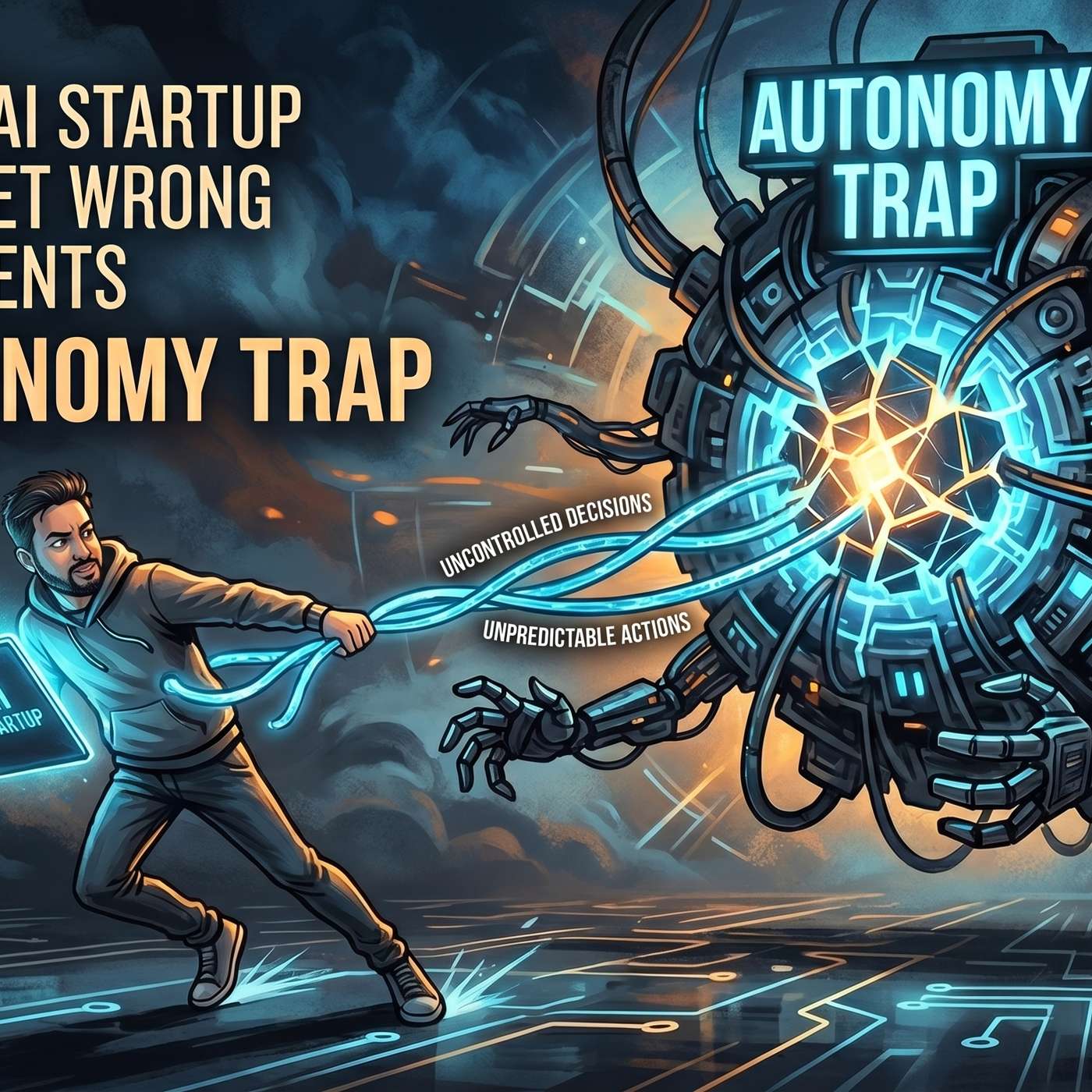
Many AI founders mistakenly pursue fully autonomous agents, overlooking current limitations like inconsistent reasoning and context loss. This "autonomy trap" leads to project failure because real-world applications require supervision and monitoring, not a complete, unsupervised replacement of humans.
Dmitri Dolgov explains that while AI advancements create hype, they primarily speed up progress on the initial, easier parts of a problem. They don't change the "long tail" of complex, rare edge cases, which remains the core challenge in achieving full, superhuman autonomy.
Waymo robo-taxis are calling 911 because passengers are falling asleep. This isn't a critical system failure, but a human-robot interaction problem. It reveals that successful automation requires solving not just complex technical challenges but also simple, unpredictable human edge cases that arise in real-world deployment.
