Get your free personalized podcast brief
We scan new podcasts and send you the top 5 insights daily.
Waymo's CEO argues it is a deceptive assumption that Level 2/3 driver-assist systems exist on a continuous spectrum with Level 4/5 full autonomy. The hardest parts of building a 'rider only' system are fundamentally different, requiring a qualitative jump in technology.

Related Insights
The move from Waymo's 4th to 5th generation driver was a discontinuous jump. Waymo abandoned smaller, specialized ML models for a single AI backbone trained on a massive, nationwide dataset. This generalizable stack, rather than city-specific tuning, enabled its recent rapid scaling across the US.
Waymo alternates major upgrades between hardware and software. Its 6th generation system introduces a custom vehicle and a cheaper, simpler sensor stack, but runs largely the same software as the 5th generation. This demonstrates software generalizability and de-risks the launch of new hardware.
After proving its robo-taxis are 90% safer than human drivers, Waymo is now making them more "confidently assertive" to better navigate real-world traffic. This counter-intuitive shift from passive safety to calculated aggression is a necessary step to improve efficiency and reduce delays, highlighting the trade-offs required for autonomous vehicle integration.

Waymo's co-CEO argues that Level 4/5 autonomy will not emerge by incrementally improving Level 2/3 driver-assist systems. The hardest challenges of operating without a human driver are entirely absent in assist systems, requiring a "qualitative jump" and a completely different approach from the outset.
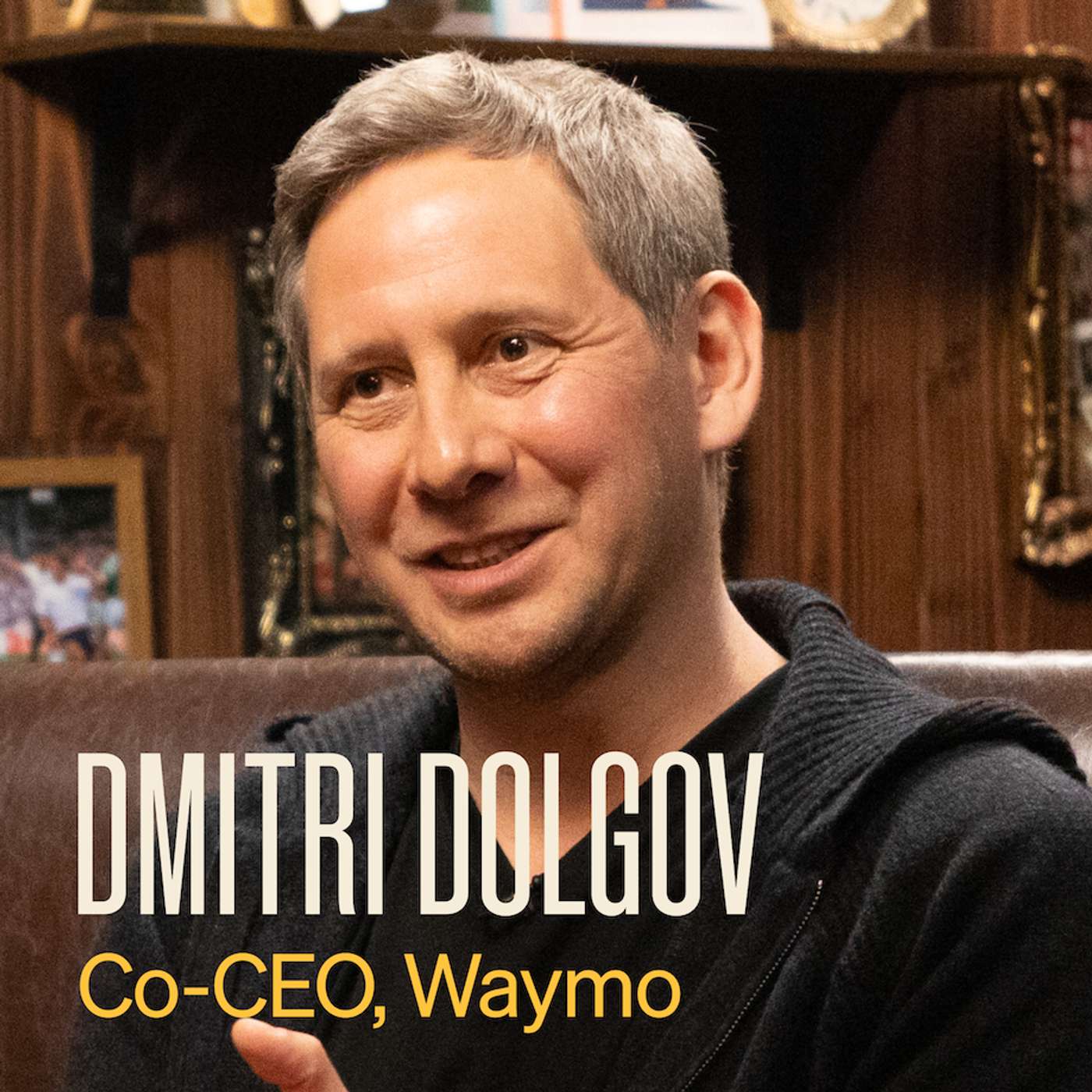
According to its co-CEO, Waymo has moved beyond fundamental research and development. The company believes its core technology is sufficient to handle all aspects of driving. The current work is an engineering challenge of specialization, validation, and data collection for new environments like London, signaling a shift to commercial deployment.
Current self-driving technology cannot solve the complex, unpredictable situations human drivers navigate daily. This is not a problem that more data or better algorithms can fix, but a fundamental limitation. According to the 'Journey of the Mind' theory, full autonomy will only be possible when vehicles can incorporate the actual mechanism of consciousness.

RJ Scaringe argues that successful, neural net-based autonomy requires a rare combination of ingredients: full control of the perception stack, a large vehicle fleet for data collection, massive capital, and GPU access. He believes only a handful of companies, including Rivian, Tesla, and Waymo, possess all the necessary components to compete.

Rivian's CEO explains that early autonomous systems, which were based on rigid rules-based "planners," have been superseded by end-to-end AI. This new approach uses a large "foundation model for driving" that can improve continuously with more data, breaking through the performance plateau of the older method.

A pure "pixels-in, actions-out" model is insufficient for full autonomy. While easy to start, this approach is extremely inefficient to simulate and validate for safety-critical edge cases. Waymo augments its end-to-end system with intermediate representations (like objects and road signs) to make simulation and validation tractable.
The transition to AVs won't be a sudden replacement of human drivers. Uber's CEO argues that for the next two decades, a hybrid network where humans and AVs coexist will be a more efficient and effective solution, allowing for a responsible transition while serving diverse customer preferences.
